





By Walter Boyd
There is nothing more humiliating than a nation that cannot move, not metaphorically but literally. In Trinidad and Tobago, traffic is no longer an inconvenience. It is a daily indictment of state weakness, administrative laziness, and public indiscipline. We are not merely enduring congestion; we are living inside a system that has surrendered its roads.
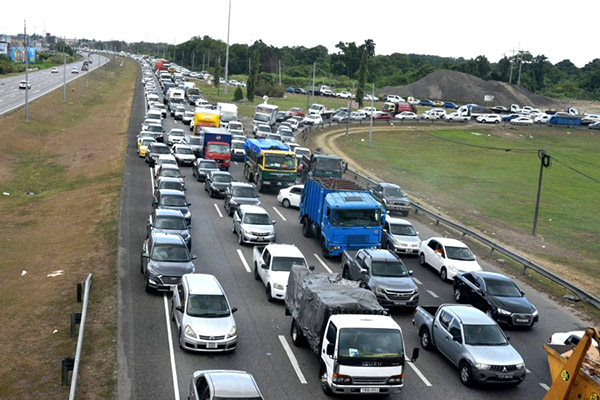
During rush hour along the East–West Corridor from Sangre Grande to Port of Spain, it is gridlock. Along the Churchill-Roosevelt Highway from central and southern traffic feeding north toward Port of Spain, it is gridlock again. One accident, one stalled vehicle, one burst water main, or one sudden deluge, and our highways and main roads collapse into parking lots.
Then the contagion spreads; minor tributaries, residential back roads, and community streets become choked as drivers desperately hunt shortcuts to evade the larger jam, exporting chaos from the highways into the neighbourhoods. What should be a functioning transport network now behaves like a circulatory system in advanced failure.
This is not just the result of “too many cars.” That excuse is tired. This is the result of too little management, too little enforcement, and too much official tolerance for nonsense.
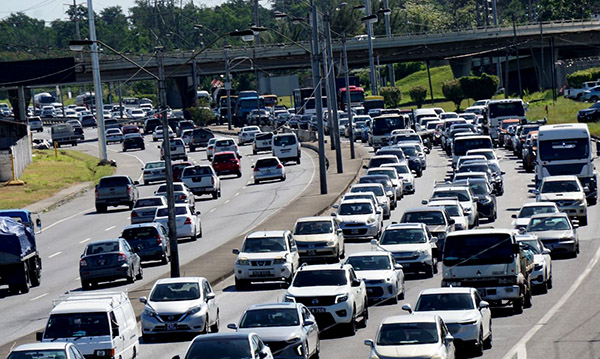
Drivers park where they please. Pavements disappear under vehicles. Junctions are blocked by selfish motorists who push ahead, knowing full well there is nowhere to go. One-way flows are ignored. Maxi-taxis stop with royal entitlement. Unroadworthy vehicles limp through the system, and where exactly are the traffic wardens who are supposed to be visible at bottlenecks, junctions, and pressure points?
The Traffic Warden Division itself says its job is to regulate traffic in designated locations and enforce the Motor Vehicles and Road Traffic Act. The Ministry also says wardens are responsible for traffic coordination and assisting police with road traffic control. Yet on far too many mornings and evenings, the public could be forgiven for wondering whether this service exists in any meaningful operational sense at all.
And what of the State? Does Trinidad and Tobago actually have a traffic management plan robust enough to meet the daily collapse on our roads? Parliament’s Joint Select Committee only began probing the efficiency of the traffic management system in January 2026, which is itself an astonishing admission that a country paralysed by congestion is still formally trying to understand whether its system works.
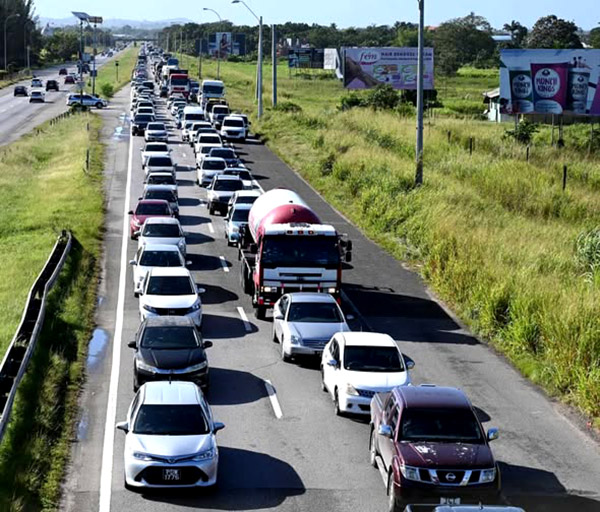
That is the scandal. Not simply that traffic is bad, but that the governance response appears fragmented, reactive, and embarrassingly small compared with the scale of the problem.
Yes, there are scattered projects. The Ministry of Works and Infrastructure has public notices on traffic upgrades in parts of Port of Spain. There was even a decision in April 2025 to temporarily open the Priority Bus Route to general traffic during the evening rush hour because of severe gridlock leaving the capital. But these measures feel like bandages on a fractured spine. Temporary diversions, intermittent adjustments, and isolated civil works are not the same thing as a coherent national traffic management strategy.
Traffic is not a side issue
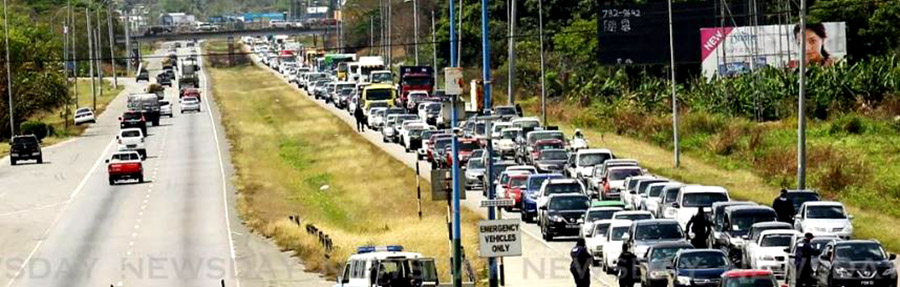
Meanwhile, the deeper causes remain largely untouched. The now-defunct Newsday noted last year that Trinidad and Tobago has nearly one car for every two citizens, one of the highest per-capita vehicle ownership rates in the Caribbean, worsened by the lack of a reliable public transport system. That is not a trivial detail. It means congestion is not simply a policing matter; it is also the predictable outcome of transport policy failure. A country that does not build dependable mass transit should not act surprised when its highways become slow-moving storage facilities for private vehicles.
So let the questions be asked plainly. What exactly is the Ministry of Transport and Civil Aviation doing to rein in this problem? What is the Ministry of Works and Infrastructure doing beyond periodic notices and road works? Where is the integrated command centre for traffic flow? Where is the data-driven deployment of wardens and police at known choke points? Where is the aggressive ticketing of junction blockers, pavement parkers, and illegal roadside stop-offs? Where is the public transport rescue plan? Where is the enforcement culture that tells drivers the roads are governed spaces, not open theatres for selfishness?
Right now, the roads tell a different story. They tell us that laws are optional, junctions are ornamental, and inconvenience is the citizens’ burden to endure. They tell us that public administration in Trinidad and Tobago, too often, awakens only after collapse. They tell us that nobody is truly in charge.
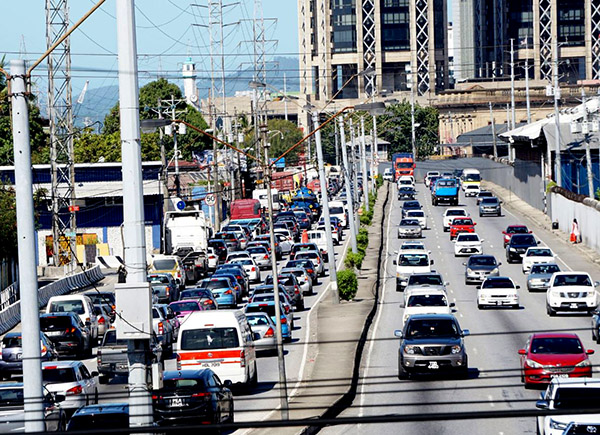
Traffic is not a side issue. It is economic waste, psychological punishment, and a daily erosion of national productivity. It steals time from workers, parents, students, emergency services, and business operators. It inflames tempers, burns fuel, disrupts deliveries, and normalises a low-grade civic despair. A country trapped in traffic long enough begins to think like a trapped country, and that may be the greatest danger of all. Once people start believing that chaos is normal, the government becomes little more than commentary.
Trinidad and Tobago does not need another soothing statement about congestion. It needs management. It needs enforcement. It needs visible road discipline. It needs traffic wardens at the bottlenecks, not buried in bureaucratic invisibility. It needs ministries that understand that transport failure is governance failure.
Until then, every rush hour will remain what it already is: a moving monument to state impotence.
