





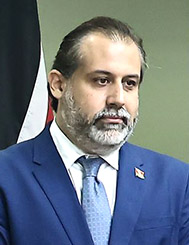
The Real Test for Minister Zakour
By Hugo Maynard
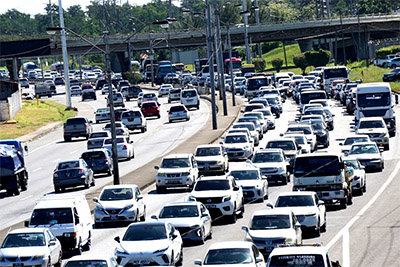
If you live in Trinidad, you already know that specific, heavy feeling in your chest when you’re stuck on the Uriah Butler Highway. You sit there watching the brake lights glare, and the daylight slip away, realizing that yet another chunk of your day has been lost to bad planning, weak follow-through, and government promises that never seem to arrive.
So, when word got out that Minister Eli Zakour was taking the reins at Caribbean Airlines (CAL), you can’t blame people for side-eying the decision. We’re looking at the same man in charge of our daily traffic nightmares and wondering: if the roads are still choking the life out of us, why should we trust him with the planes?
It’s a totally fair question. But we have to look at it realistically.
It’s easy to make the cheap joke that “he can’t fix traffic, so he can’t fly a plane.” But that’s comparing apples to oranges. Our traffic problem isn’t just a quick fix; it’s the result of decades of neglect. It’s poor urban planning, a heavy reliance on cars, and the fact that previous administrations just passed the buck while the problem grew.
An airline is a different story. CAL doesn’t need a miracle. It needs strong management, competent oversight, tough financial choices, and the courage to cut out the inefficiencies we usually let slide because it’s a state entity.
These are two entirely different beasts. But that doesn’t let Minister Zakour off the hook. Actually, it puts him directly on it.
Now that CAL is officially his problem, there’s no more passing the buck. No more blaming a different ministry or pretending the left hand doesn’t know what the right is doing. Transportation, air, sea, and land, is finally under one roof. And that means accountability is under one roof, too.
This is where we, the public, need to pay close attention.
In our everyday frustration, it’s easy to ignore the things that have improved, but we shouldn’t. Late-night flights between Trinidad and Tobago are back. The Blue Wave Harmony is running again, giving the sea bridge some much-needed breathing room. And honestly, traffic enforcement has actually helped lower road fatalities.
That last point is huge. You might still be fuming in traffic and you have every right to be but knowing fewer families are burying a child, a spouse, or a parent this year is a massive win. We have to acknowledge that progress and not let our wider frustrations blind us to real human triumphs.
But here’s where the gloves come off.
A few good moves do not make a fully functioning system. We don’t want more PR statements, renamed committees, or vague “action plans.” We want actual relief. We are tired of paying the price in wasted fuel, missed appointments, and lost time.
We shouldn’t mock Minister Zakour for inheriting thirty years of bad roads, nor should we expect him to fix them in a few months. But we absolutely must not protect him from the weight of his new responsibilities.
Caribbean Airlines is his ultimate test. It’s not a shiny new toy to make his portfolio look good, it’s our public money, Tobago’s economic lifeline, and a struggling national asset with a long history of debt and public distrust.
If the government wants a round of applause for “integrating transport,” they need to earn it. Let’s see the same urgency used to fix the sea bridge applied to the air bridge. Let’s see real, visible improvements in CAL’s reliability and financial health, not just announcements dressed up as victories.
We are exhausted by the governance of “just wait and see.” We are tired of having to throw a parade every time a ferry returns or a flight is restored, while the larger system still limps along and ministers speak in the future tense. That is the real national fatigue.
So let’s be fair, but let’s be uncompromisingly firm. Judge Minister Zakour by what is squarely in his hands today. Judge him by whether Caribbean Airlines becomes stable and efficient, and whether travelers to and from Tobago actually feel the improvement instead of just reading about it in the papers.
The runway is clear. The bureaucracy is aligned. The excuses are gone.
Minister Zakour isn’t just selling the promise of movement anymore. He owns the plane. And if it still can’t fly straight, we all know exactly who is in the cockpit.
