


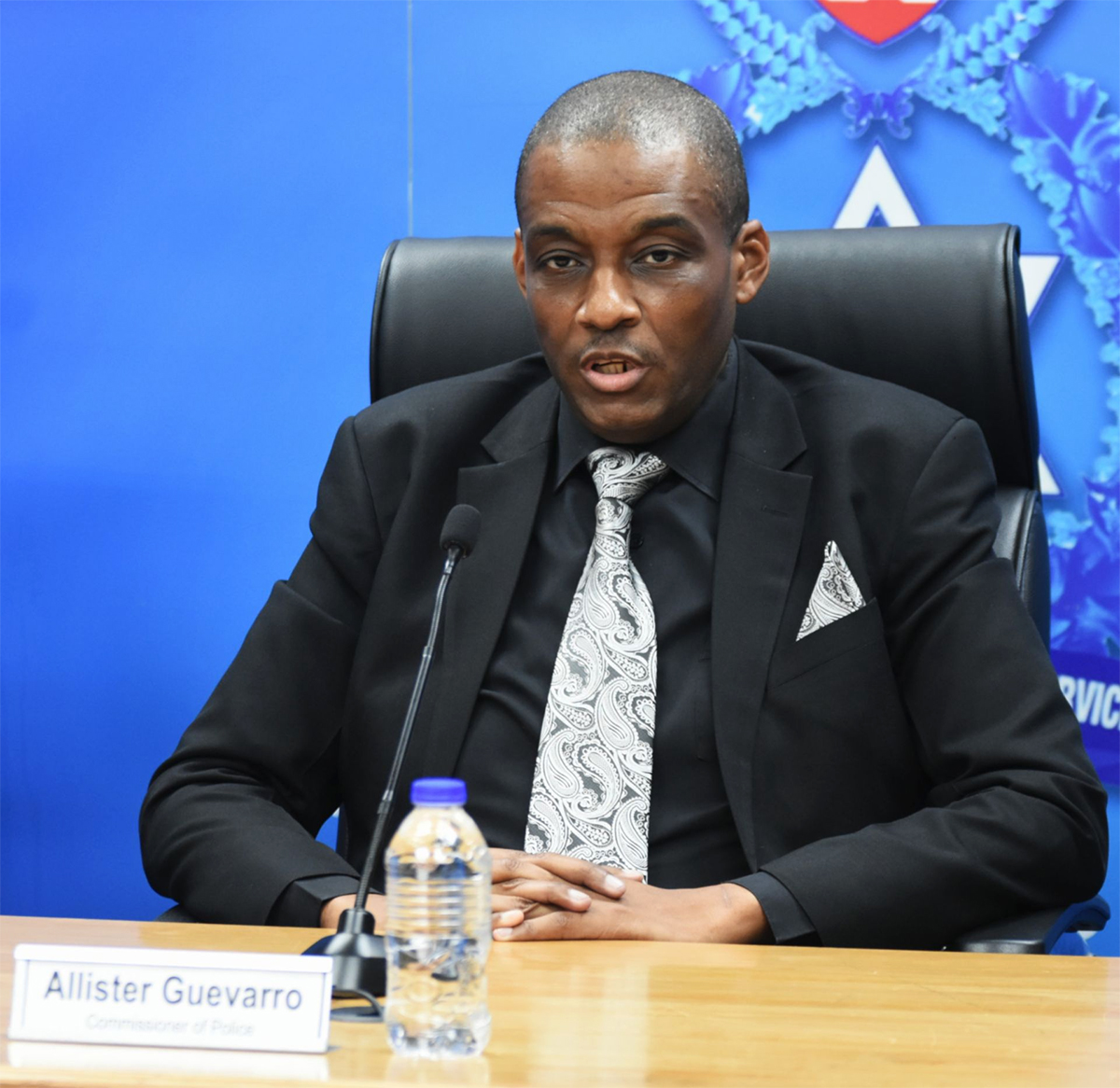



By Peter Green
Every society reaches moments that test not only its laws but also its conscience. The killing of Joshua Samaroo and the grievous maiming of his common-law wife, Kaia Sealey, now hospitalised under police guard, is one such moment for Trinidad and Tobago.
What has shocked the nation is not only the violence of the incident itself but also the widening gap between what the public has seen and what it is being asked to believe by Commissioner Allister Guevarro.
Since video footage emerged showing approximately 16 seconds of sustained gunfire by the police after Samaroo’s vehicle had crashed and he appeared to raise both hands in surrender, the official narrative has begun to unravel.
The Commissioner of Police, Allister Guevarro, initially described Samaroo’s death as “exchange of gunfire” with officers of the North-Western Division Task Force. The video now circulating publicly contradicts that account, and with each passing day, the unanswered questions grow heavier.
The Commissioner has insisted that the incident, which unfolded roughly over five minutes, involved a shootout between Samaroo, his common-law wife, and police officers. Yet the public has not been shown a firearm allegedly used by Samaroo and/or his wife.
No ballistic evidence from an alleged weapon has been presented. No officer has been reported shot or injured. These absences matter because they go to the heart of the credibility of Guevarro’s story.
More troubling still is the implication that even if there had been an exchange of gunfire earlier, would the use-of-force policy justify lethal force after a suspect had crashed, stopped firing, and surrendered?
That proposition stretches the concept of lawful force beyond recognition. If accepted, it would suggest that surrender is meaningless and that compliance offers no protection. That is not policing; it is something far more dangerous, Mr. Commissioner.
The Commissioner also expects the public to accept that three trained officers discharged sustained fire at a stationary vehicle for nearly 20 seconds without recognising that they were no longer under threat. This raises serious questions about training, command and control, and situational awareness.
Suppressive fire is meant to neutralise active threats, not replace judgment. If officers could not distinguish incoming fire from silence, that is not justification; it is an indictment of readiness and a manifestation of incompetence.
Furthermore, the silence around the physical evidence only deepens concern. How many rounds were discharged? How many were recovered, and from where? These are basic questions in any fatal police shooting.
The absence of clear answers is particularly alarming given the outcome: a 31-year-old man dead and his young common-law wife paralysed.
Police intend to lay two charges on Kaia Sealey to protect themselves
Equally disturbing are reports, attributed to unnamed police insiders, that there may be an intention to charge Kaia Sealey with possession of arms and ammunition while she lies incapacitated in hospital.
If true, such a move would appear less about justice and more about narrative management. Even the suggestion that charges might be pursued primarily to “take the heat off” the police corrodes public confidence. Justice must never be used as a shield for public relations.
This incident does not stand in isolation. Public trust has already been weakened by previous controversies involving the Commissioner’s public statements.
In December 2025, the dramatic claim that police radar technology led to the discovery of a drug-laden boat in the Caroni River was met with widespread scepticism, including from within the security services.
Questions were raised about how an engineless vessel, allegedly left unattended, fit the official account. The explanation appeared designed less to inform than to reassure.
There was also public criticism when officers were reportedly withdrawn from a surveillance operation at a drug-bust scene due to concerns about mosquito bites.
Whether fair or not, these episodes contributed to a growing perception that explanations are crafted for convenience rather than clarity.
The danger of this moment cannot be overstated. When official narratives collapse, legitimacy collapses with them. In our country, memory is long, and trust is fragile, while perceived impunity becomes a recruiting tool for violence.
Communities withdraw cooperation, witnesses fall silent, and grievances harden as every questionable killing becomes a story retold, not as fact, but as a warning.
What the nation needs now is not spin, but restraint. Not defensiveness, but transparency. The Commissioner should be focused on independent investigation, full disclosure of evidence, and the urgent implementation of body-worn cameras for frontline officers. These are not anti-police measures; they protect good officers and the public alike.
If the Commissioner believes the actions of his officers were lawful, then the fastest way to restore confidence is to subject those actions to independent scrutiny and let the evidence speak.
If he supports extrajudicial outcomes, then the country deserves to hear that position plainly; tell us if there are killer cops, condoned by him, because it represents a fundamental shift in the social contract.
Joshua Samaroo is dead; Kaia Sealey’s life has been irrevocably altered, and no narrative can undo that. How the State responds will determine whether this tragedy becomes a turning point towards accountability or another chapter in a story of mistrust that continues to fuel the very violence that Guevarro claims to fight.
The country is watching. And it is remembering, Mr. Commissioner. Be honest and true to the people.
