


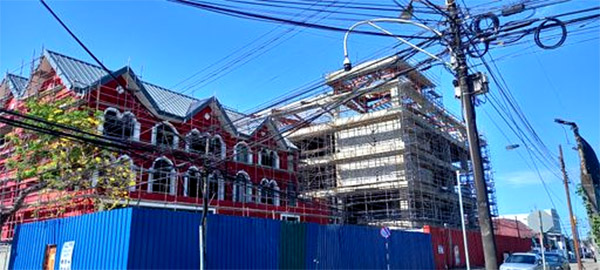



Was the PNM Balisier House Built with Drug Money
By Walter Boyd
After Dr. Keith Rowley’s recent press conference, the country is left not with clarity, but with a deeper sense of unease. For all the words spoken, all the explanations offered, and all the familiar cadence of authority, one simple question lingers: are we any closer to knowing the truth?
Specifically, are we any closer to understanding whether Balisier House, the political headquarters of the People’s National Movement, was financed with drug money? Are we any closer to knowing where the funds came from, how they were raised, whether the allegations raised in Parliament are true, and whether Dr. Rowley addressed them with the seriousness they deserve? The answer to these questions, it appears, is no.
What the public received instead was something altogether different. Rather than a focused, transparent engagement with the issue, the national conversation was quickly diverted and redirected into personality, tone, and language. The allegation itself, serious as it is, became secondary to the spectacle that followed, and that is where the concern deepens.
When legitimate questions are raised, especially in a parliamentary setting, the expectation is not evasion but engagement, not deflection but disclosure. These are not trivial matters. Allegations involving the potential use of illicit funds in the construction of a major political institution strike at the very heart of public trust, governance, and the integrity of the democratic system. They require answers. The nation is still waiting on Dr Rowley to tell it where the PNM raised the money to build their new Balisier House
What unfolded in the aftermath of the press conference felt less like a pursuit of truth and more like a shift in terrain. The focus moved away from the substance of the claim and onto the tone of the response. In particular, the reported reference to the Prime Minister, Kamla Persad-Bissessar, as a “Jamette” has dominated the discourse. That moment, controversial as it is, raises an uncomfortable question: was this a politics of distraction?
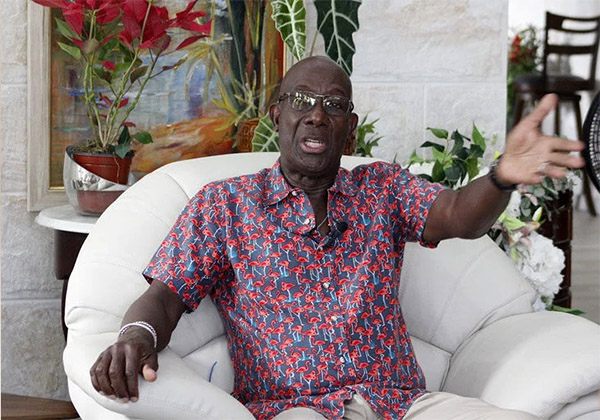
It is difficult to ignore the sequence. A serious allegation is raised. A response follows, but instead of clarity, the public is drawn into a debate over language, decorum, and personal conduct. The original issue, the financing of the Balisier House, recedes into the background, and in that shift, something important is lost: accountability.
It is not unreasonable for the public to expect that a former prime minister, particularly one responding to allegations of this magnitude, would provide clear, verifiable answers. Where did the funding come from? What records exist? What mechanisms ensured transparency? These are not hostile questions. They are necessary ones. Instead, the country is left to navigate implication, interpretation, and inference.
This is not new. Trinidad and Tobago has, for too long, struggled with a political culture that too easily substitutes confrontation for clarity. When pressure mounts, the instinct is often to redirect: to challenge the accuser, to question motive, to engage in rhetorical combat, but while such tactics may succeed in the short term, they come at a cost. The cost is trust.
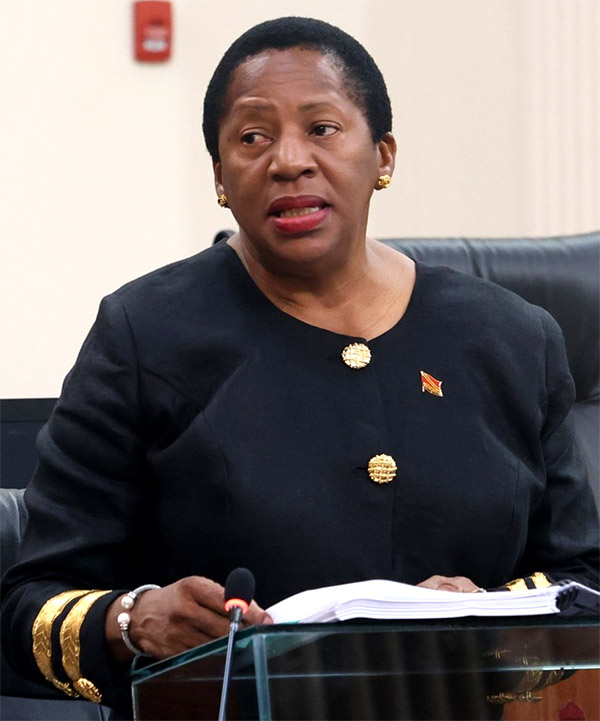
Every time a substantive issue is overshadowed by spectacle, the public is reminded not of the strength of its institutions, but of their fragility. It reinforces the perception that answers are negotiable, that transparency is optional, and that political survival often takes precedence over public accountability; that is a dangerous precedent.
To be clear, disagreement is not the problem. Political leaders will, and should, contest narratives, defend their positions, and challenge their opponents, but there is a line between defence and deflection and between engagement and evasion.
Dr. Rowley’s press conference was an opportunity to confront the issue directly, to provide clarity, and to settle the matter with facts rather than rhetoric. That opportunity was not fully realised. And in its absence, the questions remain. If anything, they have grown louder.
In the end, the public is not asking for perfection. The public is asking for honesty. It is asking for transparency. It is asking for answers that match the seriousness of the allegations raised.
Until those answers are provided, no amount of explanation, no matter how forceful, will be enough, and no amount of distraction will make the questions disappear.
