




Tuesday, March 10, 2026
Google search engine
HomeAffairsCurrent AffairsWHAT CHEVRON’S RETURN MEANS TO T&T

WHAT CHEVRON’S RETURN MEANS TO T&T

 By Ken Ali

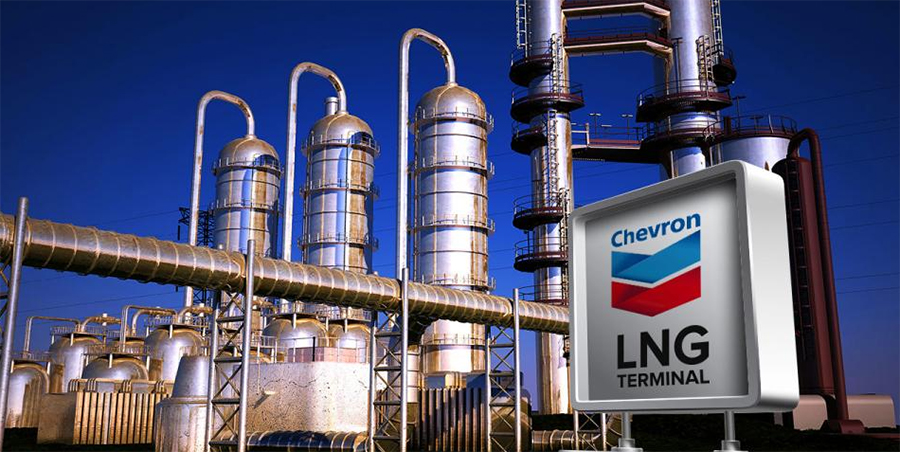
 A decade after selling its assets and leaving Trinidad and Tobago, American energy multination Chevron is interested in returning.

The company wants to have “further discussions on cooperation in the energy sector, not just exploration and production, but some matters pertaining to storage and so on,” Energy Minister Dr. Roodal Moonilal reported.

Chevron’s interest aligns with its regional strategies with respect to T&T’s natural gas and Guyana’s crude oil.

The company is involved in the Loran-Manatee cross-border gas field, which will help to power its global international investments.

A presence in T&T will be close to Guyana’s rich Stabroek field, and will permit oversight of infrastructure and logistics.

But more than that, Chevron’s impending return to T&T is another indicator of the rise of the domestic energy sector, following years of declining production.

There have been confirmed increases in oil and gas yields, with projects for additional production in upcoming years.

Last August, Exxon Mobil signed an agreement for major deepwater exploration, returning after a 20-year absence.

China National Offshore Oil Corporation (CNOOC), one of the world’s largest oil and gas producers, will explore two offshore blocks.

Chevron sold its T&T operations to the Shell Corporation in 2017, for US $250 million, explaining that its global portfolio was being consolidated.

Minister of Energy Dr Roodal Moonilal

The company had operated in the east coast marine area, supplying gas to Atlantic LNG and other domestic firms.

Shell and BP are deepening their involvement in T&T.

French-owned Total Energies is eyeing a return to exploration and production in the local deepwater area.

These positive developments are fuelled by favourable government policies and the easing of United States’ sanctions on Venezuela, permitting exploration of the cross-border fields.

The administration of Kamla Persad-Bissessar has cut red tape to energy investors, reviewed the tax regime, and engaged in direct negotiations with prospective investors.

In addition, bpTT, EOG have boosted crude production.

Cypre Phase 1 and Mento, which are bpTT projects, have contributed to the higher gas yields.

Those factors that led to the rise of oil production from an average of 52,000 barrels a day to 55,000 barrels, and gas from 2.41 bcf/d to 2.73.

Gas production had previously slumped by about 35 per cent, as a result of mature fields and the lack of new discoveries.

NGC Chairman Gerald Ramdeen

The US’ lifting of economic sanctions is expected to see the monetisation of the Dragon field, which holds about 4.2 trillion cubic feet of gas.

If phase one gets going within the next few months, as expected,  up to 185 million cubic feet a day is expected to be piped via a subsea line to Shell’s Hibiscus platform.

The exploration should see a revival of mothballed Point Lisas commodity plants and a boosting of production at ALNG.

National Gas Company (NGC) Chairman Gerald Ramdeen hailed the Dragon development as “the single most important and significant achievement by a sitting prime minister toward providing energy security to this nation and region.”

Prime Minister Persad-Bissessar has been credited with positioning T&T as a key energy hub in the region.

She held a meeting recently with US Energy Secretary Chris Wright on the margins of the Shield of the Americas Summit in Florida.

Reopening of the Pointe-a-Pierre refinery was included in the high-powered discussions.

RELATED ARTICLES