





By STEVON JAGGASAR
Another election has come and gone. On January 12th, the nation’s focus heightened on Tobago and the Tobago House of Assembly.
Many viewed the election as almost vital to the survival of the PNM party given that they are still functionally and administratively crippled after the general election from last year.
As reported by several party supporters and party officials, this was supposedly the best opportunity for them to rebuild. Things did not go their way, however.
PNM support in Tobago has seemingly been eradicated with the party now holding zero seats in the THA, a somehow even worse showing than the 2021 result where the party walked away with a singular seat.
In other words, since Covid, the PNM has contested more THA elections than they have won seats.
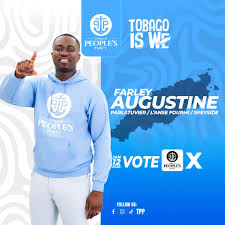
Conversely to all of this has been the rise of Farley Augustine as this generation’s flagbearer to represent the needs of Tobagonians and the desire to return to Tobago-centric leadership on the island.
Many personalities on social media, including some members of PNM, are pushing this narrative that ‘Tobago has suddenly lost its way’ and it ‘needs to return home to the PNM’.
Quite frankly that political take, and those similar, need to be viewed as what they are, an amnesic account of the history of Tobago. Since the reestablishment of the THA in 1980, the PNM have regularly struggled to convince the people that they are worthy of their vote.
Of the now eleven THA elections, the PNM have managed to win less than half of those, often going through long droughts at the polls.
Zooming out, what critics of Tobago-based political movements deliberately ignore is the fundamental advantage of self-directed representation.
Fundamentally, the survival of Tobago-centric parties in this nation gives political freedom to advocate without permission, to negotiate without fear, and to represent their constituents without having to first consult a national executive whose priorities lie elsewhere.
When Tobago stood under PNM rule, whether it be under Manning or Rowley, the opportunity to speak for themselves, even when they disagreed with the larger party was nonexistent.
The options were to conform to the whims of those across the channel or be labelled as dissidents. This is an especially hard line to tow given the PNM’s history and the iron fist with which they rule their own members.
Hector McClean may have been the first, but him having to cross the aisle, denounce his party in parliament and declare himself an independent MP is an ugly precedent and made even uglier with the dozens of similar cases, allegedly undated resignation letters, and threats to ‘politically murder’ party disagreeers.
The freedoms of Tobago representatives, and by extension the Tobago people, were always under threat under PNM rule.
A Tobago party is not constrained by the internal politics of a national organization. It does not have to dilute Tobago’s interests to preserve party unity, nor does it have to silence its representatives to avoid contradicting a narrative.
That freedom matters. It allows Tobago’s leaders to speak plainly about funding and infrastructural inequities, legislative limitations, and the long-promised but consistently delayed expansion of the island’s autonomy.
That freedom also reshapes Tobago’s bargaining power within the Republic. A Tobago-based party owes no allegiance to any government in Port of Spain; its allegiance is singular and transparent to the people who elect it. This changes the political equation entirely.
Whereas the PNM representatives for Tobago had to list excuses and justify neglect to the people for slow and stopped progress, a Tobago under their own party has the political bargaining chips to negotiate on behalf of the people, extract commitments, and demand timelines. That is not recklessness; it is responsible advocacy.
It is precisely this independence that unnerves the PNM establishment.
A Tobago that speaks with its own voice cannot be managed through the usual violent rhetoric that is associated with the Balisier.
Tobago now stands as an institution that cannot be placated with ceremonial appointments. It must be engaged seriously. National parties are then forced to compete for Tobago’s support on policy, resources, and respect rather than loyalty and legacy.
That is healthier for democracy, not just in Tobago, but across the nation.
The United National Congress has long understood this. The UNC, even before the party was known by those letters, understood the importance of speaking to the terrain, the ethos, and the pathos of the Tobagonian people. T
he late Basdeo Panday said this plainly as far back as the 1984 THA election under the Democratic Action Congress.
And that message was reiterated under the current UNC leadership as, in both 2010 and 2025, Tobago-centric parties were allowed to contest Tobago seats without opposition from the UNC party. The same cannot be said for the PNM.
The repeated framing of Tobago-centric governance as dangerous, divisive, or naïve is therefore deeply cynical. Tobago is not rejecting national unity; it is rejecting the political submissiveness the PNM demanded of them.
The island’s voters have learned, through decades of experience, that representation filtered through a national party structure often arrives watered down, delayed, or entirely absent. Voting Tobago is a corrective to that imbalance.
Farley Augustine’s success across the last two THA elections reflects this understanding. His leadership symbolizes a generational shift away from ‘allegiance through threats’ and towards political partnership built on equal footing.
This shift elevates the island closer to true political equality. It chooses a model of governance that maximizes agency and minimizes dependence on the goodwill of distant party executives.
The outcome of this election should therefore be read plainly. Tobago has not “lost its way.” It has found clarity and true partnership.
The island is asserting its right to determine who speaks for it, how loudly, and on whose terms. If that truly scares PNM members, maybe that is more of a reflection of their party management than of the Tobagonian interest.
