


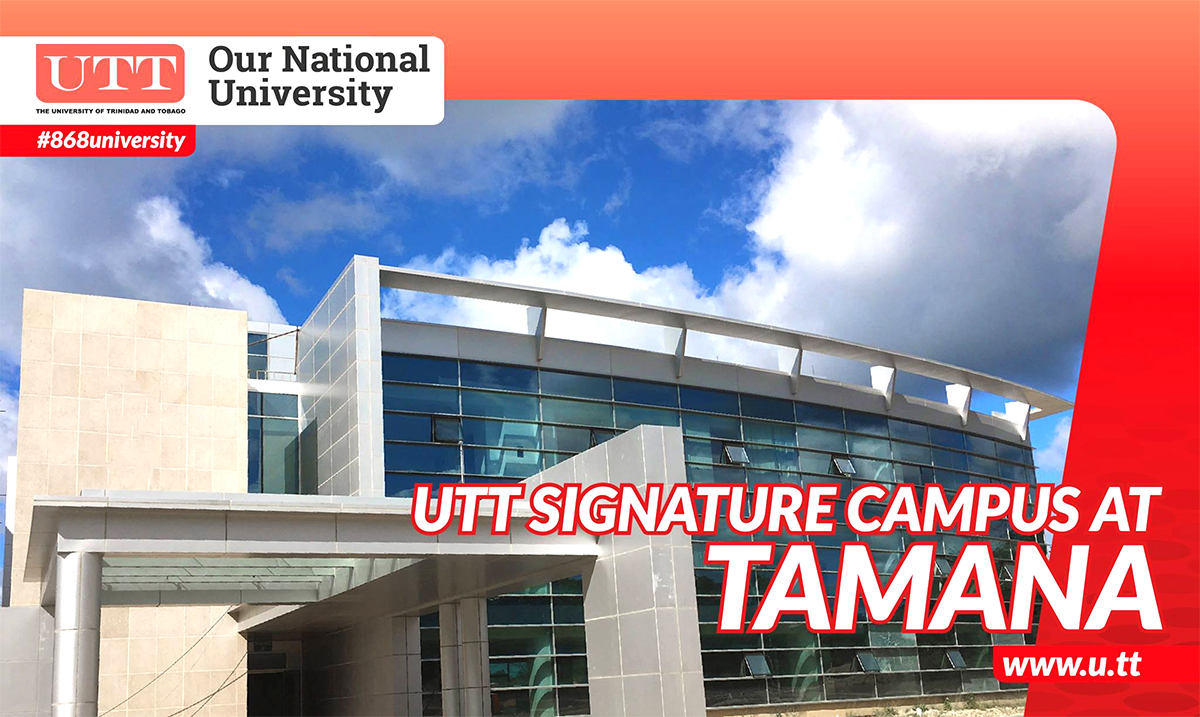



Every serious nation carries at least one serious educational dream. For Trinidad and Tobago, that dream was embedded in the founding of the University of Trinidad and Tobago (UTT): a modern institution designed to link education directly to national development.
Yet years after its creation, an uncomfortable question remains: has that dream been realised, or merely postponed?
The idea of UTT becoming an “Ivy League” university often triggers scepticism. Critics argue that ivy is earned over centuries, not declared. That criticism is fair but also incomplete.
Ivy League status is not about age or architecture. It is about standards, autonomy, intellectual output, and relevance. On those measures, becoming an elite university is not a fantasy. It is a choice.
UTT’s core challenge has never been a lack of ambition or talent. It has been drifting. Shifting mandates, political interference, uneven academic standards, and unclear differentiation from other institutions diluted its identity. A university cannot lead if it does not know precisely what it is meant to be.
If UTT is to fulfil its original promise, it must first embrace focus. Elite universities do not try to do everything.
They dominate specific domains. UTT’s comparative advantage lies in engineering, applied sciences, digital systems, energy transition, advanced manufacturing, agro-technology, and public policy linked to development.
Concentrating resources in these areas would allow depth, not dilution, and signal seriousness to students, faculty, and international partners.
Autonomy is the next non-negotiable. No Ivy-League-calibre institution operates as a political extension of the state. Academic freedom, independent governance, and long-term planning insulated from election cycles are prerequisites for excellence.
Without autonomy, recruitment suffers, research stalls, and credibility erodes. UTT cannot rise while being pulled in multiple political directions.
The heart of any great university is its faculty. Buildings impress briefly, but ideas endure. UTT must prioritise recruiting and retaining world-class scholars, particularly from the Caribbean diaspora, who bring international standards, research networks, and mentorship capacity.
Promotion and tenure must be based on output: publications, patents, industry impact and not seniority or convenience. Excellence must be rewarded, not managed down.
Research must also move from aspiration to expectation. An Ivy League institution is not defined by enrolment size but by knowledge creation.
UTT should be measured by what it contributes to solving national and regional problems, such as energy systems, climate resilience, food security, and digital governance, and not by how many students pass through its doors.
Research funding, peer review, and accountability must be transparent and rigorous.
Equally important is UTT’s relationship with industry and society. Elite universities are not ivory towers; they are engines of innovation. Students should graduate having worked on real projects with real consequences.
Industry should see UTT as a partner in problem-solving, not merely a training provider. When universities and industry align, economies evolve.
Finally, UTT must raise and protect standards for students. Access matters, but excellence requires challenge. A UTT degree should signal discipline, competence, and intellectual seriousness across the Caribbean. That reputation, once earned, becomes self-reinforcing.
UTT’s dream is not about copying Harvard or Yale. It is about building a Caribbean standard of excellence, one rooted in relevance, rigour, and independence. The question is not whether the dream is too big. It is whether Trinidad and Tobago is prepared to do what such a dream demands.
Ivy does not grow overnight. But it does grow, wherever foundations are strong, and patience replaces politics.
