






……Judge gave an illegal death sentence 46 years ago
By FRANCIS JOSEPH
Imagine you were just 17 when you committed a murder. When the verdict came in that you are guilty, the presiding judge sent you to the gallows to hang.
This illegality passed everyone, except for the Court of Appeal, which on Thursday, discovered the error – 46 years later – and quashed the sentence of 50 years on Peter Matthews and ordered that he be re-sentenced immediately. Matthews is being kept at the Carrera Island Prison.
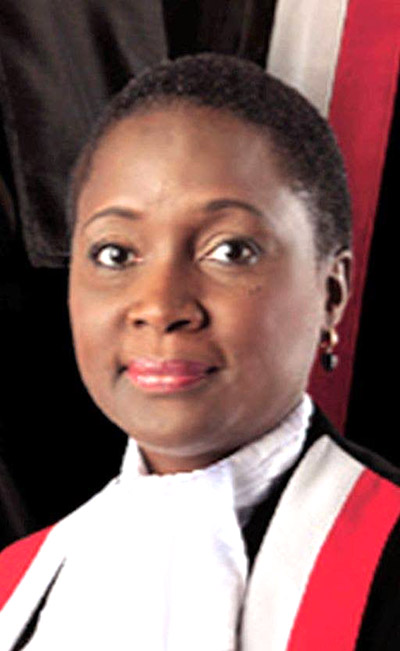
On Thursday, the Court of Appeal comprising Justices Nolan Bereaux, Maria Wilson and Geoffrey Henderson, ruled that the re-sentencing exercise conducted in May 2025, was fundamentally flawed, primarily because the High Court judge had failed to properly determine Matthews’ age at the time of the offence.
Matthews was convicted in 1984 for the 1978 murder of four-year-old Roslyn Lucas, who was found dead at her home at Providence Estate, St James, after being sexually assaulted.
At a re-sentencing hearing in 2025, Madame Justice Maria Busby Earle-Caddle imposed the 50-year sentence. Taking into account the 46 years, eight months and 25 days Matthews had already spent in custody, he was left with just over three years to serve. The judge had also ordered that he undergo psychological assessment, participate in rehabilitation programmes—including Thinking for Change and adult literacy—and be subject to probation supervision upon release.
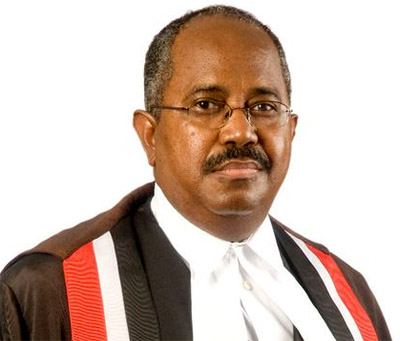
However, the Appeal Court found that a critical issue—his age at the time of the offence (17)—was not properly resolved, undermining the entire sentencing exercise. In delivering the ruling, Justice Wilson said the sentencing judge ought to have adjourned the matter to conclusively determine Matthews’ age, particularly given its legal significance.
She added, “It is very unfortunate that the re-sentencing judge did not find it appropriate to adjourn her decision until she was able to resolve the age of the appellant,” she stated, adding that the consequences of such a failure were “very serious”, especially in a case where the prisoner had already spent decades behind bars.
Fresh evidence in the form of a birth certificate, accepted by the court, showed Matthews was born on July 14, 1961, making him 17 years old at the time of the killing. This meant he should have been treated as a child offender under the law in force at the time. (Persons under 18 found guilty of murder cannot be sentenced to hang)
The court explained that people under 18 could not lawfully be sentenced to death. As a result, Matthews’ original death sentence was unlawful, and everything that flowed from it, including its commutation to life imprisonment in 1994 and the 2025 re-sentencing, was legally flawed.
Justice Wilson added, “This is a case where the sentence of death was unlawfully imposed on the appellant,” the court stated, describing the situation as highly unusual and legally complex.
The Facts
Peter Matthews was tried at the Port-of-Spain Assizes on an indictment charging him with the murder of Roslyn Lucas, sometime during the period of the 26th and 27th day of August, 1978. The trial took place over a period of six days. He was convicted on the 2nd of February, 1984 and duly sentenced to death. He appealed to this court against conviction.
There were no eye witnesses to the commission of the offence charged. The case for the State was based substantially on alleged confessions made by the accused orally, and in a written statement allegedly given to the police in the course of their investigations.
The defence was that Matthews did not kill the child; nor did he give a written statement to the police.
In August of 1978, Roslyn Lucas was a child a little over four years of age. She lived with her mother Christobel Lucas at Providence Estate, Upper Bournes Road, St. James, sometimes referred to as “the Cocoa” in a flat or an apartment which is one of many in what has been described as a “high house”. The mother worked nights sometimes and on such occasions she left Roslyn with one or other of her neighbours.
On August the 26th she left home in the late afternoon for work and returned the next morning at about five o’clock, and found her daughter dead. The daughter was wearing only a jersey and her panties were on the floor. Christobel Lucas also said she knew the accused who lived nearby – “at somebody’s house”.
At about 7 p.m. in the evening of the 26th of August, Verna Gray met the accused at the home of one Marilyn Cole who was also living at Providence Estate. At about 7.55 he pointed to the block of flats or apartments in one of which Roslyn and her mother lived. The accused then left. He returned shortly after 10 p.m. stayed for about an hour and again he left, saying that he was going home.
At around 11.00 a.m. on August 28th, 1978, Dr. Neville Jankey performed a postmortem examination on the child’s body. He found the hymen was forcibly ruptured; there was blood in the entrance to the vagina. Death was due to a sudden stoppage of the heart.
The State relied on alleged confessions made orally. One such confession it was said, was made to Allister Ogiste. Ogiste said in evidence that in August, 1978 the accused used to sleep under his (Ogiste’s) house.
On a Sunday evening in August he had heard a rumour about the accused and he asked him if it was true. The accused denied it. On the Monday evening Ogiste again questioned the accused and told him that he had heard he had killed the child.
The accused denied it, but on being asked on yet another occasion the accused said he had raped the child but that he did not kill her.
Ogiste was cross-examined by counsel. It was not put to him nor even suggested that he was not telling the truth. Nor did the accused in the statement which he made from the dock in his defence deny or even as much as suggest that what Ogiste had said was not true.
Ogiste told the accused that he would take him to the police station. The accused refused to go and Ogiste then told him that he would not be allowed to stay at his home any longer.
Another oral confession the State alleged was made to Henry Baptiste. The material portion of the evidence given by Baptiste is summarised:
“At about 8.00 or 8.30 p.m on the 31st of August, 1978, the accused went to the home of Baptiste. He asked for something to eat which he was given. While he was eating Baptiste told the accused that it seemed as though something was wrong with him, to which the accused replied in the affirmative.
The accused asked Baptiste if he had heard of the child “that got killed in the Cocoa”, to which Baptiste replied in the affirmative. Then the accused said to Baptiste that it was he (the accused) who had killed the child. Baptiste asked, “you kill the child?” Accused said, ‘yes’.
Baptiste asked him what made him do that. He replied, he didn’t know, that it was as if something was squeezing or pressing him. Baptiste asked him why he didn’t give himself up to the police. He said he was afraid.
Accused asked if he would go to the police station with him. Baptiste told him ‘yes’.”That was on a Friday night and he and Baptiste agreed to go to the police station on Sunday morning.
Baptiste said the next day the accused came again and said that he was hungry and he was again given some food and while he was eating Baptiste reminded him that they were to meet early on the next morning.
But it would seem that Baptiste had a change of mind. He told the accused that he was not waiting, until next morning and that they were going to the station right away. Both of them left and went to the police station at St. James where the report was made. Later that night Baptiste gave a statement to the investigator at the station.
The witness was cross-examined and it was not put to him that the evidence which he gave was not true, or even suggested that it was not, save in respect of one small matter.
Baptiste was asked in cross-examination whether he had heard any rumour that the accused had killed the child and it seemed it was put to him that it was he who had told the accused that he (accused) had killed the child.
In answer to both these questions Baptiste replied in the negative and it was then put to Baptiste that he was not telling the truth, to which he replied that he was.
In his unsworn statement from the dock the accused referred to the circumstances in which he had gone to the St. James Police Station and as to what transpired there in relation to the written statement.
According to the court at the time, it seemed therefore, that the two oral confessions to which reference has been made have remained uncontradicted up to the very end.
In his submissions counsel for the accused referred to those statements/confessions to Baptiste and Ogiste as being of little probative value and treated them rather lightly.A date will be set for a re-sentencing…..again.
A view of Carrera Island
