





The concept of a “Black Swan” event a rare, unpredictable occurrence with severe consequences is often treated by Caribbean business leaders as a theoretical nightmare, a ghost story told in boardrooms to justify insurance premiums.
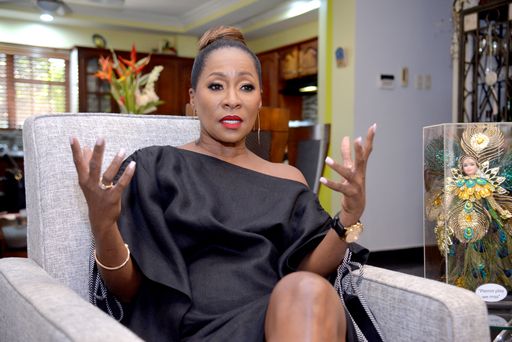
But on January 13, when Senator and economist Dr Marlene Attzs took the podium at the Trinidad and Tobago Chamber of Industry and Commerce, she was not warning of a ghost. She was pointing at the monster already in the room.
Her keynote address was a defining moment of clarity in a season of denial, arguing that a convergence of shocks geopolitical tension, climate policies, and internal fragility could derail even the best-laid plans.
The assessment is correct. In fact, it may be understating the urgency. The “Black Swan” isn’t coming; it has landed.
One needs to look no further than the heartbreaking announcement just days prior on January 9: Newsday, a staple of the national media landscape for 32 years, filed for winding up.
Managing Director Grant Taylor cited a “perfect storm” of rising costs and falling revenue. While it is easy to dismiss this as a symptom of a dying print industry, that would be a dangerous mistake.
Newsday’s closure is a microcosm of the wider Trinidad and Tobago economy and a story of an entity unable to absorb shocks because the financial buffer of the good years has evaporated.
The keynote analysis correctly identified that the threats are no longer just local inefficiencies; they are existential global shifts.
The nation is caught in the concentric circles of great power rivalries, a reality underscored by the looming threats of protectionism and climate borders. Dr Preeya Mohan, a senior fellow at the Sir Arthur Lewis Institute, provided the grim calculus to back this up, noting that 90% of Trinidad and Tobago’s exports to the European Union could be hit by the Carbon Border Adjustment Mechanism (CBAM).
This is not merely red tape; it is a trade barrier that could effectively slap a 22% tax increase on the nation’s ammonia exports. When combined with renewed protectionism in the United States and rising US-China tensions, the era of free and easy trade appears to be ending.
Domestically, the safety net is fraying. With the Debt-to-GDP ratio now hitting 85% and rising, the government is financially constrained. The longstanding economic paradigm where the state acts as the “Savior of Last Resort” is mathematically over.
The advice for boosting the economy, therefore, does not lie in waiting for a budget surplus that isn’t coming, but in a radical shift in private sector behavior.
To weather this storm, the business community must decouple its fortunes from government spending and pivot toward data-driven resilience. The “old boys’ club” method of doing business relying on relationships and intuition must be replaced by rigorous risk analysis.
If the manufacturing and energy sectors are to survive, they must implement technology like Carbon Capture and Storage not as public relations exercises, but as existential requirements to dodge the CBAM bullet.
Growth must now be found in non-state markets, leveraging technology and green adaptation to remain competitive in a closing world.
Dr Attzs has done the nation a service by refusing to sugarcoat the pill. The “perfect storm” that silenced the presses at Newsday is swirling around every legacy business in Trinidad and Tobago.
The country faces a stark choice: acknowledge the Black Swan and modernize immediately, or watch paralyzed as the water rises.
David Charles
