






Build a Cleaner Trinidad and Tobago
Carnival is upon us once again; an eruption of colour, rhythm, and national joy. For a few radiant days, Trinidad and Tobago remembers its creativity, resilience, and unity. Streets are transformed into living stages, and the worries of ordinary life briefly dissolve beneath music and movement.
Yet when the final costume is folded away, and the last note fades across the Savannah, another truth returns quietly but firmly: our environmental struggles remain long after our Carnival ends.
If I were Prime Minister of Trinidad and Tobago, I would begin with a simple conviction: the future of this nation depends on how seriously we confront the environmental realities already at our door.
Flooding communities, rising temperatures, coastal vulnerability, and polluted urban spaces are not distant threats; they are present warnings. Responding to them requires more than speeches or symbolic gestures. It requires transformation.
Much of today’s climate conversation focuses on electric and hybrid vehicles as the pathway to a greener future. While these technologies reduce tailpipe emissions, they are not the complete solution we often imagine.
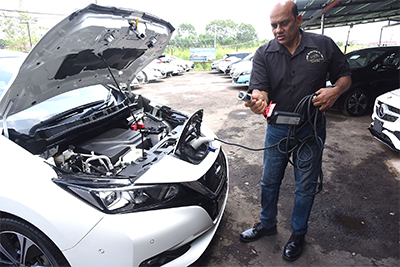
Trinidad and Tobago Automotive Dealers Association president Visham Babwah demonstrates how an electric car is charged
Electric vehicles still rely on energy generated largely from fossil fuels, still demand resource-intensive battery production, and still contribute to traffic congestion and urban sprawl.
Replacing petrol engines with electric motors changes the machinery, but it does not change the underlying system of too many vehicles, too little planning, and too much dependence on finite fuels.
If I were Prime Minister, my goal would not simply be cleaner cars. My goal would be fewer cars overall.
I would invest decisively in a modern, reliable public transportation system, one that connects communities efficiently, reduces commute times, and restores dignity to daily travel. Buses would be frequent, safe, and technologically integrated.
Transit corridors would guide development rather than chase it. Mobility would become a public good rather than a private burden.
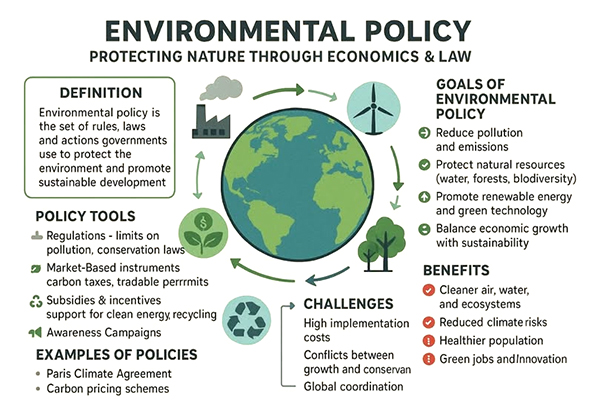
At the same time, I would redesign our towns and cities to be walkable, connected, and humane. Sidewalks would no longer be afterthoughts. Cycling networks would link neighbourhoods to schools, workplaces, and recreation.
Urban planning would bring essential services closer to where people live, reducing the need for constant driving. Environmental policy would merge with public health, community safety, and economic productivity.
Energy transformation would stand at the centre of this vision. Trinidad and Tobago cannot build a secure future on finite fossil fuels alone.
If I were Prime Minister, I would accelerate the transition toward renewable energy, solar rooftops, coastal wind, and resilient micro-grids that lower emissions while creating new industries and jobs. Clean energy would not be treated as charity for the planet, but as a strategy for national survival and prosperity.
Guiding principle
My guiding principle would be clear: leave Trinidad and Tobago cleaner, safer, and more resilient than I found it.
That means protecting wetlands that buffer floods, preserving forests that cool communities, enforcing environmental standards that safeguard health, and ensuring that development never again sacrifices long-term security for short-term gain.
Progress would be measured not only in economic statistics, but in clean air, reliable transport, renewable power, and communities prepared for climate change.
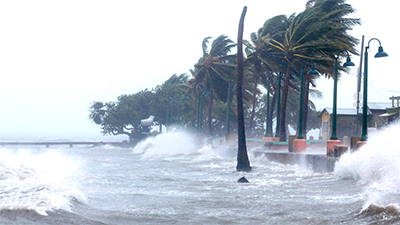
Hurricanes and Climate Change
Beyond our borders, the Caribbean faces some of the harshest consequences of a warming world: stronger storms, rising seas, and fragile coastlines.
If I were the Prime Minister, Trinidad and Tobago would not wait passively for global solutions. We would become a regional leader in climate action, demonstrating how green urban design, sustainable energy, and resilient infrastructure can transform a small island state into a model of environmental leadership.
Across this country, I would champion the creation of green cities, places where development and nature exist in balance rather than conflict.
Carnival shows us every year what Trinidad and Tobago can achieve when imagination, culture, and unity come alive together.
If I were the Prime Minister of T&T, my mission would be to carry that same spirit beyond the festival and build a nation worthy of the celebration because when the music fades, what remains is the country we choose to create.
