


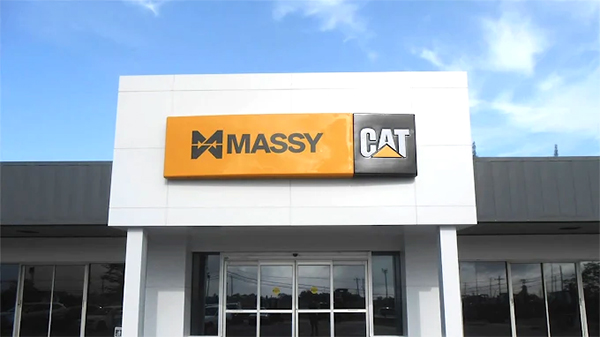



Massy has just given up its Caterpillar business in Trinidad and Tobago after almost 100 years. Let that sink in.
This is not an insignificant business. Caterpillar equipment is closely associated with construction, infrastructure, earthmoving, energy and heavy industry. Massy acquired the Caterpillar dealership in 1928 and has carried it for generations.
Massy is a business, not a charity. If a company with that history decides to sell the business, surely the country should be asking: What does Massy see that the rest of us are not seeing?
Look around Trinidad and Tobago. How many major construction sites are operating? How many tower cranes do we see? Where is the major private sector construction activity that should be driving demand for heavy equipment?
Perhaps the Caterpillar decision should be viewed as another warning light on the dashboard of our economy.
And the pressure is coming from other directions. Businesses are now being asked to absorb additional costs, including garbage collection. Every new cost eventually finds its way into the price of goods and services and, ultimately, the consumer’s pocket.
Then comes the Budget.
Government gave motorists back $1 per litre on Super gasoline in the 2026 Budget. Many motorists are now wondering whether that dollar will quietly find its way back out of their pockets, and whether another dollar could be added on top.
If that happens, the relief was never really relief; it was simply a temporary reprieve.
Government needs to understand that businesses and consumers cannot continue absorbing cost after cost while economic activity remains weak.
Massy’s Caterpillar decision should therefore be more than a business story.
It should be a question to the Government:
WHAT IS HAPPENING TO CONSTRUCTION, INVESTMENT AND ECONOMIC ACTIVITY IN TRINIDAD AND TOBAGO , AND WHERE ARE THE JOBS AND GROWTH SUPPOSED TO COME FROM?
Gordon Laughlin,
Westmoorings
