





Fairness transcends the strictures of the law.
Fairness is the quality of making honest and impartial judgments and treating people without bias, favouritism or personal interest. Law, by contrast, consists of rules established to regulate society and maintain order. Laws are necessary, but they can sometimes be rigid in their application. Fairness—or equity—asks us to consider not only what the rules require, but whether their application produces a just result.
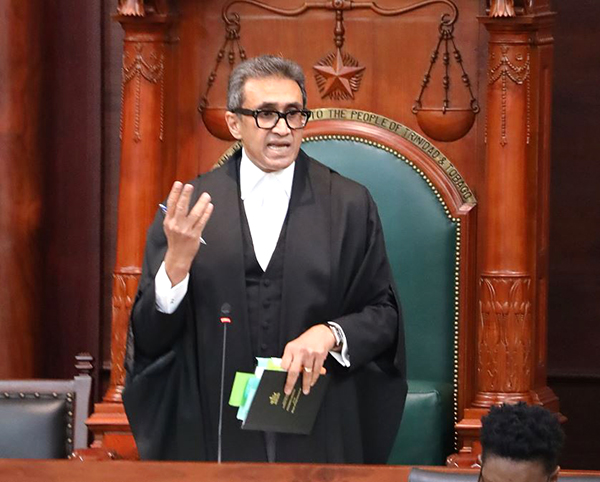
That distinction has become relevant following recent parliamentary proceedings in which the Speaker, relying on the Standing Orders, ruled that debate on an important motion had ended after the allotted time expired without the Member formally saying, “I so move.”
The question is therefore not simply whether the Speaker acted within the Standing Orders. The question is whether the outcome was fair—to the Member, to the Opposition and, ultimately, to the public whose interests Parliament exists to serve.
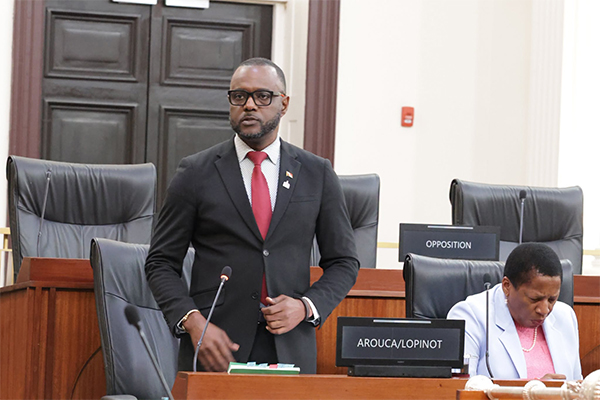
On the available facts, however, fairness must also be examined from the other side.
Members of Parliament are expected to know the Standing Orders governing proceedings in the House. If a Member fails to complete a procedural requirement within the prescribed time, responsibility cannot automatically be shifted to the Chair.
The old legal maxim ignorantia juris non excusat—ignorance of the law is no excuse—may not apply literally to every parliamentary procedural mistake, but the principle is instructive. Those participating in Parliament are expected to know its rules and to remain attentive to proceedings.
If the Member overlooked the requirement, those sitting alongside him also had an opportunity to assist. Parliament is not merely a collection of individuals. Political parties operate as teams, and experienced Members should be alert to procedural requirements that could determine whether an important matter proceeds.
In that context, it becomes difficult to complain afterwards that the application of a known rule was inherently unfair.

This does not mean that every technically correct parliamentary ruling will necessarily appear fair. Rules and fairness do not always occupy precisely the same ground. Former prime minister Basdeo Panday famously observed that “politics has its own morality”—a remark that continues to resonate in Trinidad and Tobago’s political life.
And, as Charles Dickens famously wrote, “the law is an ass.” Yet even when one dislikes the consequence of a rule, the rule does not disappear merely because its application proves inconvenient.
The larger lesson for the PNM Opposition is therefore more important than this single parliamentary episode.
The Opposition has to become more disciplined, organised and strategically effective. Opposition politics cannot consist mainly of criticising the Government simply to make itself heard. Its responsibility is to identify the serious problems confronting the country, scrutinise the Government’s response and, most importantly, present credible alternatives.
That requires preparation, coordination and leadership.
It also raises the increasingly important question of succession planning within Trinidad and Tobago’s major political parties.
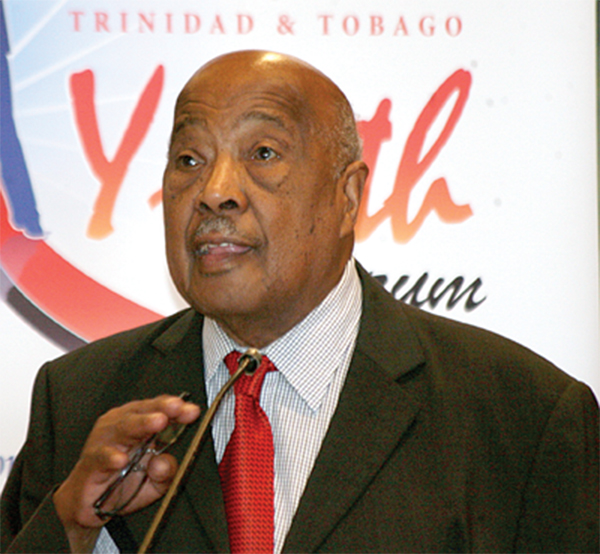
Sir Ellis Calrke
Who eventually succeeds Prime Minister Kamla Persad-Bissessar? Who succeeds Opposition Leader Pennelope Beckles-Robinson? These are legitimate political questions, particularly because leadership transitions can determine not merely the fortunes of political parties but the stability and direction of governments.
History provides an interesting example.
When Dr Eric Williams died in office in March 1981, President Sir Ellis Clarke was confronted with the immediate constitutional responsibility of appointing a Prime Minister. George Chambers, one of the PNM’s three deputy political leaders, was appointed and subsequently became political leader of the party. The transition was completed without prolonged governmental instability.
More recently, when Dr Keith Rowley announced his departure, Stuart Young emerged from a process among PNM Members of Parliament and was ultimately appointed Prime Minister by the President in March 2025. The process itself generated considerable debate within and outside the PNM, demonstrating why transparent and credible succession arrangements matter.
The PNM subsequently lost the April 2025 general election, and questions about its leadership and future direction inevitably followed.
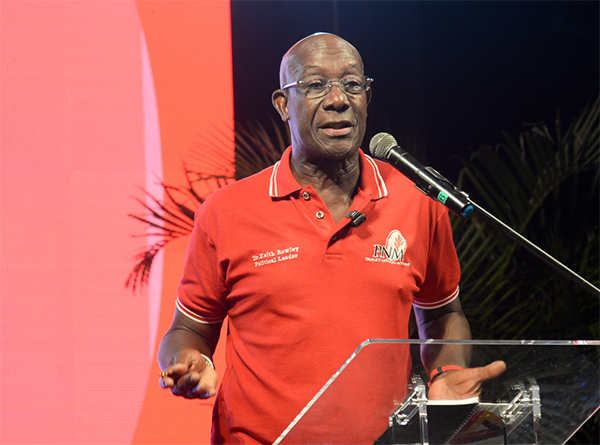
Rumours, of course, will always accompany political transitions. But rumours should never substitute for evidence.
Shakespeare described rumour memorably:
“Rumour is a pipe,
Blown by surmises, jealousies, conjectures…”
The words remain appropriate centuries later.
Political gossip can damage reputations, divide organisations and distract the public from matters that genuinely deserve attention. Those who circulate allegations without evidence should remember that public debate is strengthened by facts, not whispers.
Fairness therefore cuts in every direction.
We demand fairness from Speakers, governments, courts and institutions. But fairness also demands responsibility from parliamentarians, political parties, commentators and citizens.
Rules matter. Procedure matters. Preparation matters.
And while fairness may sometimes transcend the strict letter of the law, it cannot become an excuse for ignoring rules merely because their consequences are politically inconvenient.
Patriots
