





By Sunil Maharaj
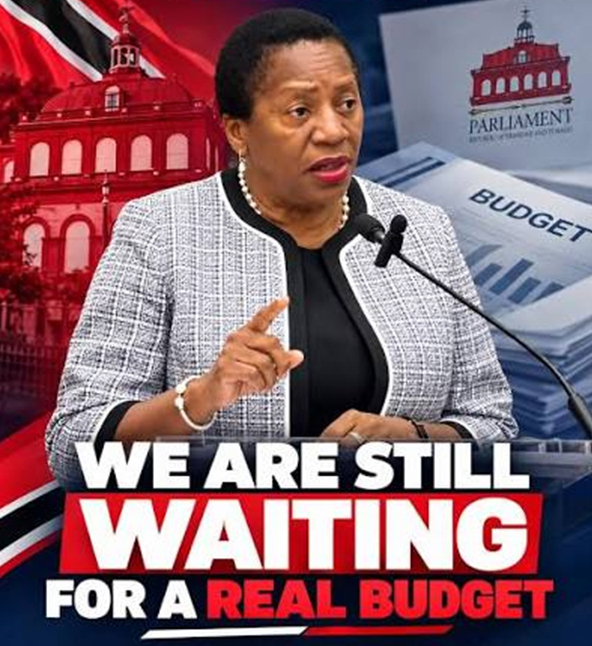
Penny’s “bikini budget” description was certainly colourful. Whether it proves useful will depend on what she puts beside it when she delivers her budget response on Friday, October 16. A catchy phrase gets attention. The figures require rather more work.
Finance Minister Davendranath Tancoo presented a TT$63.368 billion spending plan on Monday, October 12, for fiscal 2027. There is enough public money involved to warrant a discussion which survives beyond the evening’s political entertainment.
I am more concerned with what remains unexplained than with how sharply either side describes the other. Calling a budget empty does not identify which allocation is inadequate. Calling it people-centred does not establish that the money will reach the people.
Somewhere between those descriptions, somebody has to do the homework.
To be fair, Beckles has already raised matters worth pursuing. Her challenge to municipal development funding deserves a clear answer.

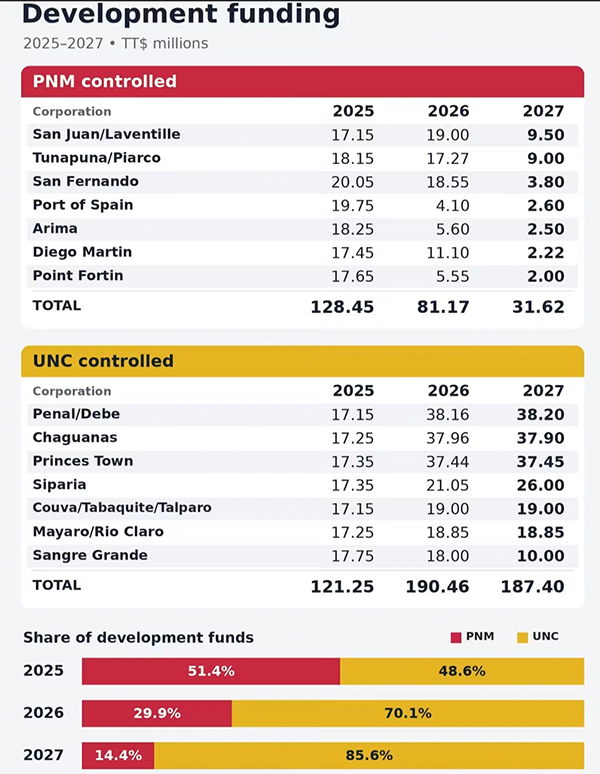
An October 13 report puts the combined development allocation for seven PNM-controlled corporations at TT$31.62 million, against TT$81.17 million originally provided for fiscal 2026. For seven UNC-controlled corporations, the corresponding allocation moves from TT$190.463 million to TT$187.4 million. The reductions are TT$49.55 million and TT$3.063 million respectively. These comparisons exclude recurrent expenditure and projects financed separately.
That qualification matters. We cannot demand precision from the Government while treating inconvenient details as disposable.
The disparity needs explaining. It does not, by itself, prove political discrimination. Completed projects or funding through another programme could affect an allocation. The Government should publish its criteria and show how they were applied.
Penny should then follow the money down to the project.
Consider a hypothetical drainage scheme whose funding has been reduced. Residents need to know whether the work is complete, transferred elsewhere or postponed. If essential work has been deferred, the apparent saving could eventually become somebody else’s bill for damaged furniture and repairs.
Or consider a hospital machine. Purchasing it is only part of the exercise. Installation, trained operators and maintenance must also be arranged. Without those provisions, patients could still be paying privately for a service the public investment was supposed to provide.
These are illustrations, not allegations about particular projects in this budget. They explain what parliamentary silence can cost. An allocation and a functioning service are different things. Citizens should not have to discover the difference after the speeches are finished.
There is unfinished business here. In her first budget response as Opposition Leader on October 17, 2025, Beckles challenged municipal development cuts and alleged that development funds had not been released. The unrevised Hansard records those complaints. It confirms that she made them, not that every allegation was established.
She should return to those projects and establish what happened. A complaint followed through with documents is more useful than the same accusation given a fresh coat of paint.
The revenue forecast deserves similar attention. Planned receipts of TT$59.729 billion against expenditure of TT$63.368 billion leave a projected deficit of TT$3.639 billion. The revised deficit estimate for fiscal 2026 is TT$7 billion. The forecast improvement is welcome. It remains something to achieve.
The oil-price assumption rises from US$73.25 to US$77 a barrel, while natural gas moves from US$4.25 to US$5 per MMBtu. Penny should press for an explanation of what happens if prices or production disappoint. Which commitments would be delayed, and how much additional borrowing would be required?
She should also insist that the account of energy development gives credit where credit is due.
Ginger received bp’s final investment approval in March 2025. Mento was moving into construction in 2023. Shell approved Manatee in July 2024, already targeting production in 2027. Those milestones preceded the present administration and belong in any fair account of the projects now supporting the country’s gas outlook.
Even ExxonMobil’s return requires some care in the telling. Reuters reported that the company first approached the Government in November 2024. The production-sharing agreement was signed in August 2025 under the current administration. There is room to acknowledge both the groundwork and the achievement of concluding the agreement.
I have no difficulty giving a government credit for completing work it inherited. That is what continuity should look like. But initiating a project, accelerating it and bringing it into production are different contributions. Penny should put the chronology before the country and recognise any documented improvements made by this administration.
She should also acknowledge the companies making the investment decisions. Neither party should treat their work as an exclusively political achievement.
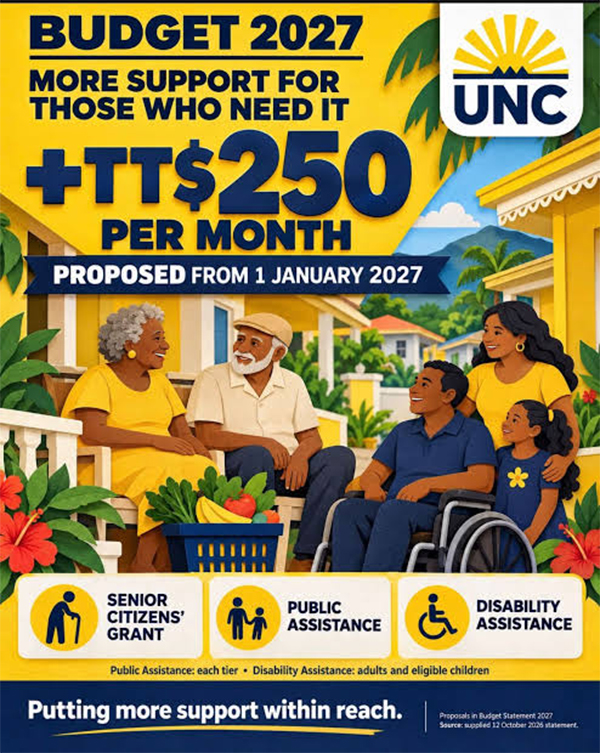
Fairness applies elsewhere in the budget too. The announced TT$250 monthly increases in the Senior Citizens’ Grant, Public Assistance Grant and Disability Assistance Grant, effective January 1, 2027, deserve support in principle. Their funding and delivery still warrant scrutiny.
Penny’s alternatives must face the same examination. Restoring an allocation requires funding. Rejecting a revenue measure requires an explanation of how the gap would be managed. The Opposition cannot demand the Government’s working while keeping its own sums out of sight.
Friday offers Beckles an opportunity to replace accusation with evidence and leave ministers with questions they must answer. The follow-up will matter as much as the speech.
Penny has supplied the description. Now she must supply the evidence. The public should leave this debate knowing more about where its money is going.
