


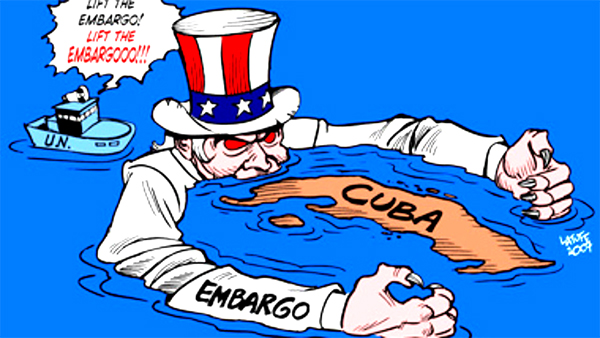



People are saying that for 34 years, no matter which political party held the keys to Whitehall, Trinidad and Tobago walked into the United Nations General Assembly and voted against the American economic embargo on Cuba. That three-decade consensus vanished overnight when the Government broke ranks with CARICOM and voted alongside the United States, with Prime Minister Kamla Persad-Bissessar stating plainly that her administration does not support a dictatorship and that Cubans deserve democratic freedoms.
People are saying that you do not throw out a 34-year-old regional foreign policyand the question on everyone’s lips is what changed between last year’s vote and this week’s roll call.
People are saying that the debate over morning coffee is not about whether Havana runs a flawed system, but about what a small island state gives up when it abandons its neighbours to stand next to a superpower. In diplomacy, just like in the real world, everyone notices when you suddenly change your friends, and ordinary citizens are wondering whether this was purely a stand on principle or the down payment on energy security and cross-border gas deals with Washington.
Nowhere left to be careful

People are saying that when two women are shot dead inside a Couva spa in the middle of the morning – a businesswoman and her customer – in front of terrified employees, after which a masked gunman rides off on a motorcycle, the old advice about staying out of bad company and dark alleys loses whatever meaning it had left. It comes less than 48 hours after attorney-at-law and former police officer Taradath Singh was gunned down in Charlieville, just a month after he survived a first attempt on his life outside his Chaguanas home despite friends warning him to change his daily routines.
People are saying that if a former policeman and officer of the court cannot out-manoeuvre a target on his back, an ordinary citizen walking into a neighbourhood business at ten o’clock on a weekday morning has very little chance.
People are saying that the Couva Point Lisas Chamber of Commerce and the legal fraternity have every right to demand better protection, but the conversation across Central Trinidad has moved past press releases into the exhausting psychology of daily survival. When keeping a regular schedule becomes a fatal mistake, citizens are left asking how people are supposed to go to work, open a shop, or sit in a waiting room when ordinary routine itself has become a vulnerability.
Boardroom mutiny on the eve of Divali Nagar
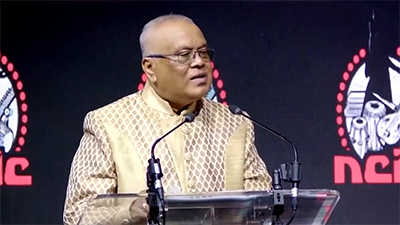
People are saying that the theme chosen by the National Council of Indian Culture (NCIC) for this year’s Divali Nagar in Chaguanas Viveka: Discerning Truth in the Age of AI has turned out to be far more ironic than the organisers intended. Discerning the truth about the Nagar’s own administration has required no artificial intelligence whatsoever, only a string of resignations and a public boardroom mutiny calling for the removal of president Surujdeo Mangaroo amid a row over sponsorship cuts and disputed claims about Government funding.
People are saying that watching one of the country’s premier religious and cultural organisations tear itself apart on the eve of a festival dedicated to light overcoming darkness is a spectacle nobody asked to see.
People are saying that with Public Utilities Minister Barry Padarath’s year-old allegation—that the council’s compound was once used to politically undermine the Prime Minister—resurfacing in the middle of the quarrel, the lesson is hiding in plain sight. When cultural institutions rely on the state treasury and state enterprises to pay the bills for million-dollar festivals, citizens have to wonder whether culture can ever truly stay out of the line of political fire.
Twenty-seven years to hear “not guilty”

People are saying that 27 years is long enough for a child to be born in San Fernando General Hospital, go through kindergarten, primary school, secondary school, and university, and start paying taxes. In Trinidad and Tobago, it is also the length of time San Fernando security officer Cecil Felming had to wait for the courts to decide whether he was guilty of a charge of robbery with violence.
People are saying that now that Mr Felming has finally been acquitted after nearly three decades and is suing the State for malicious prosecution, all the dry speeches about judicial backlogs and caseload management sound very hollow.
People are saying that an indictment hanging over a working man’s head for 27 years is not a delay in the administration of justice; it is a life sentence served in slow motion. Even if the State eventually writes him a cheque at the end of a civil lawsuit, ordinary families are asking which judge or government ministry can give a man back his youth, his good name, and the three decades of quiet anxiety he spent waiting for his name to be called in a courtroom corridor.
