





Are we witnessing a change in the economic and social lifestyle of Trinidad and Tobago, or are we simply refusing to acknowledge how difficult things have become for ordinary citizens?
As we approach the end of 2026, there appears to be little evidence of new job attractions making a meaningful impact on employment opportunities. A banker recently shared an interesting observation with me: approximately a decade ago, the average age of mortgage applicants was around 26; today, it is approaching 40. Young people are getting married, starting families and having their children while still living with their parents because purchasing a home has become increasingly difficult.
Meanwhile, many middle-class homes stand empty as their owners migrate, restaurants are struggling to survive and looking towards the upcoming Carnival season for some much-needed business. Fast-food outlets are also experiencing reduced sales.
But perhaps the most revealing indicator is what is happening at the grocery level.
Consumers are becoming increasingly conscious of what they spend. Some vendors are now offering half tins of corned beef, loosely packaged for sale, while shoppers are purchasing only what they need for the day’s meals rather than filling grocery trolleys with supplies for the week or month.
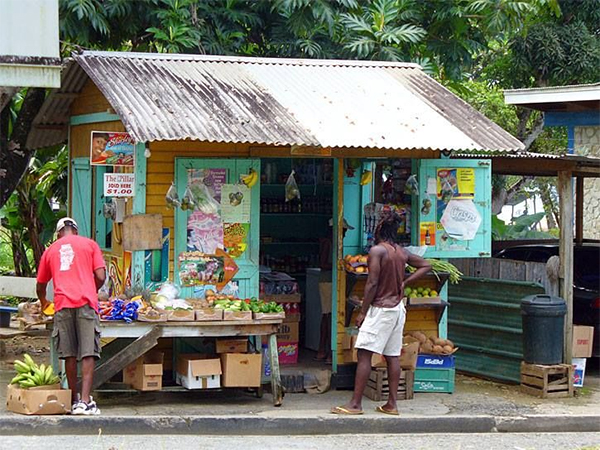
We are beginning to see what could be described as a return to the old days, when households depended on corner shops and green groceries for their daily food requirements, long before supermarkets, refrigerators and freezers encouraged bulk shopping.
Even the effects of shrinkflation are becoming more noticeable, as consumers receive less for their money while prices remain high.
Could the corner shop concept be making a comeback, not through nostalgia, but out of economic necessity?
These are not isolated observations. They are indicators of changing consumer behaviour, reduced disposable income and a population becoming increasingly cautious about spending.
Government cannot measure economic progress solely by announcements, projections and investment proposals. It must also examine what is happening on the ground.
How many sustainable jobs are being created? How many young people can afford their first homes? How many businesses are experiencing declining sales? And how much purchasing power remains in the pockets of ordinary citizens?
People are not simply cutting back on luxuries anymore; some are cutting back on the way they purchase basic necessities.
This is the reality of the cost-of-living crisis confronting Trinidad and Tobago.
When citizens are forced to return to the corner shop because they can no longer afford to shop in bulk, we should recognise that something is seriously wrong.
Gordon Laughlin,
Westmoorings
