






By FRANCIS JOSEPH
Three British Lawyers have been admitted to practice before the local courts in the mush-anticipated showdown over the Maloney lock down under the Special Operations Act 2026.
The barristers were admitted for two specific cases under Legal Notices 857, 858 and 859 of 2026, dated November 20, and signed by Attorney General John Jeremie SC.
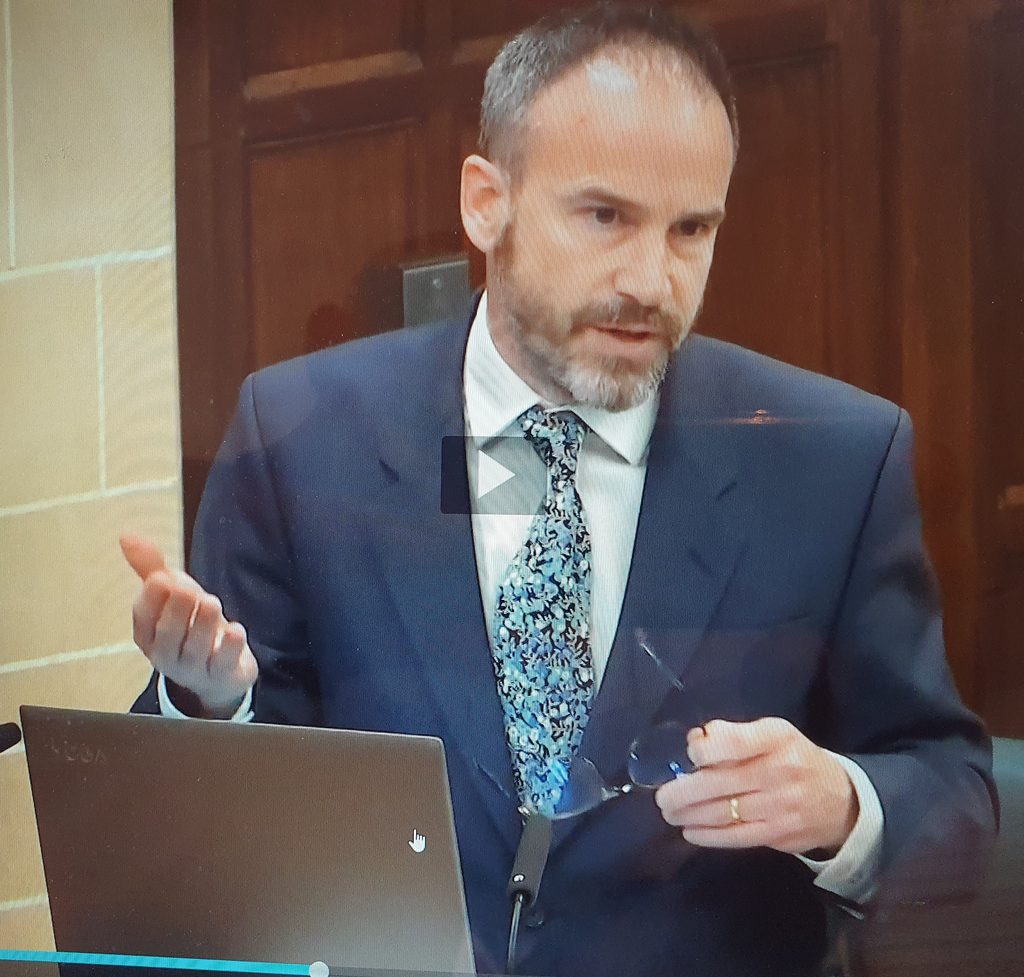
They are Robert Stephen Strang, Thomas David Henry Mountfordand, and Sir James Raymond Eadie KC.
Mountfordand and Strang are both authorized for the case brought by Opposition Leader Pennelope Beckles-Robinson against the Cabinet and the Attorney General.
That case challenges the Special Operations Act, 2026, the Special Operations (Closed Area) Order, 2026, the Special Operations (Curfew) Order, 2026, and matters relating to the Maloney Buildings Housing Development, Policing District 2.
Mountford will appear for the State in the case brought by activist Wendell Eversley v the Attorney General.
THE CASES
- On November 16, 2026, social activist Wendell Eversley. represented by a legal team led by former Prime Minister and MP Stuart Young, SC, filed a constitutional lawsuit against the Office of the Attorney General. The claim seeks to have the Special Operations Act 2026 declared unconstitutional, null, and void on the grounds that it infringes upon the rights of ordinary citizens.
- On November 17, 2026, a pre-action protocol letter was sent to the State on behalf of Opposition Leader Pennelope Beckles challenging the closed-area restrictions.
- On November 20, 2026, attorney Farai Hove-Masaisai, of Hove & Associates issued a 22-page pre-action letter on behalf of four residents and business operators—Tricia Kinsale, Neal Lewis, Natisha Quamina, and Nekesha Carter—threatening court action over the 9 p.m. to 5 a.m. curfew, movement restrictions, alleged warrantless home searches, and financial losses.
- The lock down went into effect on November 10 after President Christine Carla Kangaloo, assessed the situation and declared it a Special Operations Order the Maloney Buildings Housing Development.
- Under the Special Operations Law, Section 11 (2), within seven days of making an Order, the President shall deliver to the Speaker for presentation to the House a statement listing the specific grounds on which the decision to make the Order was based.
- The President confirmed she had made the Order declaring the Maloney Buildings Housing Development, situated within Policing District 2, to be a closed area, effective November 10.
Kangaloo said she did so being satisfied, on reasonable grounds, that public safety and peace in the Development were threatened by the following:
• escalating rates of violent crime, homicide, shootings, kidnappings or gang-related activity in that area
• the prevalence of illegal firearms or ammunition, or the unlawful presence of other weapons or explosives, in that area
• the control or intimidation, or the attempted control or intimidation of a local community by a gang in that area
• the inability of ordinary law enforcement measures to maintain or restore public safety and peace in that area
Citing the specific grounds on which her decision was based, Kangaloo said on November 10, she was informed by Cabinet that on November 9, the Office of the Special Branch of the Trinidad and Tobago Police Service had issued a threat assessment for the Housing Development.

The President added, “The threat assessment reported that on November 9, 2026, a shooting incident and a stabbing incident occurred within the Maloney Buildings Housing Development, which left three persons hospitalised. Intelligence subsequently received indicated a high likelihood that associates of the affected parties will engage in retaliatory violence.”
Kangaloo added, “The community remained tense, volatile and highly susceptible to rapid escalation. Intelligence reports indicated that rival criminal associates are actively seeking opportunities to retaliate and that firearms remain readily available to criminal actors operating within the area.
“Compounding the threat environment is the circulation of a viral social media video depicting the shooting incident. The video demonstrates open gun violence within the community and captures scenes of panic, disorder and residents fleeing for safety. The widespread circulation of the footage has heightened public fear, increased community anxiety and is assessed as a significant escalation factor capable of influencing retaliatory behaviour.”
Cabinet advised that the threat assessment indicated the Maloney Housing Development possesses several characteristics that increase community vulnerability, namely –

(a) high population density
(b) multiple residential apartment blocks in close proximity
(c) large daily movement of residents, visitors and service providers
(d) presence of children, elderly persons and other vulnerable groups
(e) multiple access points facilitating movement by offenders and
(f) limited ability of residents to avoid exposure during sudden firearm attacks.
The threat assessment further stated that should the anticipated retaliatory violence occur, the following consequences were considered highly likely:
(a) multiple fatalities;
(b) serious bodily injuries to innocent residents;
(c) indiscriminate discharge of firearms in public spaces;
(d) escalation into prolonged cycles of gang-related violence;
(e) significant public disorder and fear;
(f) disruption of public services and community activities;
(g) erosion of public confidence and community security.
The assessment concluded that the statutory threshold under the Special Operations Law was satisfied and there were reasonable grounds for recommending that the Maloney Housing Development be declared a closed area for security operations aimed at preventing loss of life, disrupting anticipated retaliatory attacks and restoring public safety and peace.
