






By Dr Jack Warner
There is an old saying that a correct diagnosis is half the cure. Unfortunately, San Fernando Mayor Robert Parris appears to have diagnosed the wrong illness and is now prescribing medication entirely unsuited to the condition.
His recent pronouncements about the growing number of homeless persons congregating around Harris Promenade, and particularly his appeal to charitable organisations and private citizens to stop feeding them, are as troubling as they are misguided.
According to media reports, Mayor Parris has expressed alarm that the homeless population in San Fernando is “ballooning”. He has suggested that the provision of food by charitable organisations and concerned citizens has contributed to what he describes as a “migrant vagrant population” in the city. Mayor Parris, with respect, feeding a hungry person does not create homelessness. Nor does withholding food, cure it.
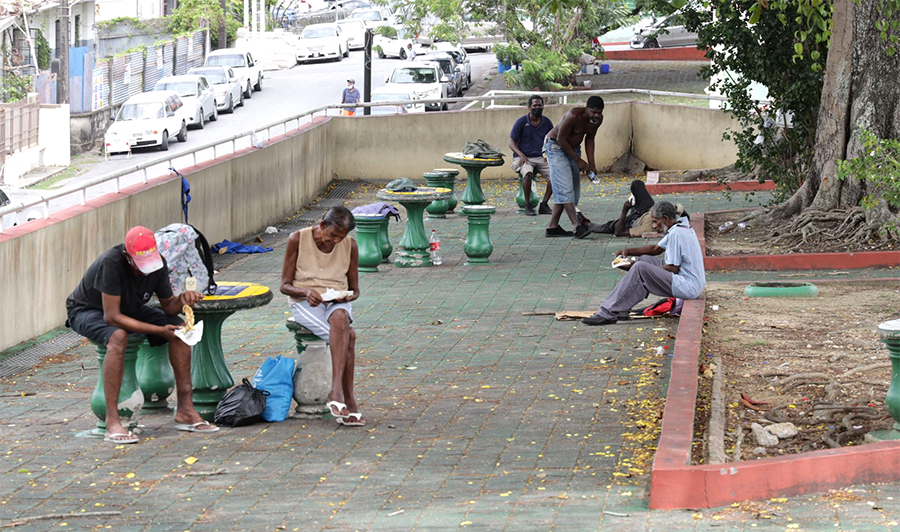
Homelessness is not a dietary condition. It is a complex social and economic problem, often rooted in poverty, unemployment, family breakdown, mental illness, substance dependency, inadequate housing and the absence of effective social support systems. To suggest that charitable organisations should stop feeding homeless persons is to confuse an act of compassion with the underlying causes of human vulnerability. It is rather like blaming the ambulance for the accident.
A Year of Concern, But What Has Changed?
But there is another question that Mayor Parris must answer, and it goes directly to the issue of leadership, continuity and accountability.
It appears that November has become something of an annual occasion for the Mayor to express his concerns about homelessness in San Fernando.
In November 2025, Mayor Parris publicly lamented the growing homeless population on Harris Promenade, estimated at approximately 200 persons, and appealed to charitable organisations to stop feeding them. Fast-forward to November 2026, and we are hearing essentially the same concerns and, remarkably, the same proposed remedy.
Mayor Parris, surely the question is no longer whether you recognise the problem. You clearly did so at least a year ago. The more pertinent question is what has been accomplished in the intervening twelve months.
What concrete interventions followed your public statements in November 2025? What engagement took place with the relevant ministries, social development agencies and charitable organisations? What measurable progress was achieved in addressing the circumstances of those living on the streets?
If the homeless population has continued to grow, as the Mayor now contends, the public is entitled to ask whether the interventions undertaken over the preceding year were sufficient, and what additional measures are now contemplated.
Your office overlooks the bandstand at Harris Promenade, providing a commanding vantage point from which to observe activity in one of the city’s most prominent public spaces. The growing presence of homeless persons could hardly have escaped the attention of the municipal authorities.

of being allowed inside the centre
The public is therefore entitled to ask why, twelve months later, the discussion appears to have returned to where it began: another public appeal, another expression of alarm and another suggestion that charitable feeding is contributing to the problem.
Surely, the measure of effective leadership is not how frequently a problem is highlighted, but what sustained action follows its identification.
Compassion Is Not the Enemy
Perhaps the most disappointing aspect of the Mayor’s remarks is his apparent criticism of those who have chosen to respond to human suffering with kindness. Across Trinidad and Tobago, religious organisations, community groups, charitable institutions and ordinary citizens routinely provide food, clothing and other assistance to persons experiencing hardship. Many do so quietly, without publicity, recognition or reward. Their actions reflect a fundamental principle of a caring society: human dignity does not disappear when someone loses a home, a job or the support of a family.
Certainly, food distribution alone cannot resolve homelessness. Indeed, there is a legitimate discussion to be had about how charitable interventions can be better coordinated with rehabilitation, housing assistance, mental health services and other forms of social support. But that discussion should begin with partnership, not public chastisement.
Mayor Parris should be inviting charitable organisations to the table, not suggesting that they withdraw the most basic assistance from people who may have nowhere else to turn. What precisely is the intended outcome of withholding food? Will hunger persuade homeless persons to secure accommodation they cannot afford? Will it restore fractured family relationships? Will it provide treatment for mental illness or substance dependency? Will it create employment opportunities? Or will it simply deepen the indignity and desperation of an already vulnerable population?
A hungry person does not become less homeless. That person simply becomes hungry and homeless.
Public Safety Cannot Be Ignored

The concerns of San Fernando’s residents, businesses and visitors must also be acknowledged. Harris Promenade is an important civic space, and the public is entitled to expect reasonable standards of cleanliness, safety and accessibility.
Reports that the Mayor’s comments on homelessness in the City of San Fernando followed a fatal incident in Marabella allegedly involving a homeless individual provide important context for the public’s anxiety. Any loss of life is tragic, and incidents of violence demand an appropriate response from law enforcement.
But even where an incident raises legitimate public safety concerns, it cannot justify treating homelessness itself as a criminal condition. Homeless persons are not a homogeneous population. Some may require psychiatric care, others assistance with substance dependency, while others may simply have fallen on difficult economic circumstances.
To conflate homelessness with criminality risks further marginalising individuals who are already among society’s most vulnerable. Public safety and compassion are not mutually exclusive. Effective governance requires both.
Instead of Public Alarm: Where Is the Coordinated Response?
Mayor Parris has reportedly called on the relevant authorities to sit down with him and compare notes on the situation in San Fernando. That is a sensible proposal. Indeed, it is precisely the type of coordinated engagement that should characterise the response to homelessness.
But it raises an obvious question. Given that the Mayor was publicly expressing similar concerns in November 2025, what consultations have taken place in the intervening year, and what concrete outcomes have emerged? Surely, the objective should be to move beyond recurring public expressions of alarm towards a sustained and coordinated programme of intervention.
A proper assessment would distinguish among persons experiencing chronic homelessness, those temporarily displaced by economic circumstances, individuals requiring medical or psychiatric intervention, and others needing family reunification or rehabilitation. These distinctions matter because effective public policy cannot be built on sweeping assumptions.
The Mayor’s description of a “migrant vagrant population” also demands clarification. What evidence establishes the extent of migration among those gathered in the city? And what exactly does he mean by the term? Language matters, particularly when it is used by public officials to describe vulnerable people.
Leadership Requires More Than Alarm
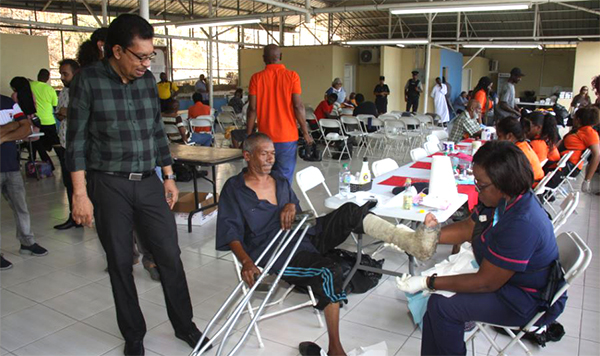
as former Mayor of San Fernando Kazim Hosein looks on
The political dimension of this controversy cannot be ignored. Mayor Parris is a representative of the People’s National Movement, a party that held national office for the preceding decade. It is therefore reasonable to ask what was achieved during that period to strengthen the systems intended to prevent and address homelessness.
The current administration should not be expected to resolve overnight problems that have accumulated over many years. Indeed, the persistence of homelessness across successive administrations underscores the need for sustained institutional responses rather than episodic political exchanges.
Equally, the fact that responsibility for social protection rests substantially with central government does not absolve municipal leadership of its duty to identify problems, coordinate responses and advocate for appropriate interventions. Local government is often the first institutional point of contact with the visible consequences of social distress.
A mayor’s responsibility is not merely to maintain the appearance of an orderly city. It is also to help ensure that the people who inhabit that city, including its most vulnerable residents, are treated with dignity.
The challenge is to reconcile the legitimate interests of the wider community with the fundamental rights and needs of those living on the margins. That requires leadership, coordination, resources and sustained intervention. It cannot be accomplished by discouraging the distribution of a hot meal.
Mayor Parris, Start with the Right Prescription
There is an opportunity here for Mayor Parris to demonstrate the leadership that this situation demands. He should convene the relevant agencies, undertake a credible assessment of homelessness in San Fernando, engage the charitable organisations already working on the ground, and establish a practical framework for immediate assistance and longer-term rehabilitation.
The reported census provides a potential starting point. Rather than simply counting homeless persons, the authorities must understand their circumstances, identify the services they require and establish measurable pathways towards rehabilitation and reintegration. The public should be told what is proposed, who is responsible and how progress will be measured.
Indeed, the situation in San Fernando should provide an opportunity for the Government and local authorities to develop a more coordinated national response to homelessness, one that combines immediate humanitarian assistance with sustainable interventions in housing, healthcare, employment and social protection.
Above all, the Mayor should recognise that compassion and effective public policy are not competing objectives. They are complementary obligations of a decent society.
No one is suggesting that feeding homeless persons on Harris Promenade constitutes a sustainable solution. But neither is denying them food.
Mayor Parris, the people offering a meal are not the cause of the illness. They are responding, however imperfectly, to its symptoms. Your responsibility is to help identify and address the underlying causes. The wrong diagnosis inevitably produces the wrong prescription. And when the patient is already vulnerable, the consequences can be devastating. San Fernando deserves better. So do the people sleeping on its streets.
