





By Dr Jack Austin Warner
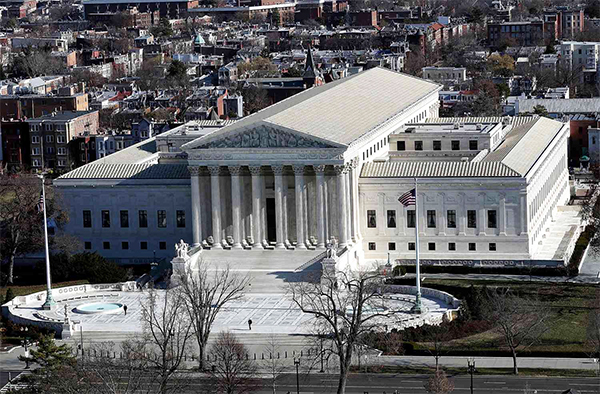
The United States Supreme Court’s decision to strike down former President Donald Trump’s tariffs may be celebrated in some quarters as a victory for constitutional clarity, but it also raises serious concerns about judicial overreach, economic realism, and the practical limits of congressional governance in a polarised age.
While the Court grounded its ruling in the principle that Congress holds the power to levy taxes and duties, the broader implications of the judgment risk constraining the Executive Branch in ways that could weaken America’s ability to respond swiftly to economic threats.
At the heart of the decision was the interpretation of the International Emergency Economic Powers Act (IEEPA), a 1977 statute that authorises the president to regulate international economic transactions during a declared national emergency.
The majority concluded that because IEEPA does not explicitly mention tariffs, it cannot be read to authorise them.
Yet this narrow textualism overlooks decades of executive practice in which presidents of both parties have exercised broad discretion over trade policy under statutory delegations. Trade is not a static domain; it is a dynamic field in which timing often determines leverage.
By demanding explicit congressional language for every significant economic action, the Court risks paralysing the presidency in moments when rapid response is essential.
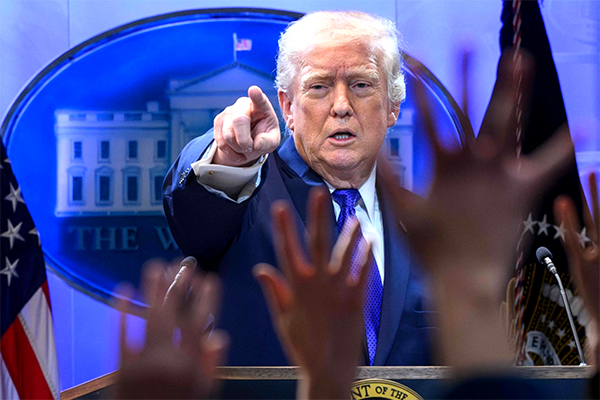
US President Donald Trump
Congress, in theory, holds the power of the purse. In practice, however, it is frequently gridlocked. Trade disputes, supply chain crises, and economic retaliation by foreign powers do not unfold on a legislative calendar.
If a foreign government imposes punitive measures or engages in unfair trade practices, waiting months or even years for congressional consensus may render any response meaningless.
The tariffs at issue were framed as tools to counter trade imbalances and address national security concerns, including the flow of illicit substances across borders. Whether one agrees with the policy rationale or not, the Executive Branch is structurally better positioned to act decisively in such matters.
There is also a strategic dimension
Moreover, the Court’s reliance on what has become known as the “major questions doctrine” reflects a broader judicial trend toward curbing administrative and executive authority.
Critics argue that this doctrine, while presented as a safeguard against unchecked power, effectively transfers policymaking influence from elected branches to unelected judges.
If courts increasingly demand hyper-specific statutory authorisation for major actions, they may be inserting themselves into policy disputes that are inherently political and economic rather than purely legal.
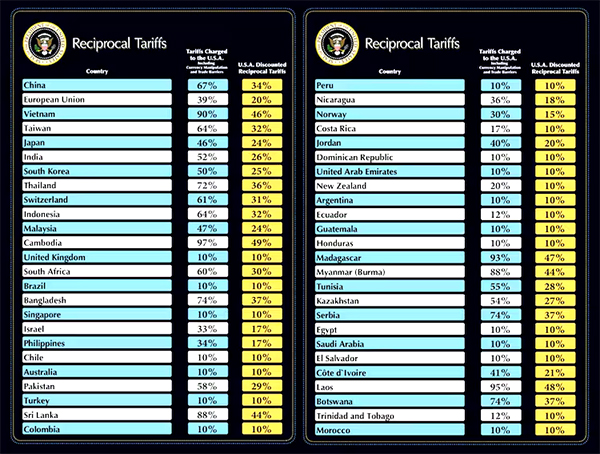
The economic consequences of the ruling also merit scrutiny. Billions of dollars in tariff revenue collected under the invalidated measures could now be subject to refund claims. Businesses structured contracts, pricing, and supply chains around the existing tariff framework.
A sudden judicial reversal introduces uncertainty not only for the federal government but also for the private sector. Stability in trade policy, whether high tariffs or low, is often more valuable than abrupt legal reversals that leave importers, exporters, and investors unsure of the rules.
There is also a strategic dimension. Trade policy has long been a core instrument of American geopolitical influence. From sanctions to tariffs, economic tools allow the United States to project power without resorting to military force.
Restricting the president’s flexibility in deploying those tools could signal weakness or indecision to adversaries who move quickly and often without comparable legal constraints.
Finally, the ruling may inadvertently incentivise Congress to remain passive. If lawmakers know the courts will invalidate aggressive executive trade actions, they may feel less urgency to legislate proactively, leaving a vacuum in which neither branch can act effectively.
Constitutional fidelity is essential, but so too is functional governance. In seeking to clarify the limits of presidential authority, the Supreme Court may have drawn lines so tightly that it hampers the nation’s capacity to navigate the volatile realities of modern global trade.
