





By Joey Bartlett
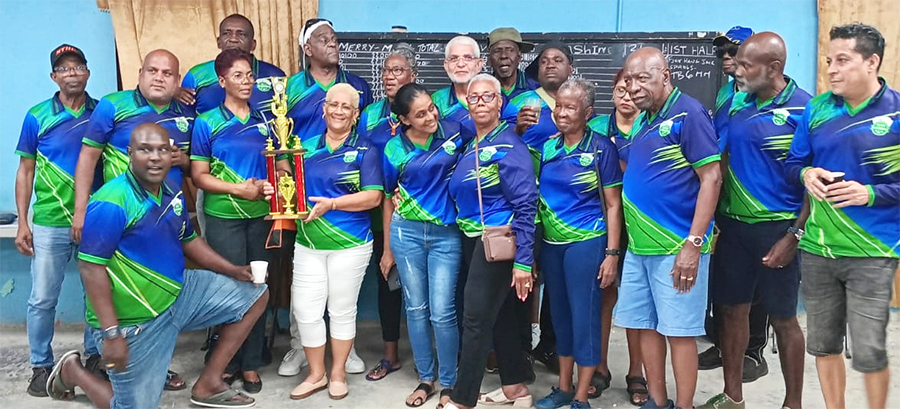
Former government minister Dr Jack Warner is defending plans for a national All Fours championship following public confusion over a proposed partnership with the Ministry of Trade and Industry.
The Ministry announced on its Facebook page on March 12 a possible partnership with Warner to host the tournament, prompting questions from members of the public in the comment section about the collaboration.
Warner says the initiative is aimed at formally organising and promoting the traditional card game, not merely as recreation but as a vehicle for economic growth, youth development, cultural preservation and tourism.
He believes the game should be recognised in much the same way the country eventually embraced other cultural expressions such as Carnival, Soca and the Steelpan.
“For any country to achieve meaningful economic and business development, several key foundations must exist: a trained and capable workforce, civil stability and the structures necessary to take advantage of both internal and external opportunities,” Warner said.
He noted while the country is rich in young talent and creativity, many young people face pressures that can lead them down negative paths if positive outlets are not created.
“When we look at areas such as Mas, Soca/Kaiso and the steelpan, we can see how far we have come in recognising and benefiting from these indigenous expressions of our culture.”
Despite the progress, he said there is still work to be done in recognising the economic potential of local traditions.
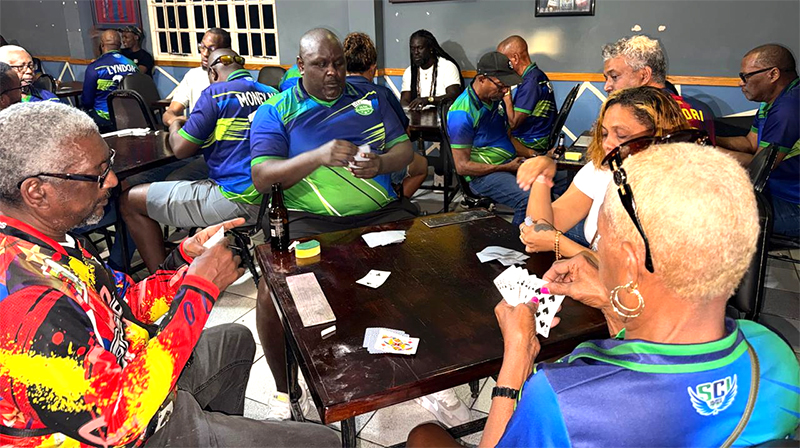
Warner said All Fours is widely regarded as the country’s national card game and remains deeply embedded in the nation’s social life. However, he believes it has been largely overlooked as a platform for structured development.
“Much like the steelpan, whose rightful recognition and global respect took far too long to achieve, we believe the time has come to acknowledge and harness the game’s cultural impact as part of the broader tapestry of our national development.”
According to Warner, organising the game through a national championship could unlock a range of economic opportunities while strengthening community engagement and cultural pride.
With competitive All Fours matches in communities already generating economic activity, he says a properly structured national tournament could expand opportunities for food and beverage vendors, event planners, photographers, livestream broadcasters, merchandise suppliers and media producers.

“Large tournaments also require venue rentals, hospitality services, promotional marketing and logistics coordination. When these elements are organised in a national framework, the economic ripple effect can extend to many small and medium-sized businesses.”
Warner added the event could also stimulate sectors such as hospitality, entertainment and tourism. He said people around the world increasingly travel for experiences, citing major sporting events, festivals and competitive gaming tournaments as examples.
With the game already enjoying a strong following both locally and across the Caribbean, he argues with the right structure, branding and promotion, a national championship could evolve into a destination event for Trinidad and Tobago.
Warner insists the concept could also be linked to emerging tourism areas such as ecotourism to create broader economic linkages.
While discussions around the initiative have focused primarily on the Ministry of Trade and Industry because of its economic potential, Warner said the concept naturally overlaps with other areas, including youth development, sport, culture and community engagement.
“This type of initiative works best when multiple sectors are able to contribute to its development,” he said, adding collaboration with other agencies such as the Ministry of Sport and Youth Affairs and the Ministry of Culture and Community Development could emerge as the project evolves.
Beyond the economic benefits, Warner said the initiative also carries strong youth and community development potential. He described the game as having historically played an important role in Caribbean family and community life, often being passed down through generations.
“The game also teaches strategy, critical thinking, communication and teamwork. These are valuable skills that help young people develop discipline and analytical thinking.”
He stressed creating a more structured environment around the game could reconnect younger generations with a positive cultural tradition while providing constructive social engagement.
Plans are also being explored for the development of community leagues and youth competitions that could eventually feed into a national championship structure.
“If properly organised and consistently supported, a national All Fours championship could eventually become a signature annual event.”
Warner concluded the long-term vision could include developing a regional circuit, bringing players from across the Caribbean to compete and positioning Trinidad and Tobago as a hub for competitive All Fours in the region.
