





By Hugo Maynard
I spread the Saturday papers out this morning the way people in this country still sometimes do, as if news is a thing you can hold, fold, curse at, and set aside. One front page was in full alarm mode: cops hunting 17 more suspects under the State of Emergency, among them two women, three Venezuelan nationals, and even a 16-year-old boy. Another screamed of terrified residents in Enterprise saying a superstore blast felt “like a bomb hit us.” Beside that sat a warning that attacks on Penal wells were threatening the water supply. By the time I reached for my coffee, the papers had already made their point. Trinidad and Tobago is no longer merely anxious. It is becoming conditioned to crisis.
It is easy to treat these as separate stories crime over here, fire over there, vandalism in the next district, and a bit of politics sprinkled on top for seasoning. But nothing about our decline arrives in tidy little compartments. What we are looking at is not a collection of unfortunate incidents. It is a society living in a state of permanent flinch.
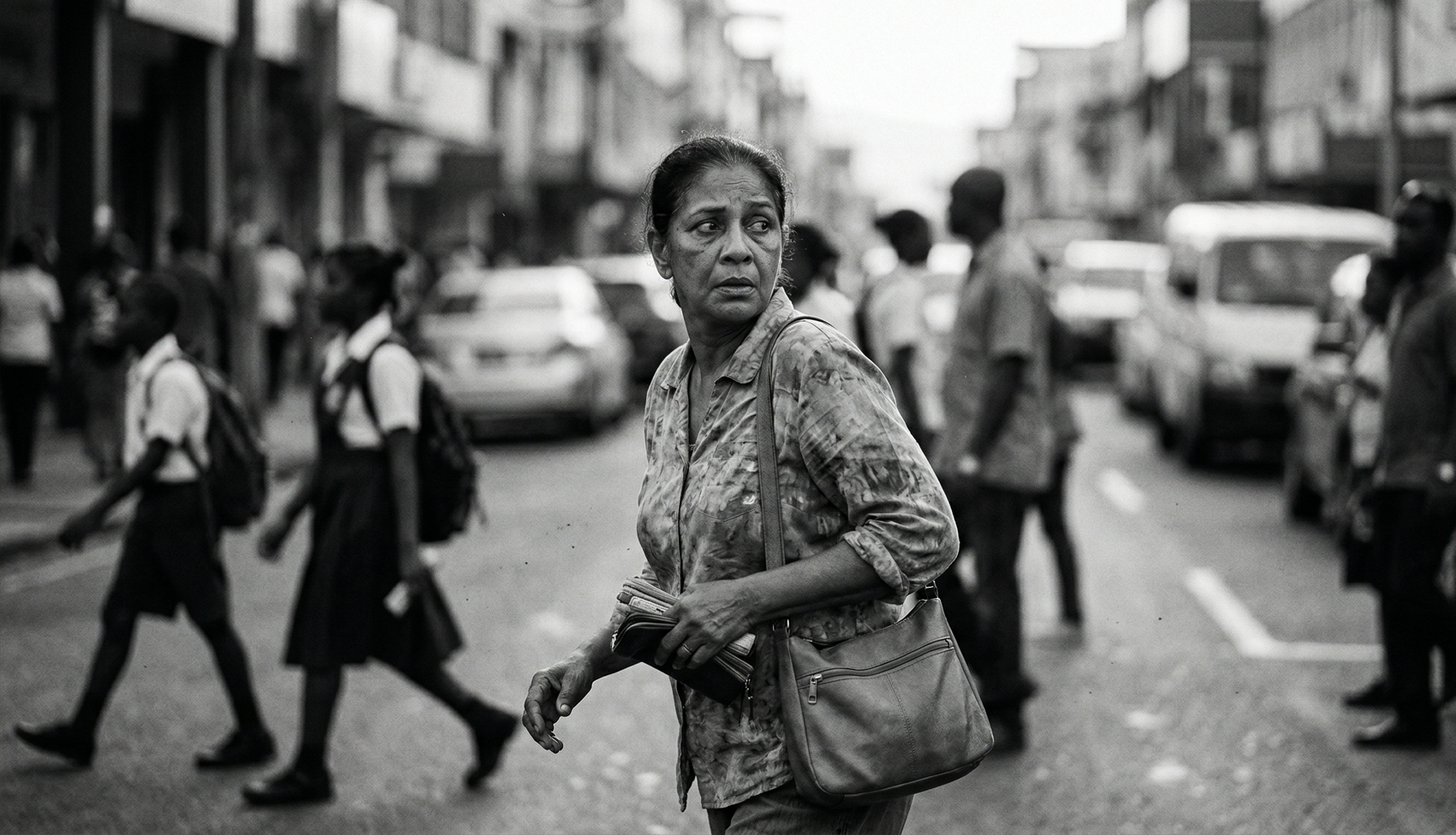
That flinch matters. You see it in how people listen for a loud noise before deciding whether to keep walking. You see it in how parents track children, not with ordinary concern, but with a species of dread. You see it in how every outage, every detour, every strange bike slowing by the gate feels like it could be the beginning of a problem. A nation should not live like a startled animal, yet here we are, jumping at headlines because the headlines so often become the street.
The reports are especially jarring not just because of the sheer numbers named in a single sweep, but because of what they say about where we are mentally as a country. Emergency powers were supposed to be exceptional, yet they are beginning to feel administrative, almost routine. Critics are rightfully warning against using a “state of exception” as an ongoing crime-fighting tool, especially as the dragnet pulls in a 16-year-old boy. This forces a raging debate over rights, due process, and what exactly happens when emergency governance reaches further and further down the age ladder.
That is the part we ought to sit with. Once a society becomes accustomed to extraordinary measures, it starts adjusting its conscience to fit them. We begin by agreeing that strong action is needed, but then the circle widens, the standards loosen, and the questions get fewer. Before long, the argument is no longer whether the system is just, proportionate, and accountable. It is whether the rest of us feel temporarily relieved. Relief, however, is a poor constitutional principle.
The situation wears people down
Meanwhile, residents in Enterprise are not debating legal theory; they are counting broken windows, damaged roofs, and the cost of simply living too close to catastrophe. Elsewhere, water infrastructure is allegedly being vandalized, leaving yet another basic necessity vulnerable to human malice and institutional strain. Let us be plain: this is not only a crime story. It is an order story. It is about a country in which the ordinary protections of daily life your home, your street, your child, your water, your peace of mind all feel a little too negotiable.
That is what wears people down. It is not just the murder counts or police operations, but the wider sense that the systems meant to keep life predictable are fraying. When citizens cannot trust the road, the utility, the neighborhood, the process, or the response time, they do what citizens always do in weakened states: they retreat into private survival. They wall off. They look out for self. They call a partner, a cousin, a minister, a friend. They stop expecting fairness and start pursuing advantage.
Then, as if on cue, the papers report that consultations are ongoing on a national policy for gated communities. Of course they are. That is exactly where a frightened society goes next—not toward rebuilding public trust, but toward fortifying private space. Not toward fixing the commons, but escaping it. A country that loses faith in shared safety starts turning every street into a negotiation and every gate into a political philosophy.
The tragedy is that this is not the only story unfolding on these pages. Buried in the news cycle is a far better one: Justice Frank Seepersad telling Morvant and Laventille students not to let their futures be defined by the worst stereotypes of their communities, reminding them that greatness often begins in places the world misunderstands. There, in one speech, is the country we claim we want a society of possibility, dignity, and upward motion.
But possibility cannot survive on speeches alone. A republic cannot constantly run on fear and then pretend surprise when fear starts shaping the national character. People take their cues from the atmosphere around them. If emergency becomes normal, normal itself becomes distorted. If insecurity becomes ambient, citizenship becomes defensive. If institutions look reactive, citizens become cynical. As above, so below.
The real question, then, is not whether Trinidad and Tobago can survive another week of bad headlines. We can. We always do. The real question is whether we intend to remain a country that simply absorbs shock after shock and calls that resilience, or whether we will finally demand a public life sturdy enough that terror, vandalism, emergency, and dread stop feeling like the national routine.
