





By Peter Green
Every generation produces its strongmen.
They emerge during moments of crisis when fear is high, crime is rising, and citizens are desperate for solutions. They speak boldly, promise action, and project confidence and authority to a frightened population; they appear to be the answer.
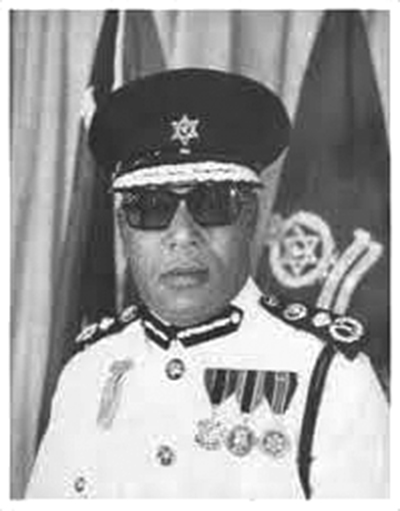
Few figures embodied that phenomenon more than former Commissioner of Police Randolph Burroughs.
At the height of his influence, Burroughs was regarded by many as the embodiment of aggressive law enforcement. He projected an image of toughness and determination at a time when citizens were demanding decisive action against criminals. To supporters, he represented strength. To critics, he represented a dangerous concentration of power. Regardless of where one stood, there was little doubt that he dominated the national conversation on crime. Yet history can be a cruel teacher.

The same man who once commanded one of the most powerful institutions in Trinidad and Tobago ultimately left public life under a cloud of controversy and, by many accounts, spent his final years in circumstances far removed from the authority and influence he once enjoyed.
His story should not be viewed as a personal tragedy alone; it should be viewed as a national lesson, a cautionary tale.
The first lesson leaders should learn is that power is temporary. One of the greatest mistakes made by political leaders, police commissioners, ministers, and public officials is confusing the authority of their office with personal importance. The power belongs to the institution, not the individual.
A Commissioner of Police commands thousands of officers today, but tomorrow he becomes a private citizen. A Prime Minister may dominate headlines today, but tomorrow another occupies the office. History has a remarkable way of reminding powerful people that the office survives long after they are gone.

The second lesson is that institutions matter more than personalities. Trinidad and Tobago has often fallen into the trap of searching for heroic individuals to solve complex problems. We look for a tough commissioner, a strong minister, a decisive prime minister, and a charismatic leader, but crime is not defeated by personality; crime is defeated by functioning institutions.
It is defeated by competent investigations, successful prosecutions, effective intelligence gathering, witness protection, border security, community cooperation, and a justice system capable of converting arrests into convictions.
When countries become dependent on individuals, progress becomes temporary. When those individuals leave, the problems often return. This lesson is especially relevant today as Trinidad and Tobago debates States of Emergency, expanded police powers, and increasingly aggressive approaches to crime fighting.

Extraordinary powers may produce extraordinary headlines. They may create the impression that decisive action is being taken, but they do not automatically create lasting security. Lasting security comes from building institutions capable of functioning effectively without emergency powers and without reliance on larger-than-life personalities.
The third lesson is perhaps the most important. Public admiration is fleeting. Today’s hero can become tomorrow’s cautionary tale. The public often rewards strong action during periods of fear, but history tends to ask different questions. Were the institutions strengthened? Were constitutional principles respected? Were sustainable solutions created? Did the country become safer in a way that outlived the leader?
These are the questions that determine legacy. That is why the story of Randolph Burroughs remains relevant decades later. Not because of the controversies surrounding his career, but because his rise and fall remind us of a truth that every generation must learn. No individual is bigger than the institution they serve.

The real measure of leadership is not how much power one accumulates while in office. It is whether the institutions left behind are stronger than those inherited. For today’s political leaders, police commissioners and national security officials, that may be the most important lesson of all.
Power is temporary, institutions endure, and history is often far less interested in the strength leaders displayed while they held power than in the condition of the nation they left behind when that power was gone.
A word to the wise is sufficient.
