





By FRANCIS JOSEPH
A New York architect who killed a Trinidadian woman 33 years ago, along with seven others, was sentenced to three life sentences on Wednesday in New York.
Rex Heuermann, 62, admitted to murdering a Trinidad-born woman from Sangre Grande and seven other women whose deaths became known as the Gilgo Beach serial killings. This brought to a close one of New York’s most notorious cold cases.
Heuermann was sentenced to three consecutive life sentences without the possibility of parole for the murders of Melissa Barthelemy, Megan Waterman and Amber Costello, and four consecutive prison terms of 25 years to life for the murders of Maureen Brainard-Barnes, Jessica Taylor, Sandra Rajkumar-Costilla and Valerie Mack.
As part of a plea agreement in April, Heuermann pleaded guilty to murdering seven women and also admitted to killing an eighth victim, Karen Vergata.
The guilty plea marked a dramatic reversal from his position following his 2023 arrest, when his attorney said Heuermann tearfully denied any involvement in the killings.

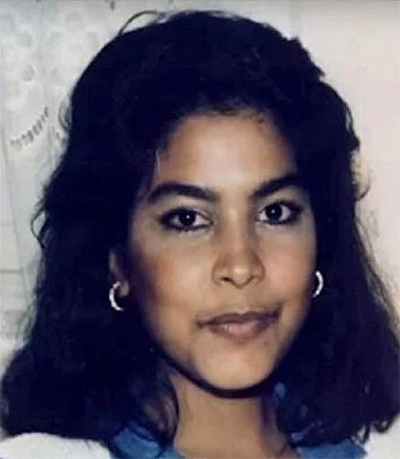
Among his victims was Sandra Costilla, formerly Sandra Rajkumar, a Trinidad-born woman from Sangre Grande who was 28 years old when she was tortured and murdered in 1993. Investigators believe she was Heuermann’s earliest known victim.
Costilla migrated to the United States at age 17 and was living in Queens at the time of her death.
Her body was discovered by two hunters in the North Sea area of Long Island on November 20, 1993.
According to court documents, Costilla’s body bore numerous sharp-force injuries to her face, torso, breasts, thigh and vaginal area. During his guilty plea, Heuermann admitted that he strangled Costilla to death, the same method he used to kill his other victims.
During the original 1993 investigation, forensic scientists recovered three hairs from Costilla’s body and clothing. Although the evidence was preserved, technology at the time could not identify a suspect.
More than 30 years later, the Gilgo Beach Homicide Task Force submitted the hairs for advanced DNA testing. In February 2024, laboratory analysis matched one of the male hairs recovered from Costilla’s clothing to Heuermann.
Investigators also identified one of two female hairs as belonging to a woman who had lived with Heuermann shortly before Costilla’s murder.
Prosecutors said the DNA evidence conclusively established that Heuermann had murdered and transported Costilla’s body.
Unlike many of Heuermann’s later victims, Costilla was not dismembered, and investigators found no evidence that she worked as a sex worker.
Because she was killed in 1993, before cell phones and social media became commonplace, investigators have never determined how Heuermann first came into contact with her.
