





By Dr Jack Austin Warner
FIFA needs the support of at least 106 of its 211 member associations by September 19. Ninety-six have already said no. Which makes Trinidad and Tobago’s vote worth exactly what Germany’s is worth.
Confetti was still falling in East Rutherford when the trophy changed hands. Donald Trump and Gianni Infantino held it together on the podium before passing it to Rodri, Spain’s captain, who lifted it above a beaten Argentina. FIFA had just concluded the largest World Cup ever staged and one that generated unprecedented revenues, with FIFA projecting more than US$15 billion in revenue for the 2023–2026 cycle.
Nine days later, FIFA put a piece of its commercial future on the market.
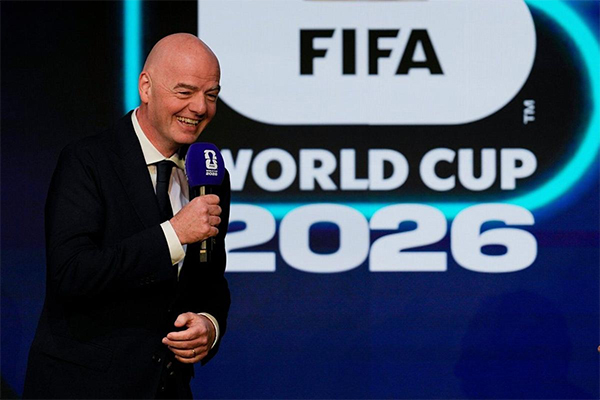
The vehicle is FIFA Forward Enterprise (FFE). FIFA proposes to bring its commercial rights — broadcasting, sponsorship, ticketing and licensing — together with the operational delivery of its tournaments under a new commercial subsidiary valued at about US$20 billion. It would sell minority, non-controlling stakes of up to 20 per cent to investors, potentially raising as much as US$4.2 billion. Thrive Eternal, led by Joshua Kushner, the brother of Donald Trump’s son-in-law Jared Kushner, is expected to be among the lead investors, with J.P. Morgan advising. FIFA’s 211 member associations have until September 19 to indicate whether they support the proposal.
They did not wait long to respond.
On Thursday, all 55 European associations unanimously rejected the proposal and said no UEFA national team would participate in FIFA competitions if the plan proceeds. Hours later, the presidents of CONCACAF’s 41 member associations rejected the proposal, citing the lack of due process, the artificially short deadline and the absence of approval from FIFA’s formal governance structures. CONCACAF also questioned why private equity was necessary after FIFA had just completed its most financially successful World Cup.
That changes the arithmetic.
Infantino needs support from at least 106 of FIFA’s 211 member associations. UEFA’s 55 and CONCACAF’s 41 account for 96 associations. The remaining votes are therefore suddenly far more important than their size, wealth or footballing pedigree might suggest.

That gap will not be closed in Zurich or Nyon. It will be closed in Port of Spain, Kingston, Suva and Nouméa, among federations that have rarely, if ever, held this much leverage. Trinidad and Tobago’s vote weighs exactly what Germany’s weighs.
So be honest about what is being offered in exchange for it.
Under FIFA’s proposed new funding model, development funding would rise to US$20 million per member association for the 2027–2030 cycle, with an additional optional US$20 million available through the proposed FIFA Fast-Forward programme. That means an association could potentially receive as much as US$40 million. FIFA says the additional funding is conditional on support for the proposal by the September 19 deadline.
For the Trinidad and Tobago Football Association, that kind of money could transform the game: pitches, coaching qualifications, women’s football, youth development and national-team structures that have too often depended on limited resources and the goodwill of sponsors.
Anyone who says that money means nothing to a small federation has never had to run one.
But then look at what happened next.
The additional US$20 million was announced after the proposal triggered widespread criticism. The deadline remained September 19. CONCACAF described the timetable as artificially short, while UEFA has condemned the process as coercive and fundamentally unacceptable. The effect is difficult to ignore: the financial incentive for a “yes” vote grew substantially while the clock continued to run.
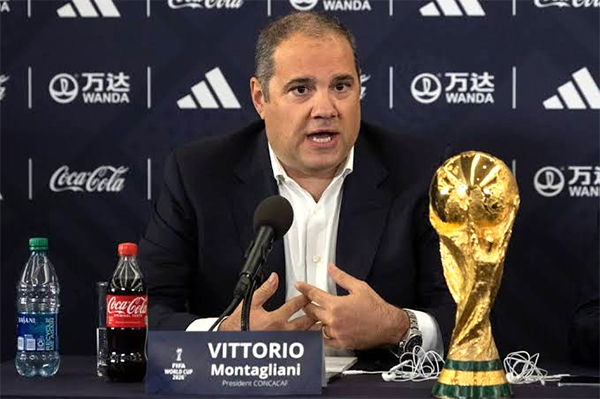
And that is precisely why CONCACAF’s objection matters.
UEFA’s opposition is easy for FIFA to dismiss as the wealthy defending their own competitions and influence. CONCACAF’s objection is harder to brush aside.
Why does a football organisation that has just generated unprecedented revenues need private capital to fund development?
CONCACAF has instructed its FIFA Council members to determine how FIFA’s existing reserves could be used to increase development funding in the region. FIFA’s own financial projections already provide for US$2.7 billion in FIFA Forward investment during the 2027–2030 cycle.
That leaves a straightforward question: if FIFA has the money, why sell a stake in the commercial future of its tournaments? And if it does not, then FIFA owes its member associations a much clearer account of its finances before asking them to surrender part of football’s future.
FIFA’s answer is that the World Cup and its other competitions are under-monetised; that the new company will separate commercial operations from governance; that FIFA will retain control; that investors will have no operational role; and that the project will collapse if the member associations do not support it. FIFA describes the proposal as an opportunity rather than an obligation.

Even if all of that is accepted, the fundamental question remains.
Investors putting up US$4.2 billion for a stake in an entity valued at US$20 billion will expect a return. Investors do not put billions of dollars into an asset simply to watch it appreciate from the sidelines. The issue is not merely whether they have a seat on a board. It is whether the introduction of private capital inevitably creates a new financial interest in how the world’s biggest football competitions are managed and monetised.
And FIFA has not fully answered the question of who ultimately stands to benefit financially from the arrangement.
The controversy is made more serious by the increasingly blurred relationship between football, politics and power around Infantino.
Infantino created the FIFA Peace Prize and awarded it to Trump. FIFA also opened an office in Trump Tower. During the 2026 World Cup, FIFA suspended the one-match ban imposed on American forward Folarin Balogun after Trump had contacted Infantino about the matter. Trump subsequently praised FIFA for the decision, while UEFA and the Belgian Football Association questioned the handling of the case. The Norwegian Football Federation has also raised concerns over the matter.
These incidents may be unrelated to the FFE proposal. FIFA has denied any improper connection. But when an organisation is asking its 211 members to approve a potentially transformative commercial restructuring involving private investors, appearances matter.
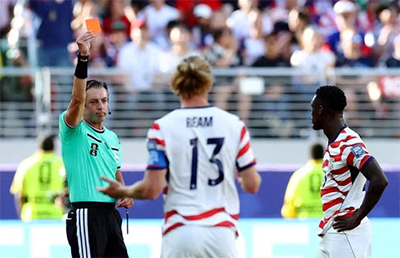
against Bosnia-Herzegovina in San Francisco Bay Area Stadium,
California, on July 1, 2026
So does accountability.
UEFA’s objection reaches the heart of the matter: the World Cup is not simply another commercial asset. It is a sporting inheritance built over generations by players, supporters, clubs, national associations and fans across the world.
FIFA did not create the World Cup. It was entrusted with it.
A trustee who sells part of the estate to tidy up the accounts has to explain why the sale is necessary — and who ultimately benefits.
That is why Trinidad and Tobago’s decision matters.
The TTFA should not be bullied by Europe. It should not be bullied by CONCACAF. And it should not be bought by a larger cheque from FIFA.
It should ask questions: Show us the reserves? Show us the books? Show us exactly why private capital is necessary? Show us who profits? Show us what safeguards will prevent commercial investors from gaining influence over the future direction of the game? Then ask us to vote.
There is another date that matters. Infantino faces re-election in 2027, and he needs the support of many of the same small and developing federations. That makes September 19 about more than one commercial proposal. It is also a test of whether those associations will exercise their voting power independently or allow financial promises to determine their position.
Trinidad and Tobago has one vote.
Germany has one vote.
Brazil has one vote.
And Trinidad and Tobago’s vote is worth exactly the same as theirs.
That is a power the TTFA should not surrender cheaply.
The solution to this crisis is clear: stand with UEFA and CONCACAF in demanding transparency, proper governance and accountability — and save FIFA from the arrogance, overreach and hubris of a president who appears increasingly willing to treat football’s greatest asset as though it were his personal commercial property.
The World Cup belongs to football.
It does not belong to Gianni Infantino.
