


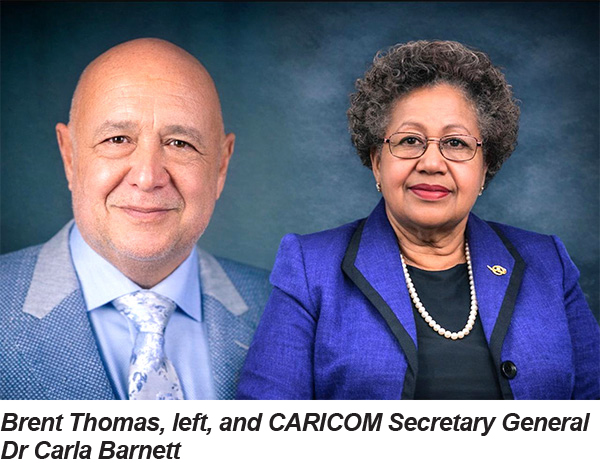



By Dr Jack Austin Warner
When Prime Minister Kamla Persad-Bissessar addressed the 50th Regular Meeting of CARICOM Heads of Government in St. Kitts and Nevis, much of the regional media reacted predictably. Headlines warned of fractures. Commentators spoke of diplomatic strain. Editorial boards speculated about division within the Community.
But in the rush to dramatise potential disunity, the Caribbean media largely sidestepped a far more consequential issue raised in that speech, one that strikes at the institutional heart of CARICOM itself.
Persad-Bissessar disclosed that in 2022, as Leader of the Opposition, she wrote to the CARICOM Secretariat seeking clarification after a Trinidad and Tobago national was allegedly kidnapped using CARICOM resources. She further indicated that, to date, she has received no response. That assertion, if accurate, is not a political flourish. It is a governance question.
Yet instead of interrogating that claim with rigour, many media outlets framed the speech through a narrower lens: would this divide CARICOM? Would it weaken regional cohesion? Would it disrupt diplomatic consensus?
These are legitimate concerns. But they are secondary to the foundational issue raised: when an elected representative of a member state seeks information about the alleged misuse of regional resources in connection with the safety of a citizen. Does the Caricom Secretariat have an obligation to respond? That is the story that demanded scrutiny.
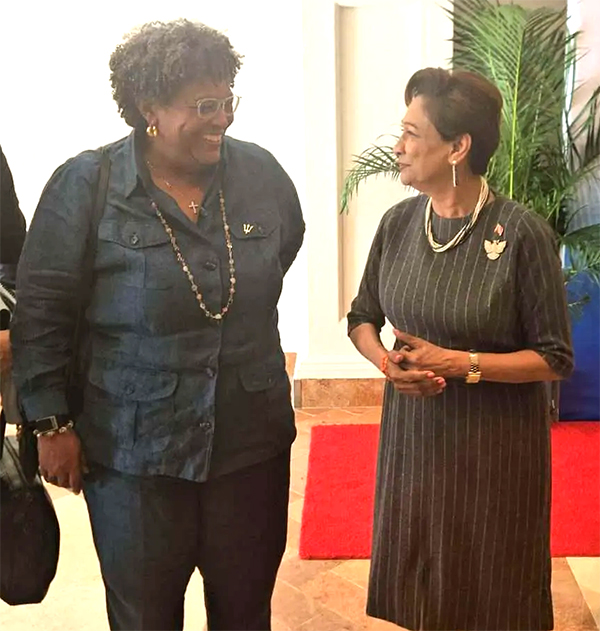
Prime Minister of Barbados Mia Mottley and Prime Minister of Trinidad and Tobago Kamla Persad Bissessar SC
The Caribbean Community was established under the Treaty of Chaguaramas in 1973 and strengthened through the Revised Treaty in 2001. Its stated purpose is not simply to facilitate coordination among governments but to enhance the welfare of “the people of the Community.” The language of integration is citizen-centred. The Caribbean Court of Justice has affirmed that Community nationals possess enforceable rights under regional law.
If that is so, then the question is not whether Persad-Bissessar’s tone unsettled colleagues. The question is whether CARICOM, as an institution, demonstrates accountability to the people whose name it invokes.
Silence in response to a formal inquiry, particularly one tied to an alleged criminal act involving regional mechanisms, is not trivial. It is not administrative housekeeping. It speaks to transparency and responsiveness. Even if the Secretariat bore no responsibility for the alleged misuse, a clear acknowledgement or explanation would have reinforced institutional credibility.
Caricom’s legitimacy rests on public confidence
The regional media, however, appeared more captivated by the optics of discord than by the substance of accountability. In doing so, it missed an opportunity to elevate the public discourse.
This is not a defence of any political leader. It is a defence of standards. Caribbean journalism prides itself on safeguarding democracy and scrutinising power. Yet in this instance, scrutiny tilted toward political theatre rather than institutional performance.
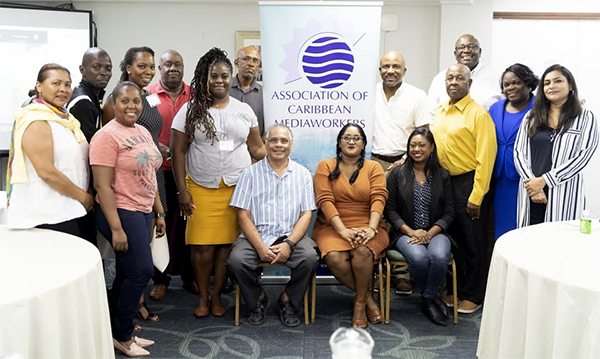
Menbers of the Association of Caribbean Media Workers
Was there correspondence? Was it acknowledged? What protocols govern responses from the Secretariat? Does the Secretariat have a defined timeline for replying to formal communications from member state officials, including opposition leaders? These are precise, answerable questions. They require investigation, not speculation about diplomatic discomfort.
By focusing primarily on whether the speech would “divide CARICOM,” the Caribbean media inadvertently framed unity as an end in itself, rather than as a function of trust. But unity without accountability is fragile. Integration sustained by silence erodes from within.
A more educated approach would have treated the speech as a prompt for inquiry. It would have separated partisan rhetoric from institutional obligation. It would have examined whether CARICOM operates as a community of governments or as a community of people.
If the Secretariat did respond and the matter was mishandled politically, that too deserves clarity. If it did not respond, that lapse warrants explanation. Either outcome informs citizens.
Regional integration cannot demand loyalty while resisting examination. Nor should the Caribbean press shy away from asking uncomfortable questions simply because they implicate a cherished institution.
CARICOM’s legitimacy rests not on communiqués or ceremonial declarations, but on public confidence. Confidence grows when institutions are transparent and responsive. The real issue raised in St. Kitts was never about division; it was about duty.
The Caribbean media should have pursued that duty with the same intensity it applied to forecasting political fallout. Integration deserves journalism that probes deeper than optics; journalism that asks whether our regional institutions truly serve the entire Caribbean Community, because if they do, they should have no difficulty answering.
