


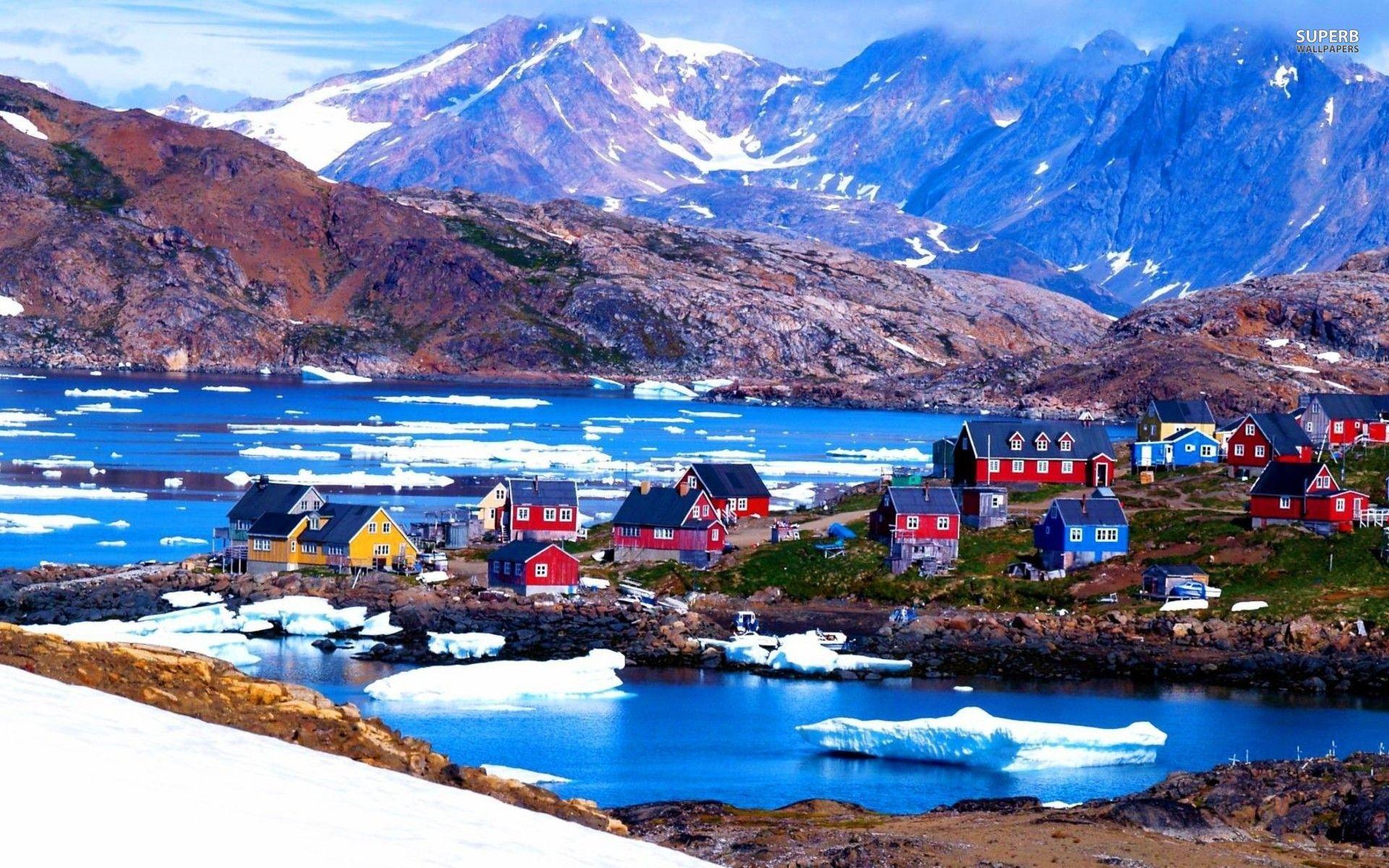



Every few years, Greenland re-enters the global spotlight not because of its people, culture, or political aspirations, but because of renewed interest from Washington. The idea that the United States should “own” Greenland, most prominently voiced during Donald Trump’s presidency, has often been dismissed as diplomatic theatre. Yet the persistence of the idea reveals something deeper: a global tendency to view Greenland primarily as a strategic asset rather than a political community with agency, rights, and a growing voice in international affairs.
What is missing from much of the discussion is this fundamental reality: Greenland is not an empty Arctic chessboard. It is a self-governing territory with an Indigenous majority population, its own elected government, and a clear, democratically expressed interest in shaping its future, potentially as an independent state.
Since the 2009 Self-Rule Act, Greenland has exercised extensive control over domestic affairs, including education, health, fisheries, and natural resources. While Denmark retains authority over defence and foreign policy, Greenlandic leaders have consistently pushed for greater international recognition and autonomy. Surveys conducted over the past decade show strong support among Greenlanders for eventual independence, even as they acknowledge the economic and institutional challenges involved. Crucially, those same surveys show little appetite for becoming part of the United States.
This matters because global narratives often erase Greenlandic political will in favour of great-power logic. U.S. interest is typically framed in terms of Arctic security, missile defence, rare earth minerals, and strategic positioning between North America, Europe, and Russia. These interests are real. The U.S. military has maintained a presence at Pituffik Space Base (formerly Thule Air Base) since the Cold War, and climate change is opening Arctic Sea routes and resource access that will reshape global trade and security calculations.
But reducing Greenland to a military or economic asset ignores an equally important transformation: Greenland is also becoming a frontline political actor in climate diplomacy.
Nowhere on Earth is climate change more visible or more consequential than on the Greenland Ice Sheet. Accelerated melting is not only reshaping local ecosystems and infrastructure but also contributing measurably to global sea-level rise. Greenland’s experience is therefore not abstract or ideological; it is empirical, immediate, and globally relevant. This positions Greenland as a credible moral and scientific voice in international climate discussions, particularly on adaptation, loss and damage, and the lived consequences of warming.
In recent years, Greenlandic officials have increasingly engaged with international forums, research institutions, and Arctic governance bodies. Their messaging is consistent: climate policy is not separate from sovereignty. Decisions about mining, infrastructure, and foreign partnerships are inseparable from the question of who decides Greenland’s future and for whose benefit.
This is where the U.S. acquisition narrative becomes problematic. Ownership language clashes directly with contemporary international norms around Indigenous rights and self-determination, as articulated in instruments such as the UN Declaration on the Rights of Indigenous Peoples. Greenland’s Inuit population is not a stakeholder to be consulted after strategic decisions are made; they are the political community to whom legitimacy ultimately belongs. They are a small but distinct indigenous majority comprising 88-90 percent of the overall 56,500 population.
There is also a strategic miscalculation in ignoring this reality. In the 21st century, influence in the Arctic will depend less on territorial control and more on legitimacy, partnerships, and governance credibility. Countries that treat Arctic communities as partners rather than prizes are better positioned to shape outcomes on security, climate cooperation, and sustainable development.
For the United States, this suggests a different path, one already partially underway but overshadowed by acquisition rhetoric. Supporting Greenlandic capacity-building, respecting its democratic institutions, and engaging transparently with its elected leaders would strengthen U.S. influence far more effectively than any symbolic discussion of ownership. It would also align U.S. Arctic policy with its stated commitments to democratic values and Indigenous rights.
For the international community, Greenland’s situation raises a broader question: how many territories in a warming world will be viewed primarily through the lens of strategic competition, rather than human governance? As climate change redraws the map, physically and politically, the voices of those who live on the frontlines will increasingly matter.
Greenland is already speaking. The question is whether global powers are willing to listen. In the end, the most important development in Greenland is not who wants to own it, but who gets to decide its future. That decision, by law and by principle, belongs to Greenlanders themselves.
