





FIX THE PUBLIC SERVICE
BY JACK AUSTIN WARNER PhD
If I were the Prime Minister of T&T, I would make public service reform my first and most urgent priority; not as a slogan, not as a commission of inquiry, but as a practical national rescue effort.
No country can function, let alone develop, when the machinery of the State is slow, confusing, unaccountable, and indifferent to the people it is meant to serve.
In Trinidad and Tobago, public frustration is not rooted only in policy choices; it is rooted in daily encounters with a system that feels unresponsive and, at times, hostile.
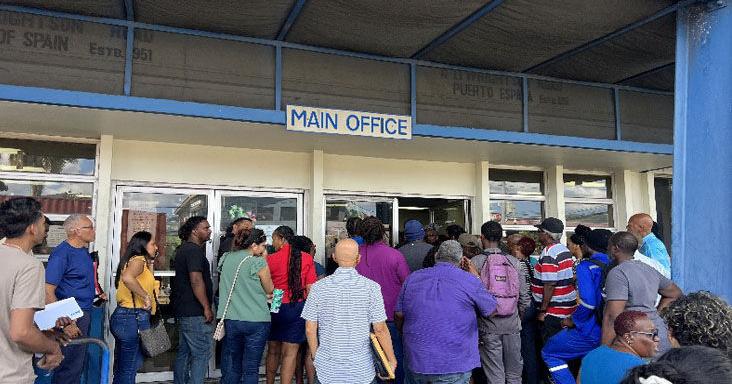
For too many citizens, the public service is being experienced as a wall of forms, delays, contradictions, and silence. Simple tasks take months. Answers vary depending on who you ask. Files disappear. Phone calls go unanswered.
Responsibility is diffused so widely that no one is accountable when things go wrong. This is not merely inefficient; it is corrosive. It teaches people that effort is pointless and that compliance is unrewarded. Over time, it erodes respect for the State itself.
If I were the Prime Minister, I would start by changing one thing immediately: accountability at the top. Public service reform cannot begin with junior staff who often work under impossible conditions.
It must begin with permanent secretaries, heads of divisions, and senior managers. Clear performance expectations, timelines, and consequences should be established and published. If a ministry consistently fails to deliver basic services, leadership must change. Reform without consequences is theatre.
Second, I would simplify procedures aggressively. Many public service delays are not caused by laziness but by outdated processes designed for a different era.
Citizens should not need to visit multiple offices, submit the same documents repeatedly, or navigate conflicting requirements between agencies.
If I were the Prime Minister, every major public-facing process, such as licensing, permits, approvals, and social services, just to name a few, would be mapped end-to-end, with redundant steps eliminated. The guiding question would be simple: Does this step add value, or does it exist because it always has?
Digitization would be a tool, not a buzzword. Too often, “digital transformation” has meant putting old inefficiencies online.
That is not reform; it is inconvenience at a higher speed. Proper digitization requires rethinking workflows, training staff, and ensuring systems actually talk to each other.
If citizens can track applications, receive clear timelines, and know who is responsible at each stage, trust begins to return.
If I were the Prime Minister, I would also protect public servants who want to do the right thing. Many capable officers are trapped in systems that punish initiative and reward caution.
Whistleblowers are exposed. Innovators are sidelined. Reform must include safe channels for reporting inefficiency and corruption, coupled with incentives for problem-solving.
A public service that fears punishment more than failure will never improv.
Training must be modernized. The public service cannot operate with yesterday’s skills in today’s world. Customer service, data management, project management, and ethics must be core competencies, not optional extras. Promotion should reflect capability and performance, not tenure alone. Experience matters, but competence matters more.
Importantly, reform must be felt by the public quickly. People will not believe in long-term transformation unless they see early wins. Fixing appointment systems at hospitals and licensing offices, reducing response times for basic queries, and enforcing service standards would send a powerful signal. These are not glamorous achievements, but they change lives.
If I were the Prime Minister, I would also be honest about resistance. Reform threatens comfort zones. There will be pushback from those who benefit from opacity, from those who fear change, and from those who mistake reform for disrespect.
Leadership requires firmness here. The public service exists to serve the public, not itself. That principle must be non-negotiable.
Public service reform is also a fairness issue. When systems are slow and opaque, the well-connected find ways around them while ordinary citizens wait.
This deepens inequality and resentment. A functioning public service is one of the most powerful equalizers in society. It ensures that rights are not privileges and that access does not depend on who you know.
Finally, I would communicate relentlessly. Reform fails when people do not understand what is changing or why. Citizens deserve regular updates, clear benchmarks, and honest reporting of setbacks. Transparency builds patience. Silence breeds suspicion.
If I were the Prime Minister, I would measure my success not by how many speeches I gave, but by whether citizens could say, six months and one year later, that dealing with the State felt easier, fairer, and more predictable.
Public service reform is not a technical exercise; it is a moral one. When the State works, people feel respected. When it does not, no policy, regardless of how well intentioned, can succeed.
Fix the public service, and you would fix the foundation. Everything else depends on it.
