


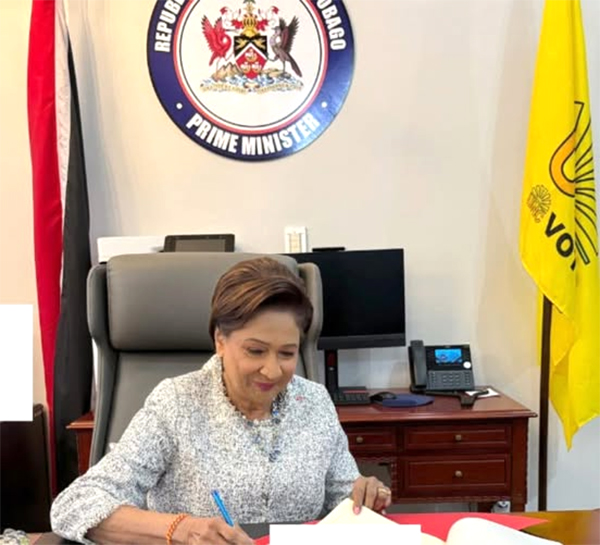



……Kamla awaiting an answer on the RSS Operation
By Dr Jack Austin Warner
The Brent Thomas affair is no longer a narrow dispute between two governments. It has become a CARICOM stress test. A High Court has already found the arrest, detention, and removal of one of its citizens to be unlawful and unconstitutional.
Against that backdrop, reports that Regional Security System (RSS) assets were engaged to facilitate the transfer raise a stark question: if treaty-based security machinery was used in a process later declared illegal, why are CARICOM’s Heads of Government silent?
The Regional Security System exists to strengthen collective security: disaster response, maritime interdiction, counter-narcotics, and support to civil authorities. It does not replace the extradition law. It does not override domestic constitutions.
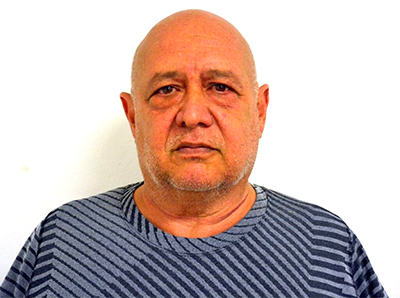
Businessman Brent Thomas
It does not authorise cross-border removal of a detained person in the absence of the safeguards of judicial oversight. Treaty tools are meant to operate inside the law, not around it.
Extradition is not a courtesy. It is the firewall between executive zeal and arbitrary seizure. It requires formal requests, judicial review, and the opportunity to challenge surrender. If a citizen is transported across borders while in custody, especially under restraint, the burden on the State to prove genuine, documented, and informed consent is overwhelming. Anything less triggers the extradition framework. Anything less invites constitutional exposure.
If RSS aircraft or coordination were used in a transfer that bypassed those safeguards, the legal implications are serious. A treaty-based instrument would have been deployed beyond its mandate, ultra vires.
The shield of “regional cooperation” cannot sanitise an unlawful act, nor can the gravity of the underlying investigation. The rule of law is tested precisely when authorities believe the cause is righteous.
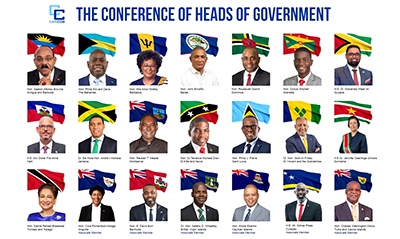
CARICOM Heads of Government
This is why the silence matters. CARICOM is not merely a talking shop. It is a community built on shared legal heritage and an explicit commitment to the rule of law. Its integration project depends on trust: that citizens moving across borders will enjoy constitutional protections, and that cooperation among states will respect the judicial process.
When leaders say nothing in the face of a judicial rebuke tied to cross-border action, it sends a troubling signal that expediency may outrun legality and that treaty instruments can be flexed without consequence. Silence, then, can be strategic, but it can also be corrosive.
If a CARICOM citizen can be removed from one member state to another without formal extradition, facilitated by regional security assets, what prevents similar shortcuts from taking place tomorrow? Today, it is a firearm investigation. Tomorrow, it could be tax offences, regulatory disputes, or political tensions. The point is not the popularity of the accused. It is the durability of due process.
Heads of Government are custodians of treaty compliance. The RSS does not self-deploy; it acts upon political authorisation. If authorisation occurred without ensuring adherence to domestic constitutional requirements and extradition law, that is not a technical lapse. It is a governance failure, and governance failures demand acknowledgement, review, and reform; somebody should be held accountable.
The Brent Thomas affair is more than a warning
What should leadership look like in such a moment? A joint statement affirming that RSS assets cannot be used as a substitute for extradition ought to have been made. A transparent account of what authorisations were issued and under what legal advice should have been declared.

Regional Security System plane RSS-A2
A commitment to standard operating procedures that require written proof of voluntariness or formal extradition documents before any cross-border transfer should have been released. An independent review, where necessary, should have been held. These are not acts of weakness. They are acts of democratic maturity.
Instead, the region hears very little from its leadership. That quiet risks more than reputational harm. It risks undermining CARICOM’s most ambitious goals: free movement, shared security, and deeper integration. Citizens will not embrace integration if they fear that cooperation blurs constitutional lines. Trust is the currency of community. When due process appears negotiable, trust depreciates.
No one argues that crime should go unchecked. But the seriousness of an allegation never licenses a procedural shortcut. The Caribbean has long prided itself on strong courts and constitutional supremacy. If a court declares state conduct unlawful in a cross-border operation, leaders should not avert their gaze. They should lean in.
The Brent Thomas affair is more than a warning. Treaty authority must yield to constitutional supremacy, always. Security tools must remain within legal bounds. And when the law is breached, silence is not neutrality; it is a message.
Every Head of Government who chose silence at CARICOM 50 must confront what that silence signifies. When a High Court has already described the arrest and removal of a CARICOM citizen as unlawful and unconstitutional, restraint is no virtue. It is abdication.
The Regional Security System does not operate in a vacuum. It is overseen by the Council of Ministers. That Council exists precisely to ensure that regional security cooperation remains anchored in law. If RSS assets were engaged in a process later declared unconstitutional, the Council had a duty to address it promptly, transparently, and unequivocally.
In the absence of such a statement, the responsibility fell squarely on the Conference of Heads of Government. CARICOM’s highest political body should have spoken clearly to its citizens. Instead, there was silence. Silence in the face of judicial condemnation does not protect institutional reputation. It corrodes it.
The removal of Brent Thomas is not a fleeting controversy. It is a constitutional moment. If CARICOM stands for the rule of law and shared democratic values, then its leaders must demonstrate that commitment when it is tested.
This will not dissipate with time or diplomatic caution. The questions are too fundamental. The implications are too wide. When the rights of one citizen are implicated through regional mechanisms, every citizen is entitled to reassurance.
