




There’s an old Caribbean wisdom we don’t quote enough in Cabinet rooms: not every thought is a statement. Sometimes the most patriotic thing a small country can do is to keep its mouth shut until it can speak with clarity, principle, and purpose. Because in foreign policy, words don’t just “express a view.” Words pick sides, close doors, create enemies, and most dangerously make commitments you never intended to make.
That is why Trinidad and Tobago’s public posture on the U.S. strike on Iran, and the way it was communicated, deserves more than the usual bacchanal of partisan cussing. It deserves sober scrutiny precisely because the stakes are global, and our margin for error is small.
The fog of war is not the time for hot takes
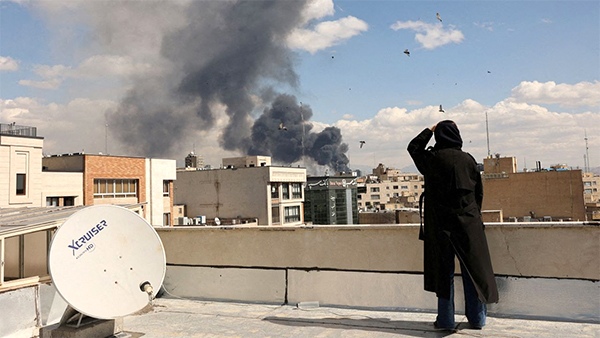
On February 28, 2026, the United States and Israel launched a major military operation across Iran, with widespread reporting that Iran’s Supreme Leader, Ayatollah Ali Khamenei, was killed in the strikes. In the immediate aftermath, retaliation followed missiles and drones flying across the region, airspace disrupted, and governments scrambling to protect their nationals.
This is exactly the kind of moment when a responsible foreign policy machine moves with caution. Not because we are timid. But because early information is often incomplete, politicised, or outright wrong. Even the Trinidad and Tobago Guardian report noted that at the time, the claim of Khamenei’s death had “yet to be independently confirmed.”
So what did we do? We rushed out a position.
The statement said what it said and then it unsaid it
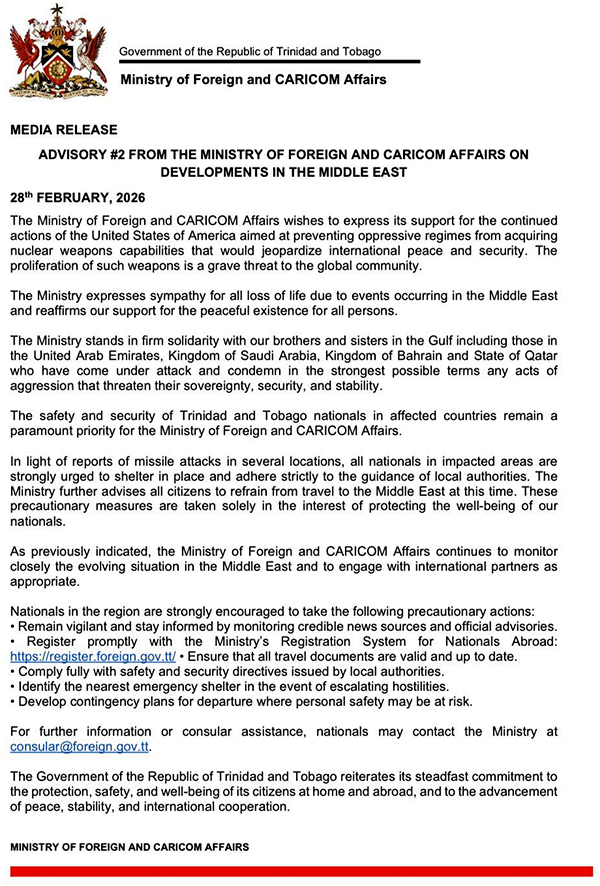
Advisory #2 from the Ministry of Foreign and CARICOM Affairs
According to reporting, a statement was posted around 4 pm on the Ministry’s Facebook page and then retracted after being up for at least an hour, with the Minister saying the Government was “still assessing the situation.”
Later that evening, the Ministry issued Advisory #2, which expressed support for “the continued actions of the United States… aimed at preventing oppressive regimes from acquiring nuclear weapons capabilities,” while also expressing sympathy for loss of life and solidarity with Gulf states under attack.
Now, notice the problem: that is not a neutral travel advisory. That is a geopolitical endorsement wrapped in the language of security. And once you endorse a strike especially one that has triggered regional retaliation you can’t pretend you were merely “concerned about peace.”
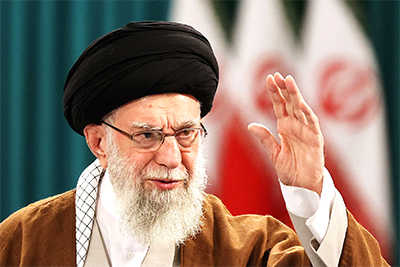
Still to confirm that the Iran’s Supreme Leader, Ayatollah Ali Khamenei was killed in an air strike
Yes, nuclear proliferation is dangerous. But that’s not the whole argument.
Let’s be fair. The Ministry’s core justification preventing nuclear weapons proliferation rests on a legitimate global concern. The Non-Proliferation Treaty (NPT) is explicitly aimed at preventing the spread of nuclear weapons and promoting disarmament and peaceful nuclear cooperation.
No sensible Caribbean person wants a world where nuclear weapons spread like illegal guns on the block. If nuclear weapons are the ultimate “one shot and everybody dead” logic, then preventing their spread is a moral objective.
But here is where the adult reasoning begins: supporting non-proliferation is not the same thing as endorsing a military assassination and a cross-border bombing campaign. Those are separate questions legally, diplomatically, and ethically.
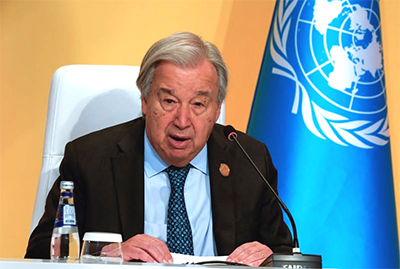
Secretary-General Antonio Guterres is deeply alarmed by the recent escalation in Iran
Small states live or die by international law so we should talk like it
Trinidad and Tobago is not a superpower. We do not set the rules of the world. We survive by insisting that rules exist and that they apply even to the mighty.
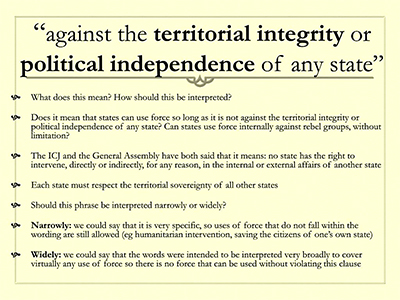
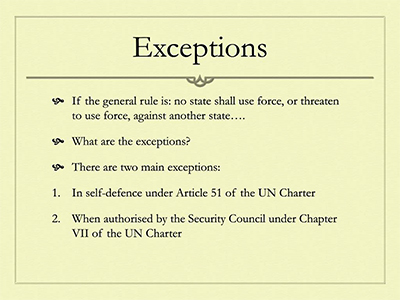
The UN Charter prohibits the threat or use of force against the territorial integrity or political independence of any state, except in narrow circumstances such as Security Council-authorised action or lawful self-defence.
And in the real world, this is not academic. At an emergency Security Council meeting, the UN Secretary-General was reported as condemning both sides’ attacks and warning about the collapse of restraint and the widening of war.
So when our Government races to declare “support” for an attack before the dust even settles it sends a signal that we are comfortable with force-first logic once it is dressed up in moral language. Today it is Iran. Tomorrow it could be a small state with oil, a disputed border, or the wrong friends.
That’s why, in moments like these, silence or at least disciplined restraint isn’t weakness. It is self-preservation.
Diplomacy is not a fete: you don’t jump on stage before the band tune up
Here’s the part too many people miss: in international politics, words are instruments. They are leverage. They are insurance policies. They are escape routes. They are bargaining chips. When you spend them cheaply on a Saturday afternoon Facebook post you reduce your future options.
Prudent, consistent and defensible
A careful state could have said, very simply:
We are monitoring developments.
Our priority is the safety of nationals.
We urge de-escalation and respect for international law.
We support global non-proliferation through established international mechanisms.
That would have been prudent, consistent, and defensible.
Instead, we got a statement that had to be edited mid-flight removing terms like “allies,” according to reporting because somebody clearly realised the wording was too eager.
In diplomacy, the retraction is the confession.
CARICOM is supposed to coordinate foreign policy so why are we freelancing?
There is also the regional layer. CARICOM, on paper, is not just trade and talk. It includes coordination of foreign policy as part of its broader integration mandate.
And CARICOM has previously issued statements urging cessation of hostilities and restraint in Middle East flare-ups.
So when Trinidad and Tobago, home of the Treaty of Chaguaramas and all the regional symbolism that comes with it, chooses to jump out alone with a bold endorsement, it raises an uncomfortable question:
Are we speaking as a serious regional actor or as a nervous small state trying to impress bigger friends?
And if we are going to “stand in solidarity” with Gulf states (as the Ministry did), then we should also understand what that means for our diplomatic relationships, our diaspora, our energy markets, and our security posture.
The quiet domestic fact: war has a price tag, and we will pay it too
We don’t need to pretend this conflict is “over there.” The Guardian report included local analysis that the conflict could increase costs especially because we import most refined petroleum products, and shipping costs can rise in a regional war environment.
So even if you’re the kind of person who sees “opportunity” in higher energy prices, the reality is messier: the same crisis that lifts one line item can punish households through higher prices, supply disruption, and broader economic instability. In other words: war is a tax you didn’t vote for.
So yes sometimes it is better to stay silent
Not silent as in cowardly. Silent as in strategic.
When facts are moving, when law is contested, when retaliation is unfolding, when civilian lives are being lost, when the region is on edge the best first statement is often the one that protects your people and keeps your principles intact.
Because once you declare “full support” for a superpower’s strike, you inherit its enemies, its blowback, and its moral baggage without having any of its military power to protect you from the consequences.
And that is the oldest lesson in the Caribbean’s foreign policy playbook:
We cannot afford to talk like empires because we do not get to behave like them.
