


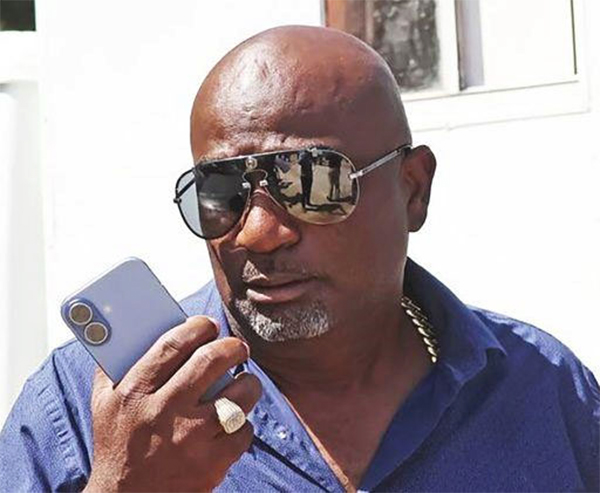



The Nation Deserves Answers—and Action
Special Editorial
In the aftermath of Danny Guerra’s violent death, Trinidad and Tobago finds itself at a crossroads—a nation haunted by unanswered questions, unresolved allegations, and the gnawing suspicion that much remains hidden beneath the surface of official narratives. But as the days pass and memories fade, one question becomes inescapable: Are we witnessing the emergence of a local scandal on par with the global infamy of Jeffrey Epstein, a shadowy figure whose connections, crimes, and ultimate demise exposed the vulnerabilities and failures of institutions meant to protect the public?
To ask whether Danny Guerra is Trinidad & Tobago’s Jeffrey Epstein is not mere provocation. It is a demand for clarity, accountability, and the kind of rigorous investigation that our democracy, if it is to mean anything, requires. The parallels, though not identical, are chilling enough to demand scrutiny.
Like Epstein, Guerra was no backroom operator; he was a businessman with visible operations, a man who moved in influential circles, someone whose name surfaced repeatedly in connection with serious criminal allegations, and, crucially, like Epstein, Guerra’s proximity to power, his ability to evade definitive legal reckoning, and his violent end have created an atmosphere thick with speculation, mistrust, and fear.
The facts as recorded in public reports are already disturbing. Guerra was detained under the State of Emergency, not for minor infractions, but under suspicion of organised criminal activity, illegal quarrying, money laundering, and arms trafficking. These accusations, if true, would put him at the centre of illicit networks that drain the nation’s resources, undermine public trust, and endanger lives.
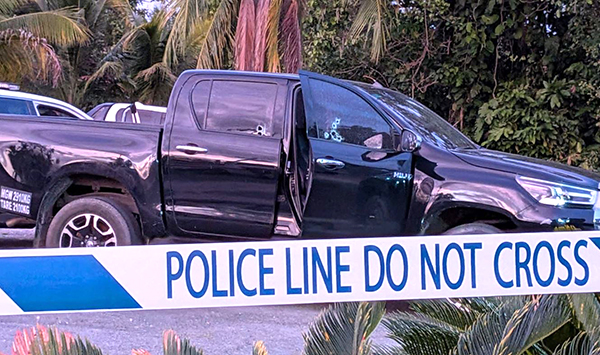
Yet, as is too often the case in Trinidad and Tobago, the progression from allegation to resolution faltered. Guerra was released; the prosecutions fizzled. No comprehensive public accounting was ever made, and the story faded into that familiar limbo, neither confirmed nor denied, neither prosecuted nor cleared.
But perhaps more disturbing than the unresolved accusations are the questions about who enabled Guerra’s rise and survival. Multiple reports point to professional and social connections between Guerra and individuals now in positions of political and administrative power.
There are whispers of campaign support, of business dealings, of favours traded in the murky overlap between commerce and statecraft. Alone, these connections may be innocent. In a small society, the lines between business and politics are inevitably blurred, but when proximity to power intersects with serious unresolved allegations, the public interest demands scrutiny, not indifference.
Here is where the comparison to Epstein grows sharper and more troubling. Epstein thrived not simply because of his cunning but because institutions failed. Intelligence was ignored, warnings were dismissed, and elite networks shielded him from consequences until it was too late. The question for Trinidad and Tobago is whether our institutions, the police, regulators, and political leaders, have done any better.
Why was Guerra able to operate so openly? Were investigations thorough or merely cursory? Did state agencies receive intelligence and fail to act, or were they prevented from acting by political interference?
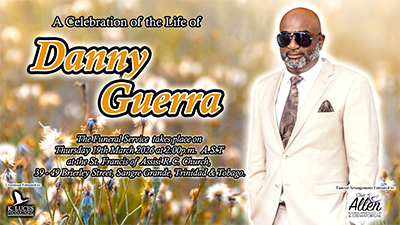
Were there gaps in oversight that allowed Guerra’s operations to continue unchecked? Or, more cynically, did some benefit from his activities, looking the other way in exchange for favours, donations, or silence?
These are not baseless accusations. They are the very questions the state must answer if it is to restore public confidence, because when a figure so closely linked to serious criminal allegations is killed, and when the aftermath is marked by more violence, threats, and silence, the situation cries out for more than routine police updates.
It demands a full, independent investigation into Guerra’s operations, his associations, the actions and inactions of law enforcement, and the possible complicity or negligence of public officials.
It is a test of the nation’s soul
The stakes could not be higher. If, as some allege, Guerra operated at the heart of a web of criminality without facing consequences, then it is not simply a matter of one man’s guilt or innocence. It is a test of the nation’s soul, of whether justice means anything, or whether power and wealth are all that matter.
If the state fails to act decisively, the message is clear: wrongdoing can flourish without consequence, and those with the right connections are beyond the reach of the law.
Epstein’s case exposed not only the horrors of individual exploitation but also the rot that sets in when institutions are captured, corrupted, or cowed. Trinidad and Tobago must not repeat that failure.
Already, the aftermath of Guerra’s death has been marked by further violence: threats to family members, the killing of an associate, the recent arrest of Danny Guerra’s relative in Tobago relating to gang activities, and ongoing police inquiries into a tangled web of motives. This isn’t an isolated incident; it reflects a broader issue.
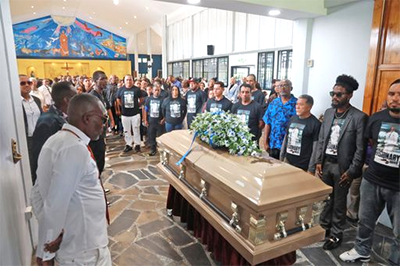
What must be done? First, the government must establish an independent, transparent investigation into all aspects of Guerra’s operations and relationships. This should include a review of why he was detained during the State of Emergency, what investigations followed, what financial and regulatory oversight was applied to his businesses, and, importantly, the nature of any documented interactions with public officials.
Second, this investigation must be insulated from political interference and conducted in a manner that inspires confidence rather than cynicism. Third, the findings must be made public and acted upon, wherever the evidence leads.
This is not a call for a media witch-hunt. Guerra, like anyone, was entitled to the presumption of innocence, a principle that does not die with its subject. But neither does death erase the public interest or the imperative of accountability. When the courts cannot establish the truth, institutions must reconstruct it.
Silence, in this context, is corrosive. It feeds the perception, already widespread, that some are above the law, that institutions will always protect their own, and that justice is a game for the powerless.
The government now faces a choice: allow this case to fade into the background noise of unresolved scandals, or confront it directly, establishing a process that seeks not to assign blame prematurely but to uncover the facts comprehensively.
Trinidad and Tobago must not become a place where the deaths of powerful, well-connected individuals trigger only resignation and rumour; we must insist on answers: Who knew what, and when? Who benefited from Guerra’s operations? Who failed to act when it mattered? Until these questions are answered, this nation will only see its shadow grow longer. The legacy of Jeffrey Epstein is a warning, not a template. Let us not wait for another tragedy before demanding the truth.
The country deserves better. The time to act is now. The nation deserves accountability, answers, and justice.
