





By Keith Seeram
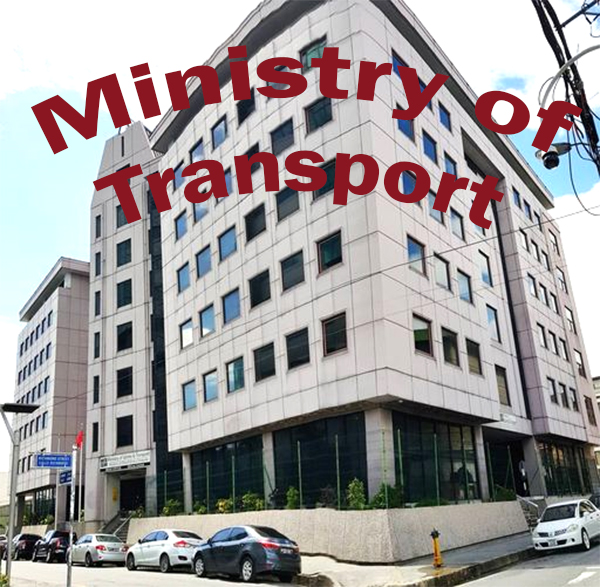
Do we actually have a Ministry of Transport, or merely a Ministry of Minor Administrative Adjustments? This is the question that inevitably springs to mind upon hearing Transport Minister Eli Zakour’s latest pronouncement.
Speaking in the Senate, the Minister expressed grave concern over the “increasing use of mobile and windscreen-mounted devices” for video calls and live streaming. He warns that the Ministry is “closely monitoring” the situation to determine if new regulations are needed.
One has to marvel at the disconnect. While the Minister is busy wringing his hands over TikTok and Zoom calls, the rest of the nation is busy engaging in the country’s most popular pastime: sitting in a stationary vehicle, questioning their life choices.
It is a classic case of majoring in minors. To focus on the technological etiquette of the cockpit while the road beneath it is in a state of collapse is akin to worrying about the arrangement of the deckchairs on the Titanic.
The Minister speaks of “state-of-the-art” regulatory frameworks, yet he presides over a transportation system that feels positively prehistoric. Whether by land, sea, or air, the travelling public is held hostage by inefficiency, yet the priority is apparently to police the misery rather than end it.

Minister of Transport Eli Zakour
For those of us in South Trinidad, or the thousands suffocating daily along the East-West Corridor, the Minister’s concerns feel like a cruel joke. The traffic situation has graduated from “horrendous” to inhumane.
The highway is not a thoroughfare; it is a linear parking lot. If drivers are glancing at their screens, perhaps it is because they have not moved more than ten feet in the last twenty minutes and are looking for some proof that the outside world still exists.
Let us dispense with the abstractions and present the Minister with the unvarnished truth of the daily commute a reality I have personally witnessed and endured with clockwork irregularity.
Between the hours of 6:45 AM and 7:30 AM, a time when a functioning economy should be mobilizing, the East-West Corridor transforms into a graveyard of productivity. It takes an agonizing 45 minutes to traverse the short distances from the Piarco lights to Trincity, or from Orange Grove to the UWI lights.
These are not cross-country journeys; they are minor stretches that have become major mental health hazards.
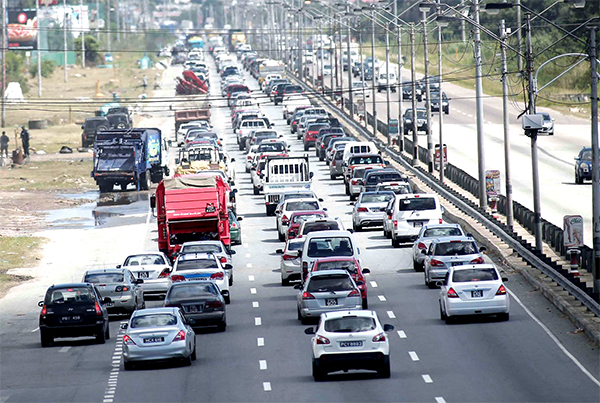
Is traffic morning, noon and night every highway and byway
Nor is this gridlock confined to the “rush hour” window. The paralysis has metastasized. Just yesterday, the short jaunt from the Sea Lots lights to the Lighthouse a distance one could practically jog in minutes consumed 25 minutes of life that motorists will never get back.
And this was not during prime time; this is the new, unacceptable normal. The Minister may be “monitoring” screens, but who is monitoring the sheer theft of time occurring on his watch?
Minister Zakour, hailing from the relatively accessible environs of Diego Martin, seems blissfully insulated from this reality. We recall his swearing-in speech, where he grandly promised to “take the traffic burden” and witness the suffering firsthand.
It was a noble soundbite, but one suspects it has not been followed by action. If the goodly Minister truly intends to honor that pledge and brave the morning commute from San Fernando or Sangre Grande, I offer him a piece of unsolicited, practical advice: travel with an empty bottle.
And I do not mean for hydration. I suggest he does not drink too much water at all. When one enters the gridlock that his Ministry has failed to solve, the bladder becomes a liability. There are no rest stops in purgatory.
To add insult to injury, the Ministry’s solution to this infrastructural failure appears to be a punitive raid on the public purse. There is talk of raising traffic fines a move that stands in stark contradiction to previous assurances.
We were told this government would not burden the driving public further, yet we are reminded that “a promise is a comfort for a fool.” It appears the Minister has raised the fines not to improve safety, but to fool the population into believing work is being done.
It is a performative distraction; having failed to clear the roads, he has decided to tax those trapped upon them.
And yet, a storm gathers in the Siparia distance. One is compelled to remind the Lady of the House of her own thunderous oath: that dead weight would be cut loose and that incompetence would find no sanctuary in her cabinet.
If the Minister persists in polishing the screens of a sinking ship while the passengers below drown in asphalt gridlock, he may soon find that “Kamla” is less maternal and more managerial.
We await the inevitable moment when patience snaps and she decides to honor her pledge to “buss the head” of this administrative failure not with a physical blow, but with a political decapitation so swift and public that it shatters the façade of immunity and leaves his legacy cracked wide open on the pavement of the very highway he failed to fix.
Minister, the time for “monitoring” is over. Do your damn job.
