





By Dr Jack Warner
Cashew Gardens is not simply another neglected housing development hidden somewhere in Central Trinidad. It is a community of families, mortgage holders, workers, children and elderly citizens who have been forced to endure the consequences of an unforgivable betrayal. For more than two decades, residents have been strung along by empty promises and official lies. Hundreds of housing units were planned by the PNM government, and residents were told that the estate would include the basic institutions required for a functioning community: a secondary school, community centre, recreation ground, police outreach post, and flood-control infrastructure.
What they received instead were houses, stripped of everything that would make them worthy of being called homes. The essentials that should have transformed these houses into a vibrant, secure, and dignified community were brazenly withheld. This is not mere neglect; it is abandonment in its most callous form.
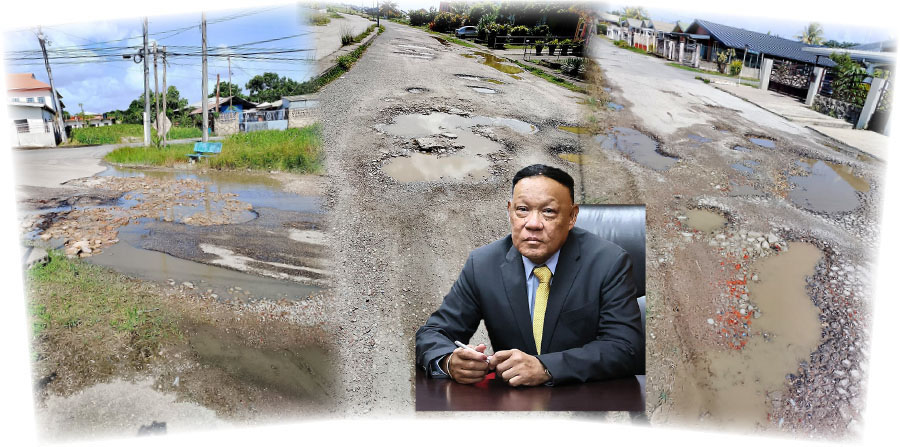
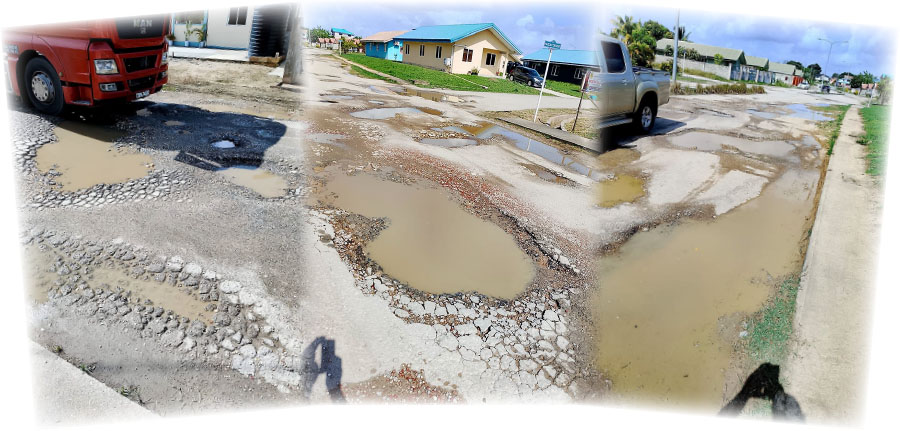
Today, Cashew Gardens residents describe a playfield that has been abandoned and used as a dumping ground for old tyres. The small commercial mall that should have supported community life has effectively disintegrated, leaving behind shuttered spaces and unmolested illegal drug activity. Roads are scarred by potholes, some reportedly stretching across much of the carriageway. Drainage remains a source of concern, with vegetation growing in major drains amid longstanding complaints about cracked walls and sinking houses. Public transportation is painfully limited, forcing residents to depend on costly private cars and having to pay as much as $9.00 for short journeys.
But perhaps the most degrading image, one that should outrage every citizen, is residents filling gaping holes in the road with rubble because the State refuses to lift a finger. Citizens who dutifully pay mortgages, taxes, and utility bills are left to perform the work of a previous government that has washed its hands of them and a present government that does not seem to care. This is not community empowerment; it is contempt for the people, a deliberate abandonment dressed up as self-help. The message from the authorities, past and present, is clear: you are on your own, and your dignity means nothing.
Cashew Gardens reportedly accommodates hundreds of families and several thousand people. Yet it has been treated not as a community of human beings, but as an inconvenient administrative nuisance, a problem to be shuffled from desk to desk and conveniently forgotten.
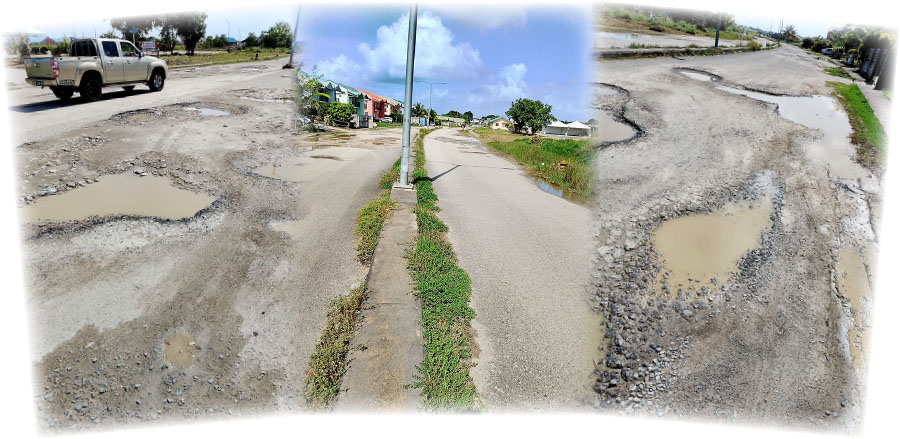
For years, the Housing Development Corporation and the local government system have cynically pointed fingers at each other, refusing to take the basic steps necessary for a proper handover to the Couva/Tabaquite/Talparo Regional Corporation. This bureaucratic limbo is not accidental; it is a calculated evasion of responsibility. While officials play their blame games, real people are forced to drive through craters, navigate flooded streets, and watch the infrastructure promised to them decay into useless ruin.
The political neglect is not just shameful; it is a disgrace. Cashew Gardens was cynically ignored during years of PNM government, and now residents rightfully fear that the UNC will do no better. No government should be allowed to hide behind excuses or history.
This is not “PNM Cashew” or “UNC Cashew,” no matter how the parties try to divide and conquer. It is a Trinidad and Tobago community deliberately denied the basic rights and services that others take for granted. Every day of inaction is an act of political cowardice and moral failure.
Government neglect does not remain confined to potholes and drains. It eventually enters homes. When a playfield is abandoned, young people do not merely lose a place to kick a ball; they lose supervision, structure, mentorship and belonging. Without a community centre, residents lose a place for homework programmes, skills training, counselling, meetings, and cultural activity.
When commercial spaces collapse, legitimate small businesses disappear, and unlawful activity finds room to grow. When policing is distant, and neighbourhoods are poorly lit, household break-ins become easier, and fear becomes part of daily life. That is the current state of Cashew Gardens
An emergency inter-agency intervention is needed.
Residents now speak of young people breaking into homes, drug use and sexual activity becoming increasingly visible among the youth. These concerns must not be used to condemn an entire generation. They should be understood as warnings. Young people are responsible for their choices, but governments are responsible for the conditions in which those choices are made. A society cannot withdraw recreation, opportunity, transport, security and social support, then express surprise when destructive behaviour fills the vacuum.
Cashew Gardens does not need another ministerial visit followed by photographs and promises. It needs an emergency inter-agency intervention. The HDC, the Regional Corporation, Ministries of Works, Local Government, Sport, Education, Youth Development and National Security must sit with residents as a multisectoral unit and produce a public recovery plan.
That plan should identify who is responsible for every road, drain, abandoned facility and unfinished phase. It should contain budgets, deadlines and the names of accountable officers.
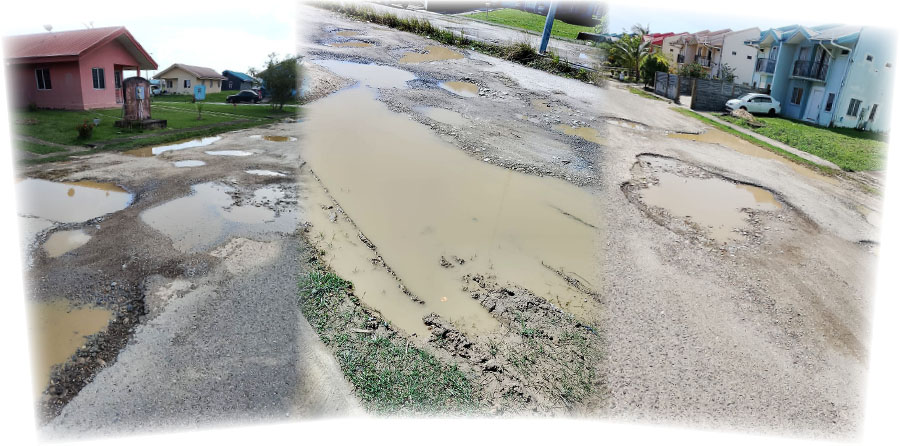
The roads must be properly repaired, not patched indefinitely. Drains must be cleared and structurally assessed. The playfield must be restored, illuminated and placed under organised community management. The abandoned commercial areas should be secured and redeveloped for legitimate businesses and essential services.
A police outreach presence should be established, supported by youth officers and community patrols. After-school programmes, apprenticeships, sport, counselling and small-business support must follow.
Cashew Gardens is not asking for luxury. Its residents are demanding what is rightfully theirs: the basic infrastructure and social institutions that any decent government should have provided from the outset. They are demanding that the State finally fulfil its obligations, not with more empty words, but with real, immediate action. Anything less insults the people who have already endured too much.
The warning that Cashew Gardens is “a disaster waiting to explode” should not be dismissed as emotional language. Communities rarely collapse in a single dramatic moment. They are weakened gradually; one pothole, one abandoned playfield, one closed business, one burglary and one forgotten young person at a time. Over to you now, Member of Parliament, David Lee, to correct the Cashew Gardens neglect of the past.
Cashew Gardens has waited long enough. If both major political parties continue to neglect it, then its deterioration will not be an accident. It will be a choice made by the State in full view of the people suffering its consequences.
