


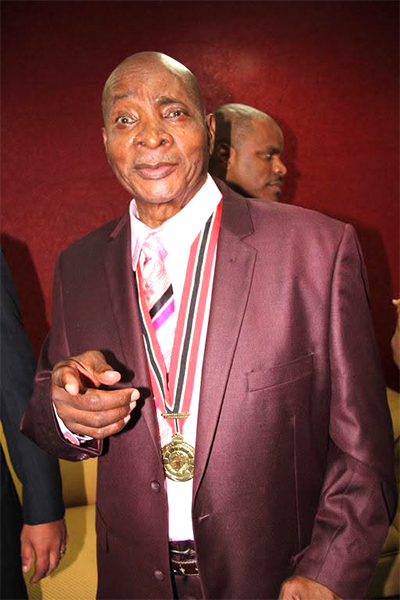



By Dr Jack Warner
Some entertainers become famous, and artistes become legends, but a few exceedingly rare cultural figures become inseparable from a people’s identity. Dr Slinger Francisco, “the Mighty Sparrow,” belonged to that final category.
The Birdie has flown.
Sparrow died peacefully in New York on September 27 at the age of 91, surrounded by loved ones after a brief illness. His passing closes one of the most extraordinary chapters in Caribbean cultural history, but it does not silence him. Men such as Sparrow do not disappear when their voices become still. They migrate from living memory into national inheritance.
Born in Grand Roy, Grenada, in 1935 and brought to Trinidad as a young child, Sparrow would eventually become one of the greatest cultural gifts these islands ever presented to the world. His breakthrough came spectacularly in 1956, when the young calypsonian captured both the Calypso King and Road March titles with “Jean and Dinah”. From there emerged a career extending across more than seven decades and hundreds of recordings, but statistics cannot explain Sparrow.
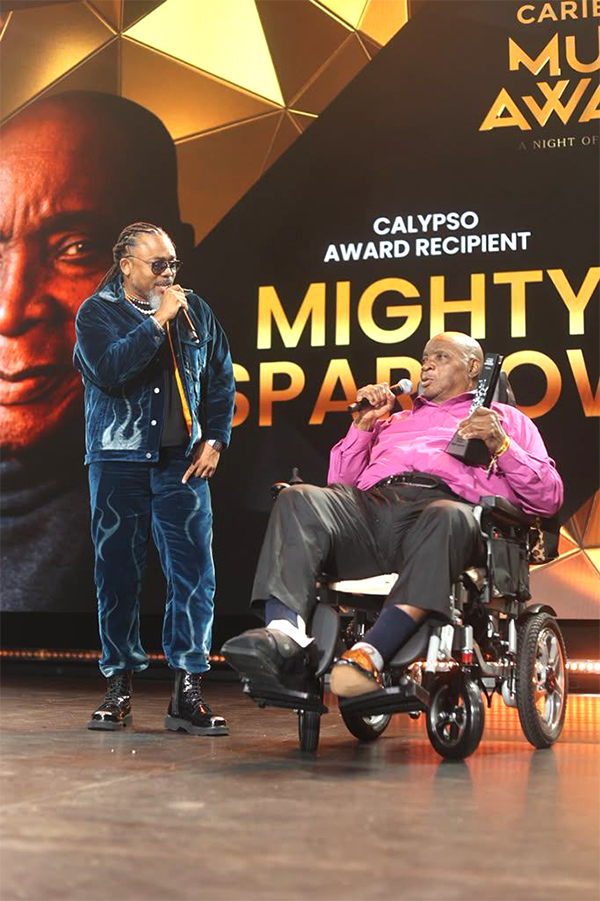
To understand his greatness, one must understand what calypso represented in Caribbean society. It was newspaper, parliament, rum shop, theatre, history book and public conscience compressed into song. Before social media gave everyone a platform, the calypsonian stood before society and told it about itself, and few ever did it better than Sparrow.
He could make an audience laugh while quietly forcing it to confront something uncomfortable. He sang about politics, race, education, relationships, sexuality, colonialism, social pretence and the absurdities of everyday Caribbean existence. His catalogue became, in effect, an alternative archive of West Indian life. Contemporary accounts of his career appropriately emphasise that his work ranged across politics, social questions, culture, relationships and ordinary experience.
Sparrow understood something that many artistes never master: serious commentary does not have to sound like a lecture.
Humour was his weapon. Melody was his vehicle. Language was his playground. Behind the mischievous grin stood an extraordinarily perceptive observer of human behaviour. Sparrow could inhabit characters, expose hypocrisy, ridicule pretension and convert the ordinary vocabulary of Caribbean people into sophisticated social commentary. His genius was making complexity appear effortless.
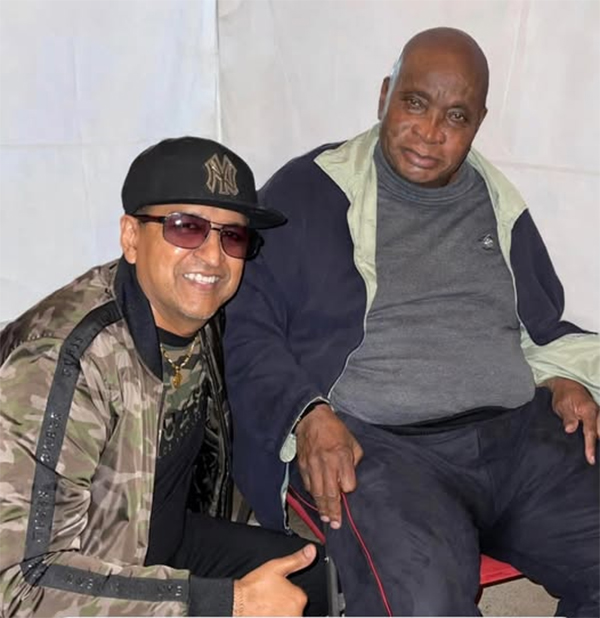
That is why calling him merely a calypsonian somehow feels inadequate.
He was a storyteller, a satirist, a historian without a university archive and a social commentator without a newspaper column. Above all, he was unmistakably Caribbean.
At a time when newly independent societies were still wrestling with questions of identity and cultural legitimacy, Sparrow demonstrated that our voices required neither foreign permission nor foreign translation to possess value. He took the rhythms, humour, anxieties and contradictions of Caribbean people onto international stages, including Madison Square Garden. That contribution should matter enormously to Trinidad and Tobago today.
We sometimes behave as though culture is entertainment added to the serious business of nation-building. Sparrow’s life demonstrated precisely the opposite. Culture is part of how nations are built. Songs preserve memories. Stories transmit values. Artistes create identities that governments could never manufacture through policy documents.
Generations who never experienced the Trinbago of Sparrow’s youth can still encounter fragments of it through his music. Future generations will hear vocabulary, attitudes, controversies and social conditions that might otherwise disappear. That makes his catalogue more than music; it makes it heritage.
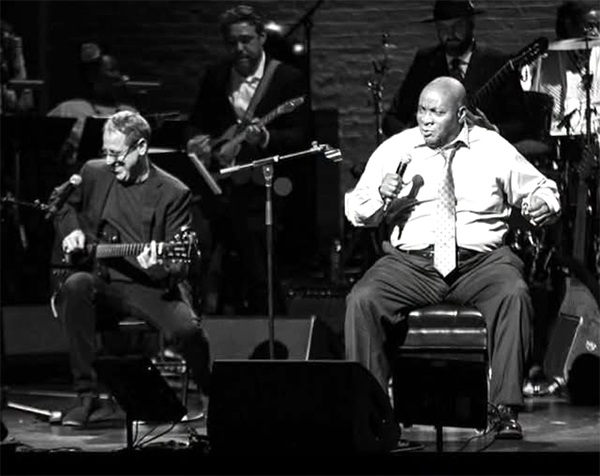
Francisco, the Mighty Sparrow
And now that Sparrow is gone, Trinidad and Tobago owes him something greater than condolences, ceremonies and predictable speeches about his greatness. His recordings, compositions, interviews, performances, photographs and personal history should be systematically preserved, digitised, studied and introduced to younger generations. Schools should teach the social history contained within calypso. Universities should examine its literature. Cultural institutions should ensure that Sparrow’s contribution remains accessible long after those who saw him perform have passed away, because nations reveal what they value by what they preserve.
Sparrow received significant recognition during his lifetime, including national honours, while the University of the West Indies conferred an honorary Doctor of Letters upon him in 1987. Yet perhaps his greatest honour cannot be bestowed by any institution. It is heard whenever Caribbean people repeat his melodies. It exists whenever another calypsonian discovers that humour can challenge authority. It survives whenever a young Caribbean artiste believes that a voice emerging from these small islands can command a global audience.
Sparrow lived for 91 years. His music will live considerably longer.
There will never be another Mighty Sparrow because cultural giants are not manufactured to specification. They emerge at particular moments, absorb the character of their societies and somehow find the language to express what millions of people recognise but cannot articulate themselves.
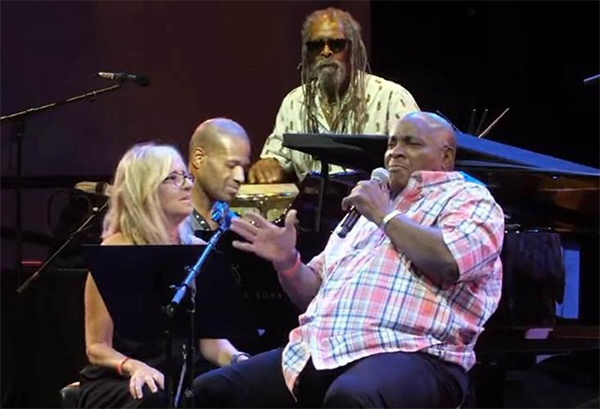
Lincoln Centre for the Performing Arts in Manhattan, New York
Slinger Francisco did that for us.
He made us laugh at ourselves. He made us uncomfortable with ourselves. He recorded us. He represented us, and across more than seven decades, he helped the Caribbean hear its own voice and recognise that it was worthy of being heard by the world.
The stage is quieter today.
The Birdie has finally flown.
But somewhere beyond mortality, one imagines that unmistakable voice beginning another verse.
And here in the Caribbean, we will continue singing the chorus.
