


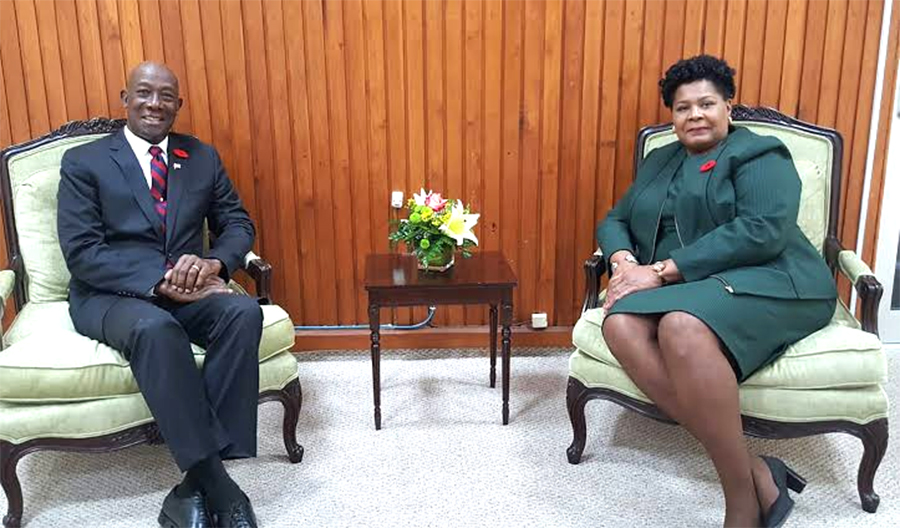



People are saying that the expression, “Where ignorance is bliss, ’tis folly to be wise,” has little relevance to the $250,000 judgment delivered by High Court Judge Kevin Ramcharan, who found former Police Service Commission (PolSC) Chairman Bliss Seepersad liable for misfeasance in public office. The case arose from her 2021 unilateral withdrawal of the Order of Merit List, which had placed Gary Griffith at the top for reappointment as Commissioner of Police.
People are saying that Seepersad, who was appointed by then President Paula-Mae Weekes, wrongly believed she was obliged to withdraw the list after being informed by then Prime Minister Dr Keith Rowley, in his capacity as Chairman of the National Security Council (NSC), about a report containing allegations that could affect Griffith’s selection process. It appears that Bliss found herself overwhelmed during the meeting at President’s House, in the presence of President Weekes and Prime Minister Rowley.
People are saying that Gary Griffith is justified in calling for a police investigation into the roles played by former Prime Minister Dr Keith Rowley and former President Paula-Mae Weekes in the events surrounding the 2021 Commissioner of Police selection process. Such an investigation, he argues, should determine whether their actions amounted to misconduct, misbehaviour in public office or any other breach of the law.
People are saying that Bliss Seepersad now finds herself facing the financial consequences alone, having been ordered to pay Gary Griffith $250,000 in damages, together with his legal costs, for acting outside her lawful authority.
People are saying that this judgment should serve as a warning to persons appointed to state boards and commissions who accept questionable advice from ministers, particularly when that advice is given over the telephone rather than formally in writing. When the time comes to account for their decisions, those appointees may discover that the persons who advised them are nowhere to be found and that hey are left holding the proverbial baby.
The question remains: if others were involved in the discussions and decisions that led to this debacle, should Bliss Seepersad alone bear the consequences? Accountability should not be selective.
If de police could kill, who is we, soldiers now seem to be saying?

People are saying that the question of who is authorised to use lethal force, and under what circumstances, has become increasingly troubling. The concern is no longer confined to the conduct of the police, but now extends to members of the Trinidad and Tobago Defence Force.
People are saying that the Police Complaints Authority (PCA) has recorded 39 fatal police-involved shooting incidents for 2026, with figures reportedly identifying 45 victims and listing three as unknown. Between August 1 and October 28, there were reportedly 15 fatal police-involved shooting incidents involving 19 victims.
People are saying that, in a significant number of these incidents, relatives of deceased persons dispute the police account that officers were fired upon first and returned fire. They question how, in so many cases, the officers survive these encounters while the alleged assailants end up dead, with firearms always reportedly recovered at the scenes.
People are saying that there is a danger that soldiers may begin to believe that if police officers can repeatedly escape serious consequences following fatal encounters, they too can act with similar impunity. This concern has been heightened by the killing of 19-year-old Aaron Anderson, who was shot dead by a Defence Force sergeant during a raid at his home on Delhi Road, Fyzabad.
People are saying that residents of Fyzabad and Anderson’s relatives deserve answers, and that the circumstances surrounding his death must be thoroughly and independently investigated. The uniform worn by any officer must never become a shield against accountability.
People are also saying that their repeated calls for police officers to wear body cameras have fallen on deaf ears, while the authorities continue to praise the police for doing a good job. Body cameras would provide an additional layer of transparency, help protect innocent officers against false allegations and provide valuable evidence when questions arise about the use of force.
But people are warning that time longer than twine. Public confidence cannot be maintained indefinitely by official statements and assurances. When lives are lost during encounters with law enforcement, the public is entitled to answers.
US Coast Guard seizes US$27 million worth of cocaine in Caribbean Sea
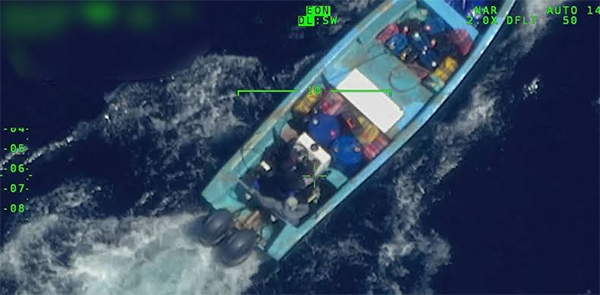
valued at an estimated US$27 million
People are saying that they read with amazement how the United States Coast Guard intercepted and seized a substantial quantity of cocaine in the Caribbean Sea, without anyone being reported shot dead or a vessel blown up.
For those who missed the report, the following is a summary of the account published by the media:
“The United States Coast Guard offloaded approximately 3,622 pounds of cocaine, valued at an estimated US$27 million, following two interdictions in the Caribbean Sea. The drugs and four detainees were brought ashore at Port Everglades, Florida, on Wednesday, November 4, 2026. The detainees were handed over to federal agents for further investigation.
Lieutenant John Colucci, commanding officer of Coast Guard Cutter William Trump, praised the professionalism of the personnel involved and highlighted the cooperation between the Coast Guard, Joint Interagency Task Force South, US Customs and Border Protection and international partners.
The Coast Guard said the operation formed part of its continuing efforts to prevent illegal drugs from reaching American communities and disrupt transnational criminal organisations”.
People are asking what has caused this sudden change in US policy, but then they remembered that the seizure took place the day after President Donald Trump and the Republican Party, the GOP, suffered a significant setback in the midterm elections.
People were heard saying that a lost US election can bring about a remarkable change in attitude. They expressed the hope that this apparent appreciation for restraint and professionalism would also influence the conduct of US Immigration and Customs Enforcement (ICE) agents.
Perhaps the lesson is that effective law enforcement does not have to be measured by the number of people killed or boats destroyed. Sometimes, the best operation is the one in which the suspects are arrested, the evidence is secured and everyone comes out alive.
Human trafficking in T&T is alive and well
critical role in facilitating the trafficking ring between Trinidad and
Tobago and Venezuela
People have taken note that Trinidad and Tobago recorded only two convictions for human trafficking offences, despite 85 persons appearing before the courts for trafficking and related offences between 2013 and 2024. These figures have raised serious questions about the effectiveness of police investigations and prosecutions, as well as the support available to victims expected to participate in criminal proceedings.
People are saying that, given the scale of human trafficking believed to exist in Trinidad and Tobago, the low number of convictions is deeply concerning to the Caribbean Centre for Human Rights. They are questioning whether law enforcement agencies are doing enough to gather the evidence necessary to secure convictions and bring traffickers to justice.
People are saying that the situation is particularly disturbing because victims may be afraid to report their experiences or cooperate with investigators. They fear for their personal safety and worry that information supplied to the authorities could find its way back to the very people responsible for exploiting them.
People are saying that it is not enough to have legislation, task forces and public statements condemning human trafficking. Victims must be protected, witnesses must have confidence in the justice system, and investigations must be sufficiently thorough to withstand scrutiny in court.
Two convictions over such an extended period should cause considerable concern. Human trafficking is not merely a law-enforcement problem; it is a serious violation of human dignity and human rights.
The question is whether Trinidad and Tobago is doing enough to protect the vulnerable and dismantle the networks responsible for this modern form of slavery.
