


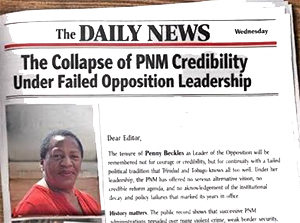



By Dr Jack Warner
The People’s National Movement has survived political defeat before. It survived 1986, rebuilt under Patrick Manning, returned to government, lost again and eventually returned under Keith Rowley. Its history therefore suggests that electoral defeat need not become political extinction. Still, recovery begins with an uncomfortable requirement: a party must understand why people stopped trusting it before it can reasonably expect them to trust it again.
The PNM’s present difficulty did not begin with the April 2025 general election. The succession controversy preceding it exposed deeper questions about leadership, internal democracy and renewal. When Dr Keith Rowley announced his departure, the parliamentary caucus selected Stuart Young over Pennelope Beckles by 11 votes to nine. Young subsequently became Prime Minister by two votes on March 17.
Some senior PNM figures publicly objected to the succession process. Jennifer Baptiste-Primus argued that the party’s General Council should have the final say and warned against bypassing established party processes. Whether one agreed with those objections or not, they revealed something politically damaging: a party renowned for discipline suddenly appeared uncertain about how leadership itself should be transferred.
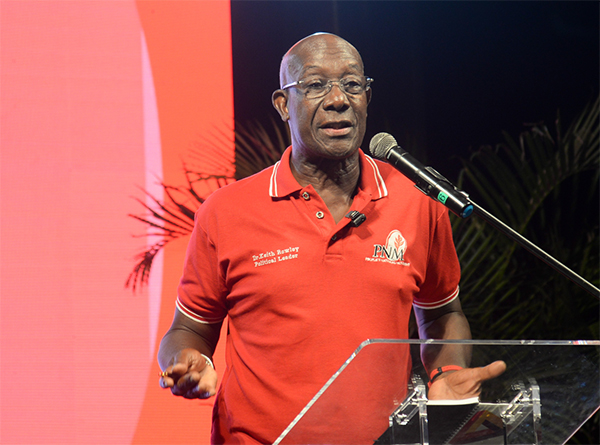
Movement (PNM), effective Thursday, May 1, 2025
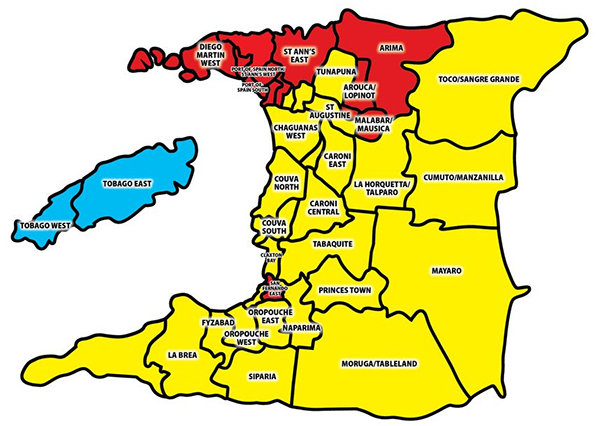
The electorate delivered its judgment on April 28. The UNC won 26 constituencies, the PNM 13 and the Tobago People’s Party two. Elections never have a single cause, so it would be simplistic to attribute that defeat solely to the Young succession. But the result should have forced a fundamental examination of what the PNM had become.
Pennelope Beckles, now its political leader, has herself acknowledged that the party “lost its way”. That admission should become the beginning of reconstruction rather than another political slogan.
The first requirement is intellectual renewal.
Opposition is not government with the microphone reversed. Its purpose cannot simply be to condemn whatever the Government proposes. Parliament is where an alternative government demonstrates whether it possesses the intellectual capacity to govern. Every major debate should therefore reveal research, policy alternatives, command of legislation, financial analysis and understanding of consequences.
The objective should not be the loudest contribution. It should be the contribution citizens remember because it exposed something the government overlooked.
When legislation is sound, say so. When its objective is legitimate but its drafting is defective, propose amendments. When government policy is wrong, explain precisely why and present an alternative. Opposition becomes credible when citizens can imagine its criticisms transformed into policy.
Second, the PNM must distinguish experience from entitlement.

Experienced former ministers possess institutional knowledge that should not simply be discarded. But renewal cannot mean rearranging familiar personalities and presenting the result as transformation. Former general secretary Ashton Ford argued after the 2025 defeat that rebuilding required new blood. The challenge, then, is to combine institutional memory with a genuine opening for another generation.
That requires identifying credible voices in economics, technology, energy, education, agriculture, national security, climate policy and public administration. A party seeking renewal needs people who understand the Trinidad and Tobago that is emerging, not merely the Trinidad and Tobago, its political traditions remember.
Third, the PNM must reconnect with its membership.
Its June 2025 internal election should have been sobering. Although more than 100,000 members were reportedly eligible, only slightly more than 7,000 participated. Beckles was unopposed for political leader. Whatever explanations exist, such participation raises legitimate questions about enthusiasm within the organisation itself.
A political party cannot demand national confidence while struggling to engage its own members.
Fourth, it needs humility.
The PNM’s longevity is both an asset and a danger. A party that has governed repeatedly can gradually confuse historical importance with permanent entitlement to govern. No party owns Trinidad and Tobago. Political loyalty is borrowed, not inherited, and every generation of voters can withdraw it.
That means listening to communities without assuming criticism is hostility. It means examining why traditional supporters stayed home or changed allegiance. It means understanding younger citizens whose political identities may not be inherited from their parents.
Most importantly, renewal requires allowing the Rowley era to become history.
That does not require repudiating everything accomplished under his leadership. Mature institutions preserve achievements while examining failures, but Beckles cannot lead convincingly if every decision is interpreted through the personalities and conflicts of the previous administration. Her leadership must eventually become recognisably her own.
The PNM therefore does not primarily need a better slogan, sharper attack lines or louder parliamentary performances. It needs institutional seriousness: internal democracy, policy depth, generational renewal, parliamentary competence and the humility to learn from defeat.
Political parties recover when citizens begin believing they have learned something while outside government. The PNM has already demonstrated throughout its history that it can survive defeat. The more difficult question is whether it can change.
Before any political party can credibly ask Trinidad and Tobago to trust it with government again, it must show that losing power taught it why it lost.
