





Dear Editor,
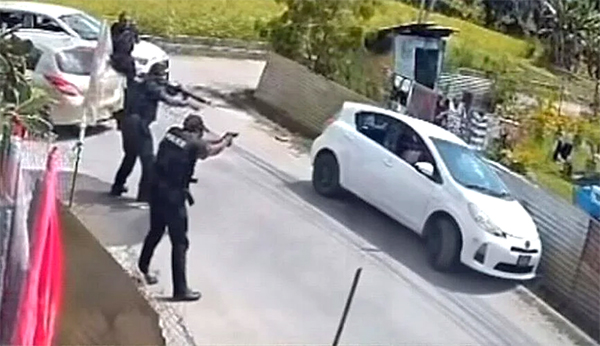
The killing of Joshua Samaroo and the serious injury sustained by Kaia Sealey have once again forced the nation to confront uncomfortable questions about alleged extrajudicial killings and the state of policing in Trinidad and Tobago.
Over the past three years, 167 people have died during police-involved incidents, a figure that has deeply unsettled the public and intensified scrutiny of how lethal force is used, explained, and reviewed.
Public confidence has been further strained by repeated official statements from Commissioner of Police Allister Guevarro, in which fatal encounters are routinely described as shootouts conducted in accordance with police use of force policy.
While such explanations may reflect initial operational accounts, they have increasingly failed to reassure a population already fatigued by persistent violence and unresolved questions.
In this most recent case, video footage circulating publicly appears to contradict the initial narrative, renewing calls for independent investigation and transparency.
For many citizens, this moment feels uncomfortably familiar. It recalls the 1970s, when Randolph “the Fox” Burroughs, as Commissioner, confronted the National Union of Freedom Fighters (NUFF).
That period was marked by widespread allegations of extrajudicial killings, allegations that were never meaningfully resolved because a crime-weary nation appeared willing to trade accountability for a sense of order.
The consequences were profound: the radicalisation of a generation, declining witness cooperation, falling case-clearance rates, weakened community trust, and a lasting erosion of police legitimacy marked Burroughs’ reign.
By the end of that decade, Burroughs’ tenure was no longer revered; he and members of the Flying Squad became figures of controversy rather than confidence, a legacy that still lingers, a cautionary tale for Allister Guevarro.
Today, the police indeed face a crisis, and January alone is telling. As of January 24, 2026, 29 citizens had been murdered, already exceeding the 25 murders recorded over the period during the previous year.
This grim comparison suggests that narrative reassurance is being overtaken by performance realities. Yet this is no reason for the State to present the country with a false choice between “strong policing” and “rights.”
Police overreach
History offers sobering reminders that strong policing, when unmoored from accountability, can be disastrously wrong. The death of PC Clarence Gilkes remains a cautionary example of questionable police behaviour; one that Commissioner Guevarro would do well to revisit with then Acting Commissioner McDonald Jacob.
More recently, the deaths of 21-year-old Fabien Richards, his 17-year-old cousin-in-law Isaiah Roberts, and Leonardo Williams stand as stark warnings about police overreach, particularly when autopsies reportedly showed gunshot wounds from behind, to the back, the back of the head, and even the buttocks.
At a time when the State is asking Parliament for expanded police powers, these memories do not comfort the public. They heighten anxiety.
The burden, therefore, falls on the Commissioner and the wider security leadership to demonstrate, clearly and consistently, that accountability is not an obstacle to effective policing but its foundation.
The choice before us is not between safety and justice. The evidence from small societies shows that justice, properly applied, is how safety that lasts is achieved.
Transparent investigations, credible oversight, meaningful witness protection, and measurable improvements in case-clearance rates are not concessions; they are force multipliers.
If we fail to learn from our own history, we risk repeating it at great cost to trust, legitimacy, and ultimately, public safety.
Hugo Maynard
