





By Dr Jack Warner
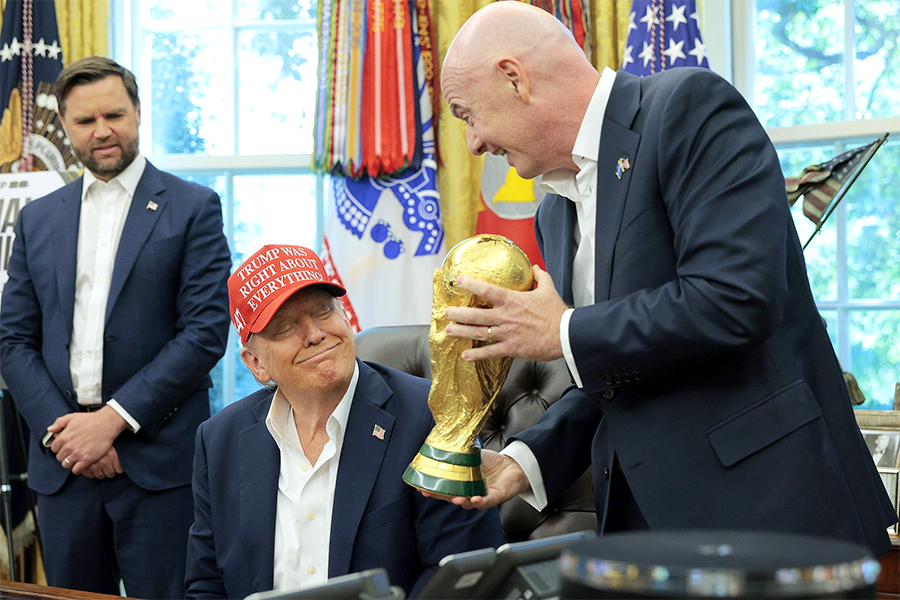
Donald Trump’s midterm election setback has created an uncomfortable new reality for FIFA President Gianni Infantino. A relationship that once provided exceptional access to the White House could now expose him to renewed congressional scrutiny, embarrassing disclosures and serious questions about his leadership.
With Democrats now controlling Congress, decisions involving Trump and FIFA may face closer scrutiny when the new legislature convenes in January 2027.
For Infantino, whose presidential future is already attracting scrutiny, the timing could hardly be more sensitive.
The controversy centres on whether his relationship with Trump crossed the line between legitimate cooperation with a World Cup host government and inappropriate political influence.
Nothing illustrates that concern more sharply than the extraordinary intervention involving American footballer Folarin Balogun.
During the 2026 World Cup, Balogun received a red card against Bosnia-Herzegovina, triggering a one-match suspension that would have kept him out of the United States’ knockout encounter with Belgium.
Trump personally telephoned Infantino requesting a review.
FIFA subsequently deferred the suspension for a one-year probationary period, allowing Balogun to play.
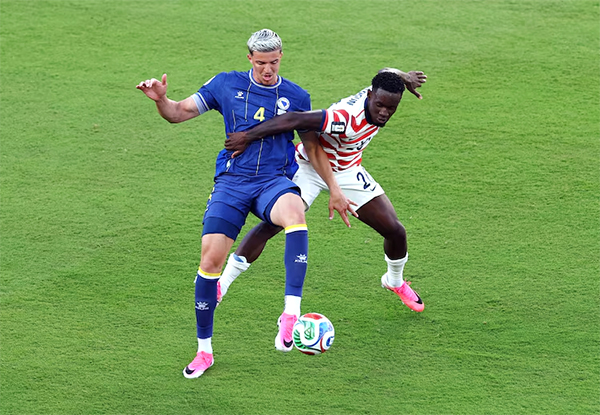
shown a red card during their FIFA World Cup 2026 Round of 32 match July 1, 2026
The red card remained valid, and FIFA insisted that its independent disciplinary committee had acted within the provisions of its Disciplinary Code.
Trump acknowledged making the request but denied directing the outcome.
No established finding shows that Infantino improperly influenced the committee.
Nevertheless, the circumstances demand an explanation that goes beyond assurances of independence.
Would a similar request from the political leader of Trinidad and Tobago, Jamaica or another smaller football nation have received equivalent consideration?
Were comparable disciplinary precedents examined? What procedures ensured that presidential intervention did not influence the decision?
Belgium challenged the outcome, but FIFA rejected its appeal because the Belgian federation lacked standing.
That procedural response did not resolve the wider question of public confidence.
For an organisation governing football across more than 200 member associations, applying disciplinary rules equally is fundamental.
The Balogun affair was not the only controversy involving Infantino and Trump.
In December 2025, Infantino presented Trump with FIFA’s inaugural Peace Prize, provoking criticism over the award’s political character and the transparency of its selection process.
Why was FIFA honouring a sitting political leader for achievements outside football?
Who determined the criteria, and what independent safeguards governed the decision?
FIFA’s establishment of offices in Trump Tower raised additional questions about commercial arrangements and the appearance of political favour.
In July, Democratic Congressman Jamie Raskin sought information on FIFA’s communications, financial relationships, and dealings with Trump, his administration, and associated businesses. Those inquiries preceded the midterm elections.
The incoming Democratic congressional majorities could now provide a stronger institutional platform to examine the same matters.
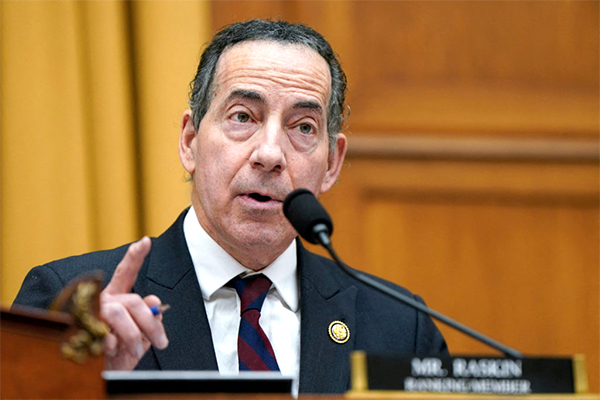
Infantino may find that questions previously addressed through public statements become demands for documents, testimony and detailed explanations.
Another controversy involved FIFA’s proposed commercial investment arrangement, which attracted attention because Thrive Capital, led by Josh Kushner, was among the potential investors. Josh Kushner is the brother of Jared Kushner, who is Trump’s son-in-law.
That relationship does not establish wrongdoing. However, it creates legitimate questions about potential conflicts of interest, independent valuation and the protection of FIFA’s commercial assets.
The proposal was subsequently withdrawn following opposition within international football.
UEFA also demanded answers concerning FIFA governance, the Peace Prize, the Balogun decision and commercial relationships.
These developments suggest that Infantino’s difficulties extend beyond American partisan politics; they concern the credibility of FIFA’s leadership.
His proposed 2027 re-election adds another complication, with disagreement continuing over how to interpret presidential term limits.
Infantino retains significant support among football associations, and neither congressional scrutiny nor governance controversy automatically threatens his removal, but leadership depends on more than securing votes.
FIFA’s president must demonstrate that decisions affecting the world’s most popular sport are made independently, transparently and without preferential treatment for powerful political figures.
Trump’s electoral defeat has not ended his presidency or eliminated his influence. It has, however, changed the political environment surrounding FIFA’s relationship with his administration.
Infantino now faces the prospect that decisions once celebrated as evidence of privileged access could be revisited as questions of institutional independence and accountability.
For smaller football nations, including Trinidad and Tobago, the principle matters most. They must be confident that FIFA’s rules apply equally to every member, regardless of political influence or financial power.
The consequences for Infantino’s presidency remain uncertain. Investigations could establish that he acted improperly, identify governance weaknesses or uncover matters requiring further action.
Infantino cultivated a relationship with one of the world’s most powerful political leaders. After Trump’s midterm defeat, a dark cloud now hangs over Infantino, and that relationship with the US President could become a defining test of his leadership.
Football belongs to the world, not to the occupants of the White House.
And FIFA’s president must answer to football, not political power.
