





By Wayne Griffith
Trinidad and Tobago has been called upon to defend its human rights record before the United Nations. The questions raised in Geneva should concern every citizen who believes that fighting crime and protecting constitutional freedoms are equally important responsibilities of government.
The Trinidad Express report of November 10, headlined “T&T DEFENDS SOES”, reveals that the country’s representatives faced questions concerning repeated states of emergency, allegations of excessive police force, violent crime and human trafficking.
The proceedings expose a troubling contradiction. Trinidad and Tobago presents itself internationally as a constitutional democracy committed to justice and the rule of law. Yet at home, concerns persist about emergency powers, police accountability and the protection of vulnerable people.
Is our human rights reputation being tarnished by the very measures intended to protect national security?
Successive governments have confronted serious criminal threats. Citizens have endured murders, armed robberies, kidnappings and intimidation. They understandably demand decisive intervention, but the seriousness of crime cannot justify unlimited restrictions on constitutional rights.
States of emergency are extraordinary constitutional instruments, intended to address exceptional threats. Their repeated use raises questions about whether temporary emergency powers are becoming substitutes for effective policing and sustainable crime prevention.
During an emergency, expanded powers of arrest, search and detention may significantly affect individual liberties. The Government must therefore demonstrate that such measures are necessary, proportionate and subject to meaningful judicial oversight.
It must also explain whether they produce lasting reductions in criminal activity or merely temporary improvements that disappear when restrictions expire. The burden of justification rests with those exercising extraordinary powers.
Equally disturbing are concerns surrounding police-involved killings. According to figures attributed to the Police Complaints Authority, 69 people died in 56 police-involved fatal shooting incidents during 2025. By October 2026, another 32 deaths had reportedly occurred across 27 incidents.
These deaths cannot automatically be classified as extrajudicial executions. Police officers confronting immediate threats have a lawful right to defend themselves and others. Nevertheless, every fatal shooting involving state agents demands an independent, credible investigation, which is rarely forthcoming.
The public must know whether deadly force was necessary, proportionate and consistent with the law. This is where the stewardship of Homeland Security Minister Roger Alexander becomes particularly relevant.
As a former senior police officer, Alexander should appreciate the importance of evidence, professional standards and public confidence. Yet the continuing controversy over body-worn cameras raises questions about whether sufficient priority has been given to independent accountability.
Cameras cannot prevent every unlawful act. They can, however, provide important evidence, protect officers against false allegations and assist investigators when accounts conflict.
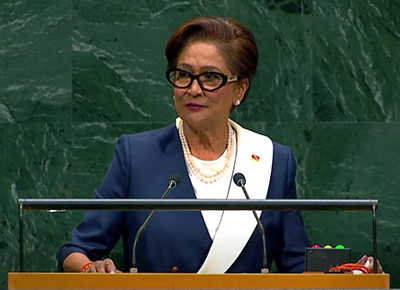
The Government should establish enforceable recording requirements, strengthen the Police Complaints Authority and publish meaningful information about investigations into fatal police shootings. Prime Minister Kamla Persad-Bissessar must also make clear that protecting police officers does not mean tolerating unlawful violence.
Her administration has a responsibility to ensure that allegations of misconduct are independently examined and that criminal wrongdoing, where established, attracts appropriate consequences.
The human trafficking concerns raised in Geneva are equally serious.
Trafficking exploits vulnerable people through coercion, deception and abuse. Victims may include migrants, women, children and persons facing economic hardship. Effective legislation is necessary, but laws alone cannot protect victims.
Government must demonstrate that trafficking investigations lead to prosecutions, that survivors receive adequate protection and that vulnerable migrants can report exploitation without unnecessary fear.
The UN review also highlighted concerns involving refugees, asylum seekers, prison conditions and discrimination. These issues cannot be dismissed as foreign interference.
Trinidad and Tobago voluntarily participates in international human rights mechanisms and has accepted obligations arising from international agreements.
The Universal Periodic Review is not a criminal trial. It is a process through which governments explain their performance, acknowledge shortcomings and consider recommendations for improvement. Our representatives defended national security measures while reaffirming the country’s commitment to fundamental rights. Those assurances must now be translated into measurable action.
The government should publish an implementation programme addressing the concerns raised in Geneva, including clear responsibilities, deadlines, and public reporting. Parliament must exercise meaningful oversight, while civil society and independent institutions should be able to scrutinise progress without intimidation.
The ultimate measure of national security is not simply the number of criminals arrested or the reduction in recorded murders. It is whether citizens can live safely while enjoying the constitutional protections that distinguish democratic government from arbitrary power.
A State that protects citizens from criminals but fails to protect them against unlawful exercises of state authority has not fulfilled its democratic responsibility.
Trinidad and Tobago’s international reputation will not be damaged merely because uncomfortable questions were asked in Geneva. It will be damaged if those questions remain unanswered, legitimate concerns are dismissed, and the government fails to demonstrate that the rule of law applies equally to criminals, citizens and those entrusted with enforcing it.
The United Nations has held up a mirror to Trinidad and Tobago. The government’s responsibility is not simply to defend the reflection but to correct whatever wrong that reflection reveals.
