





By Sam Frimpong
Trinidad and Tobago has had legislation to combat human trafficking since 2011. Yet, more than a decade after the passage of the Trafficking in Persons Act, the country continues to face serious questions about enforcement, victim protection and the prosecution of perpetrators.
Despite some progress, persistent concerns about official complicity, inadequate victim identification, weak evidence collection and insufficient support for victims raise fundamental questions about the effectiveness of the country’s anti-trafficking framework.
The United States Department of State’s 2025 Trafficking in Persons Report retained Trinidad and Tobago at Tier 2. This classification means that the Government does not fully meet the minimum standards for eliminating trafficking but is making significant efforts to do so. Nevertheless, continuing weaknesses require urgent attention.
The question is not simply why Trinidad and Tobago remains at Tier 2, but why, after so many years, the country continues to struggle with implementing legislation intended to protect some of society’s most vulnerable people.
The United Nations Raises Further Concerns
A report published in the Trinidad Guardian on November 10, 2026, highlighted renewed international scrutiny of Trinidad and Tobago’s human rights record following its fourth Universal Periodic Review before the United Nations Human Rights Council in Geneva.

Tobago Chamyantie Lal
Among the issues raised were human trafficking, the treatment of migrants, discrimination, the death penalty and deficiencies in the country’s legislative framework.
Several countries urged Trinidad and Tobago to strengthen enforcement, improve victim identification and ensure adequate support for those subjected to exploitation.
The country’s delegation, led by Chargée d’Affaires Chamyantie Lal, reaffirmed the Government’s commitment to protecting human rights while acknowledging that further work was necessary.
However, declarations of commitment must translate into measurable action.
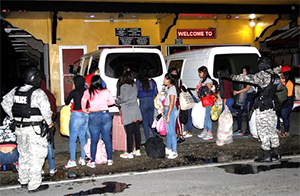
During Operation Resolute Shield in October 2026, the Counter-Trafficking Unit (CTU) screened 14 Venezuelan nationals and identified two minors as potential trafficking victims. The children were subsequently transferred to the Children’s Authority.
This development illustrates the importance of proactive screening, particularly where children and vulnerable migrants are concerned. It also raises questions about how many other potential victims remain unidentified and exposed to exploitation.
Trinidad and Tobago is a signatory to the United Nations Convention on the Rights of the Child. Its obligations must extend beyond formal commitments to the practical protection of children, regardless of nationality or immigration status.
The Trafficking in Persons Act, 2011: What Does the Law Require?
The Trafficking in Persons Act, No. 14 of 2011, was enacted to give effect to the United Nations Protocol to Prevent, Suppress and Punish Trafficking in Persons, Especially Women and Children. Although passed in 2011, it came into operation on January 2, 2013.
The legislation defines trafficking in persons to include the recruitment, transportation, transfer, harbouring or receipt of persons through force, coercion, abduction, fraud, deception, abuse of power or vulnerability for the purpose of exploitation.
In the case of children, trafficking is established where a child is recruited, transported, transferred, harboured or received for exploitation, irrespective of whether the prohibited means required in cases involving adults are present.
The principal objectives of the Act include protecting and assisting victims, facilitating investigations and prosecutions, and promoting cooperation with other states to prevent trafficking and punish offenders.
The legislation is therefore not deficient in its stated objectives. The greater concern is whether the institutions responsible for implementing it possess the resources, independence, expertise and determination to achieve those objectives.
The Venezuelan Crisis and the Vulnerability of Migrants
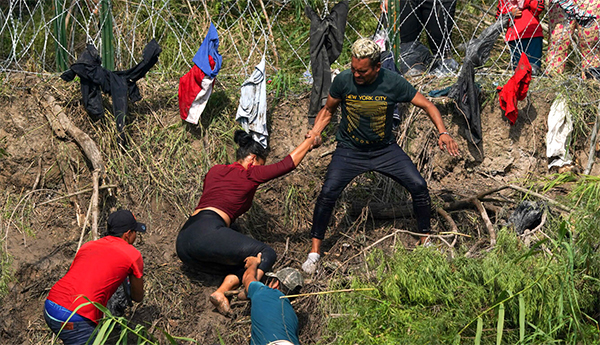
The political and economic crisis in neighbouring Venezuela has contributed to significant migration into Trinidad and Tobago. This movement has created humanitarian and national security challenges while increasing the vulnerability of certain migrant populations to exploitation.
Women and girls, particularly those experiencing economic hardship or lacking secure immigration status, may become targets of traffickers through fraudulent employment offers, false promises of financial assistance and deceptive relationships.
Unaccompanied or separated children are particularly vulnerable to sexual exploitation, forced labour and domestic servitude.
The problem is not confined to one nationality or sector. Individuals working in domestic employment, bars, nightclubs, informal construction and other poorly regulated environments may also face labour exploitation.
It is important to distinguish between irregular migration and human trafficking. Not every undocumented migrant is a trafficking victim, and not every trafficking victim has entered the country unlawfully. Failure to recognise this distinction can result in victims being treated as immigration offenders rather than people requiring protection.
The Government must therefore ensure that immigration enforcement does not undermine its obligations to identify, protect and assist trafficking victims.
Organised Crime, Corruption and Accountability
Human trafficking is a lucrative form of transnational organised crime. It thrives on vulnerability, secrecy, exploitation and the ability of criminal networks to move people across borders while concealing their activities and profits.
Trinidad and Tobago’s geographical position, proximity to Venezuela and extensive maritime boundaries present considerable challenges for border surveillance and enforcement.
However, the problem cannot be addressed exclusively through immigration controls, police operations or occasional raids. Effective intervention requires intelligence gathering, coordinated investigations, financial investigations, evidence preservation and successful prosecutions.
Of particular concern are allegations of corruption and official complicity. International assessments have previously identified alleged complicity involving persons within law enforcement and national security agencies as a significant concern.
These allegations demand independent investigation and appropriate action wherever evidence establishes wrongdoing. No public official, regardless of rank or position, should be beyond accountability. Equally, allegations must be established through credible evidence rather than indiscriminate accusations against entire categories of public officers.
The effectiveness of the CTU must also be examined. Is it adequately staffed? Does it have sufficient investigative resources? Are officers receiving specialised training? Is there effective coordination with the Police Service, Immigration Division, Coast Guard, Children’s Authority and Office of the Director of Public Prosecutions?
The prosecution record deserves particular attention. During the November 2026 United Nations review, the Government reported that 85 persons had appeared before the courts for trafficking and related offences between 2013 and 2024. The country’s first conviction for trafficking was recorded in 2023, followed by another in 2025.
While these convictions represent progress, the figures raise legitimate questions about the relationship between investigations, prosecutions and successful convictions.
Why has the country struggled to translate investigations into convictions? Are there weaknesses in evidence gathering, witness protection, prosecutorial preparation or interagency cooperation? Are victims sufficiently supported to participate in criminal proceedings?
These questions demand transparent answers.
Moving Beyond Rhetoric: What Must Be Done?
If Trinidad and Tobago is serious about eliminating human trafficking, it must move beyond declarations of commitment and occasional enforcement exercises.
First, the CTU must be strengthened and given the operational independence, professional expertise and resources necessary to investigate trafficking without fear, favour or interference. An independent oversight mechanism should also be considered to investigate allegations of misconduct and strengthen public confidence.
Second, victim identification must become a priority. Police, immigration and Coast Guard officers must receive specialised training to recognise trafficking indicators. Migrants must not automatically be treated as immigration offenders where there are reasonable grounds to suspect exploitation.
Third, victim support services must be strengthened. Safe accommodation, medical and psychological assistance, legal representation, translation services and appropriate immigration protections are essential, particularly for children and vulnerable women.
Fourth, the Government must improve the collection and publication of reliable statistics. The public deserves to know how many investigations have been initiated, victims identified, prosecutions commenced and convictions secured.
Finally, Trinidad and Tobago must strengthen regional and international cooperation to dismantle trafficking networks, investigate financial transactions and prosecute those who profit from human exploitation.
Conclusion: A Test of Our National Conscience
Human trafficking is not merely an immigration problem or a matter of national security. It is a fundamental violation of human dignity, human rights and the rule of law.
The exploitation of women and children for sexual purposes, the use of vulnerable migrants for forced labour and the commercialisation of human suffering represent a profound failure of the State’s responsibility to protect those within its jurisdiction.
We cannot claim to uphold human rights while allowing institutional weaknesses, inadequate enforcement and failures of accountability to undermine the protection of vulnerable people.
The Government must recognise that passing legislation is only the beginning. The true test of leadership is whether that legislation is implemented effectively, perpetrators are brought before the courts and victims are protected rather than further victimised.
There must be no room for official complicity, political interference, corruption or indifference. Anyone found to have facilitated or profited from human trafficking must face the full consequences of the law.
The time has come for a comprehensive review of the national anti-trafficking framework, including the structure, operational independence and oversight of the CTU. Trinidad and Tobago must demonstrate that it is prepared to confront this crime decisively.
The measure of a civilised society is not simply the strength of its laws or the international conventions it signs, but how it treats its most vulnerable people. Human trafficking must never become an accepted cost of doing business, an unfortunate consequence of migration or an embarrassment to be managed when international reports expose our shortcomings. The exploitation of human beings demands more than promises. It demands action, accountability and justice.
