


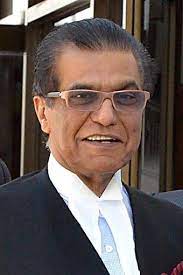



Attorney Ramesh Lawrence Maharaj SC said Tuesday’s Privy Council decision ought not to be interpreted as deciding that the repeated declarations of State of Emergencies made since 2024 were valid.
He said the appeals, which he brought to London concerning the 2011 State of Emergency, arose from a specific Proclamation made in response to circumstances prevailing at that time including an escalation in gang related murders, and intelligence concerning retaliatory violence following substantial drug seizures as well as a report of conspiracy to assassinate the Prime Minister.
Maharaj added, “The frequency and duration of the recent States of Emergency raised additional constitutional questions which are to be considered in light of the principles endorsed by the JCPC in the appeal of Earl Elie and Others, which include that a State of Emergency should be short lived, the restrictions on fundamental rights must be temporary (not indefinite) and ought not to be used to address problems arising from ongoing problems of inadequate resourcing or lax enforcement of the ordinary criminal law.
Those are matters which require the State to enforce existing laws and effectively administer policies.”
Maharaj said the Privy Council at paragraph 66 of its judgment referred to the three public emergencies created in Trinidad and Tobago after the 2011 public emergency.
“The consideration by and the decision of the JCPC in the instant appeal therefore took place against the backdrop that in Trinidad and Tobago the following public emergencies were declared in Trinidad and Tobago:
* On 30 December 2024 the Government declared a public emergency which lasted until April 2025,
* On 1 8 July 2025 another public emergency was declared lasting until January
2026,
* On 3 March 2026, a public emergency was declared which was lifted on 15
September 2026.
He said the British judges expressly recognized that the appeal had important implications for more recent States of Emergency declared by the government but made no findings as to the validity of those States of Emergency as those were not matters arising for its determination.
He said the Privy Council however, interpreted Sections 7 and 8 of the Constitution of Trinidad and Tobago and established principles directly relevant to the validity of the subsequent States of Emergency which raise questions about the continuation and repeated invocation of States of Emergency as a mechanism for crime control.
Maharaj represented Earl Elie, Dominic Pitilal, and Ashmead Mohammed in the appeal in London. Although the judges ruled that the 2011 State of Emergency was constitutional, they ruled for Elie and Pitilal that the State breached their constitutional right in nor affording them to consult with a lawyer while they were incarcerated during the SoE. Each got $50,000 for that breach.
