


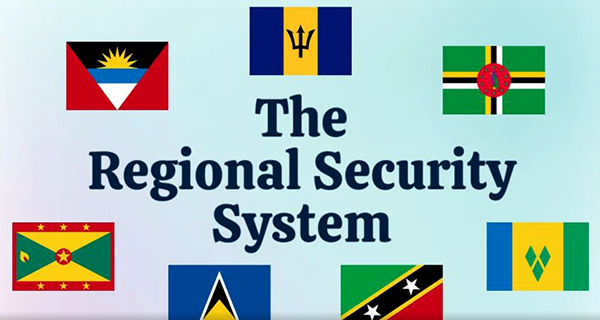



Public confidence in regional security cooperation depends not on secrecy but on clarity. In the ongoing public discussion surrounding the movement of a CARICOM citizen across borders, a central question has emerged: what does the Regional Security System (RSS) require when transporting a person who is said to have “volunteered” to return to another jurisdiction?
This question is not accusatory. It is constitutional.
The RSS is a treaty-based mechanism. It does not possess independent sovereign authority. It operates only upon the request of a Member State and within the domestic legal framework of the host country. It can provide aircraft, personnel, and logistical support. It cannot override constitutional safeguards. It cannot replace extradition statutes. It cannot supply legal authority where none exists.
Therefore, if a person is described as having “volunteered” to return, the legal standard for that voluntariness becomes decisive.
Voluntariness, in law, is not inferred from compliance. It is established by proof.
For a voluntary movement to withstand constitutional scrutiny, certain elements must be present:

Former acting Commissioner of Police McDonald Jacob
First, the individual must be free from unlawful detention at the time consent is given. Consent obtained while restrained, under arrest, or in circumstances of coercion is inherently suspect.
Second, the individual must be informed. That means understanding the nature of the request, the right to refuse, the right to legal counsel, and the legal implications of leaving the jurisdiction.
Third, there must be documented consent. In serious cross-border matters, best practice requires a written statement signed in the presence of independent witnesses or legal representation. In some jurisdictions, a recorded statement may be advisable to eliminate ambiguity.
Fourth, the movement must comply with the immigration and departure laws of the host state. Even a voluntary departure must be processed lawfully through exit controls and recorded accordingly.
Fifth, the requesting state must ensure that no extradition statute is being functionally bypassed. If the individual is the subject of criminal warrants, and if custody is exercised, the presumption leans toward extradition rather than informal transfer.
In such circumstances, if the RSS is asked to provide transport, it must rely on the assurance that these legal preconditions have been satisfied. The RSS is not an adjudicator of voluntariness; it is a logistical instrument. But it cannot be deployed lawfully where the underlying process is defective.
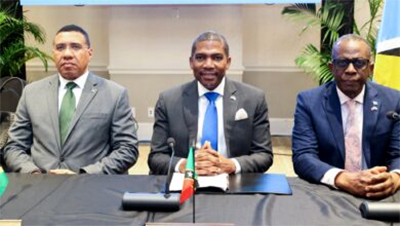
Dr Terrance M. Drew, Chair of CARICOM and Prime Minister of St. Kitts and Nevis, addressed members of the media on regional security during the closing media conference of the 50th Regular Meeting of the Conference of CARICOM Heads of Government
Mr McDonald Jacob, the concern you raised publicly is not about the value of regional cooperation. The Caribbean faces real security threats that require a coordinated response. The issue is whether cooperation can ever justify procedural shortcuts.
If a person is awakened, restrained, escorted, and transported under guard, the distinction between voluntary return and state-controlled removal becomes legally fragile. The burden of demonstrating genuine consent is high. In the absence of such proof, constitutional risk attaches.
You, Sir, would appreciate, as a career law enforcement professional, that operational decisions are often taken under pressure. Intelligence may indicate flight risk. Investigations may be time-sensitive. But urgency cannot dissolve legal thresholds. The legitimacy of any operation depends on strict compliance with the rule of law.
This is not a matter of semantics. It is a matter of constitutional architecture.
If RSS assets were engaged based on voluntariness, the public deserves to know:
Was there written consent?
Was counsel present?
Was the individual free from detention when consent was given?
Were immigration and domestic procedures properly followed?
Transparency on these points would not weaken the institution. It would strengthen it.
The RSS exists to protect Caribbean citizens, not to create uncertainty about their rights. If a citizen can be moved across borders without the robust safeguards of extradition, then every citizen must ask what protections remain.
Sir, clarity at this juncture would serve both institutional integrity and public confidence. Regional security cooperation must rest on legality, not assumption. Thank God, you have retired
Jacob McDonald
