





Energy policy is not a talking point in Trinidad and Tobago. Energy determines foreign exchange, employment, and economic survival. When gas production falls, factories slow, exports drop, and the entire economy feels the pressure.
The national record over the last decade shows what happens when leadership fails. Gas output declined sharply, LNG utilization fell, petrochemical plants idled, and investor confidence weakened. These were not accidents. They were the consequences of poor governance under the former PNM administration.
Today, the contrast is clear.
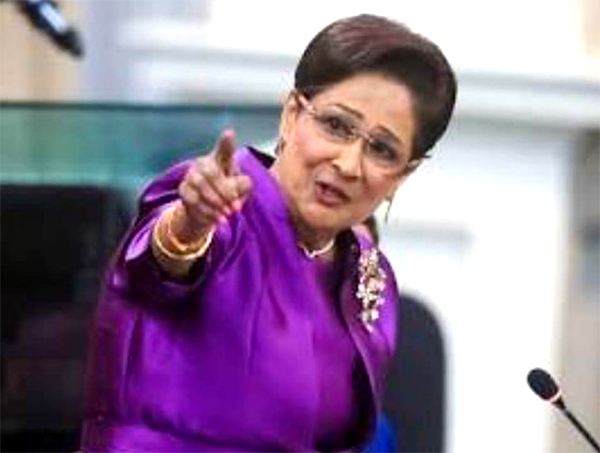
Prime Minister Kamla Persad-Bissessar has restored credibility where it matters most, on the international stage. Her leadership secured approvals under the United States Office of Foreign Assets Control licensing framework, reopening lawful engagement on Venezuela’s Dragon gas field.
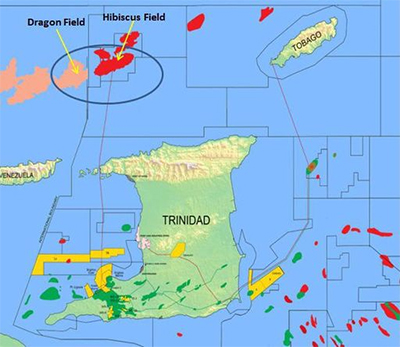
The crossborder Dragon Gas Field off Trinidad
That achievement alone separates serious leadership from political noise. Without regulatory clearance, no negotiation moves forward. With it, Trinidad and Tobago regains strategic breathing room in gas supply planning.
The numbers explain why this matters. Natural gas production fell from above 4 billion cubic feet per day in earlier years to closer to the mid 2 billion range in more recent periods. That decline crippled downstream utilization and foreign exchange earnings. Any credible government must expand supply options.
The Dragon field, with trillions of cubic feet in reserves, offers long term supplementation potential. Securing access required diplomacy, trust, and competence. Prime Minister Kamla Persad-Bissessar delivered all three.
Compare that with the record of the failed PNM opposition. They presided over declining production, refinery closure, job losses, and shrinking investor confidence. In 2018, the Petrotrin refinery shutdown removed roughly 168,000 barrels per day of refining capacity and wiped out thousands of direct and indirect jobs.
Communities suffered. Skilled workers migrated. Industrial confidence collapsed. That decision alone stands as one of the most damaging economic choices in modern national history.
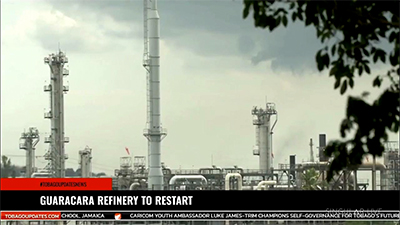
Now, under Prime Minister Kamla Persad-Bissessar, serious discussions about the future of the Guaracara refinery site have returned. This is not reckless nostalgia. It is structured evaluation grounded in feasibility, partnerships, and economics. Responsible leadership examines options with data. Failed leadership shuts doors and calls it policy.
Diplomacy is again working in Trinidad and Tobago’s favour. High level engagement with the United States signals renewed strategic relevance. Energy discussions at that level influence regulatory cooperation, investment sentiment, and regional positioning. Investors follow stability. They follow credibility. They follow leadership. Prime Minister Kamla Persad-Bissessar has restored all three.
Operationally, the Ministry of Energy has resumed meaningful engagement with major producers such as Shell and bpTT. These companies drive a large share of national gas output. Project acceleration, drilling programs, and supply optimization depend on trust between government and industry. That trust eroded under the PNM. It is being rebuilt now.
Regional dynamics also tell a story. At major energy conferences, Trinidad and Tobago is once again positioned as a serious player rather than a declining producer. With Guyana rising as an oil powerhouse, cooperation becomes essential.
Trinidad and Tobago’s established gas infrastructure, LNG facilities, and petrochemical base still provide competitive advantages. Leveraging those strengths requires leadership that understands regional economics. Prime Minister Kamla Persad-Bissessar brings that clarity.
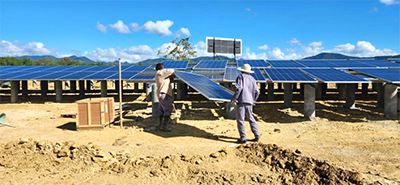
Two workers instal solar panels at the Piarco Airport solar farm
Energy diversification is also back in focus. Solar development and regulatory modernization reflect an understanding that resilience requires both gas security and gradual diversification. Even modest renewable penetration frees additional gas for export, improving revenue efficiency. Strategic governments think in terms of balance. The failed PNM governed in extremes and left instability.
The difference today is measurable. Regulatory barriers removed. Diplomatic bridges rebuilt. Investor confidence returning. Strategic discussions reopened. Regional partnerships strengthening.
The PNM opposition now attempts to rewrite history, but the national memory is not short. Citizens remember falling production, refinery closure, job losses, and economic contraction. Those realities cannot be erased by press conferences or recycled talking points.
Prime Minister Kamla Persad-Bissessar stands in sharp contrast. She brings credibility abroad, stability at home, and seriousness to energy governance. In a country where hydrocarbons drive export earnings and fiscal stability, leadership is not abstract. Leadership produces results.
Trinidad and Tobago is once again seeing direction, competence, and national pride in its energy sector. The country deserves leadership that builds, not leadership that destroys. On energy policy, the evidence speaks for itself.
Curtis Anthony Obrady,
Arima
