





By: Peter Green
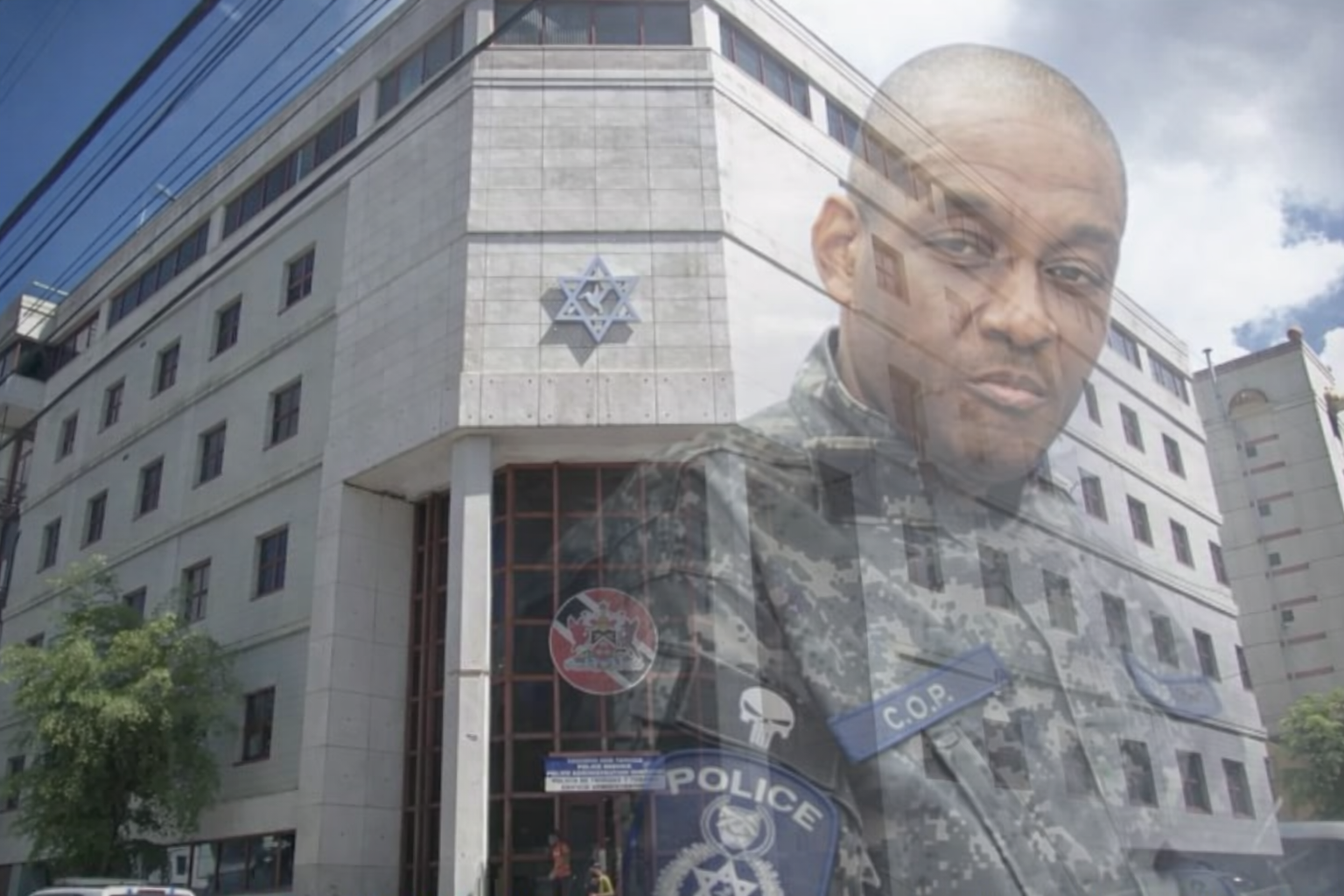
Is the Commissioner of Police under investigation during a State of Emergency?
That is the question now hanging over Trinidad and Tobago, not whispered in backrooms but forming in the minds of citizens as the country’s top law enforcement office becomes entangled in a fog of contradictions, evasions, and institutional amnesia.
Five former Commissioners of Police, men and women who once occupied the highest office in law enforcement, have all stated, plainly and without hesitation, that they have no recollection of recommending that Allister Guevarro be granted permission to outfit his private vehicle with blue lights and a siren. No recollection. No knowledge. No responsibility. Yet, somehow, the approval existed.
Somewhere within the system, a recommendation was made. A justification was provided. A privilege, so unusual that former Commissioners of Police have described it as effectively unheard of, was granted, and now, no one can say who did it.
This is not a minor administrative curiosity. This is a window into something far more troubling: a system in which authority is exercised without accountability and in which consequential decisions dissolve into collective amnesia the moment scrutiny begins.
The current Commissioner, Allister Guevarro, was found to have had emergency lights and a siren installed on his private vehicle while serving as an officer in the Special Branch. When the matter surfaced, even the Transport Commissioner acknowledged that approval had been extended only after receiving a recommendation from within the Police Service.
Yet the question remains unanswered: who authorised it?
The former acting Commissioner at the time, Junior Benjamin, cannot “honestly remember.” The current Commissioner has declined to provide a clear explanation. Repeated attempts to obtain a direct answer have been met not with clarity, but with silence. This is not governance; this is evasion and it is happening under a State of Emergency, a period when the country has been asked to surrender certain freedoms in exchange for security, discipline, and trust in law enforcement.
What does it say about that trust when the leadership of the Police Service cannot account for its own decisions? What does it say about the rule of law when privileges appear to be granted outside of normal procedures, justified after the fact, and then defended by a chorus of “I don’t recall”? We are being asked to accept a contradiction.
On one hand, the State demands strict compliance from citizens. It enforces curfews, conducts raids, and insists that extraordinary powers are necessary to combat crime. On the other hand, when questions arise about the conduct of those at the very top, the response is not transparency but opacity: two standards, one for the governed and another for the governors, and that is where the real danger lies.
A nation cannot be governed by amnesia
This is no longer just about a siren on a private vehicle. It is about the integrity of the institution itself. It is about whether the Police Service operates within a framework of clear rules and accountability, or functions under a system of informal approvals, discretionary privileges, and undocumented decisions that cannot withstand public scrutiny. The explanations provided so far only increase one’s concern.
We are told that such approval is not tied to rank but can be granted “on a case-by-case basis.” We are told it was justified by the “flexibility and fluidity” required of Special Branch operations. But if that is the case, where is the policy? Where is the documented framework that governs such decisions? Where is the paper trail that any competent institution should be able to produce within minutes?
Instead, we are left with fragments: letters, recollections, and opinions, but no coherent chain of accountability. And so, the question returns, sharper now than before: who authorised it, and why can no one say so?
In any serious democracy, such a situation would trigger immediate, independent investigation. Not to assign blame prematurely, but to restore confidence in the system. Because confidence, once eroded, is not easily rebuilt. But here in Trinidad & Tobago, we appear to be drifting in the opposite direction, toward normalisation of the abnormal, toward acceptance of the unexplained. That is a mistake, because a nation cannot be governed by amnesia.
It cannot function on the basis that those in authority simply “do not recall” when confronted with uncomfortable questions. It cannot sustain public trust if the highest offices are shielded by vagueness, silence, and selective memory, especially in a State of Emergency.
If the Government is serious about law and order, then it must begin with its own institutions. It must demand clarity where there is confusion, accountability where there is evasion, and truth where there is silence. Anything less sends a dangerous message that power can operate without explanation and that the rules are flexible only for those who enforce them.That is not law and order; that is disorder, dressed in uniform.
