






Survival or Structural Shift
By Corneilus George
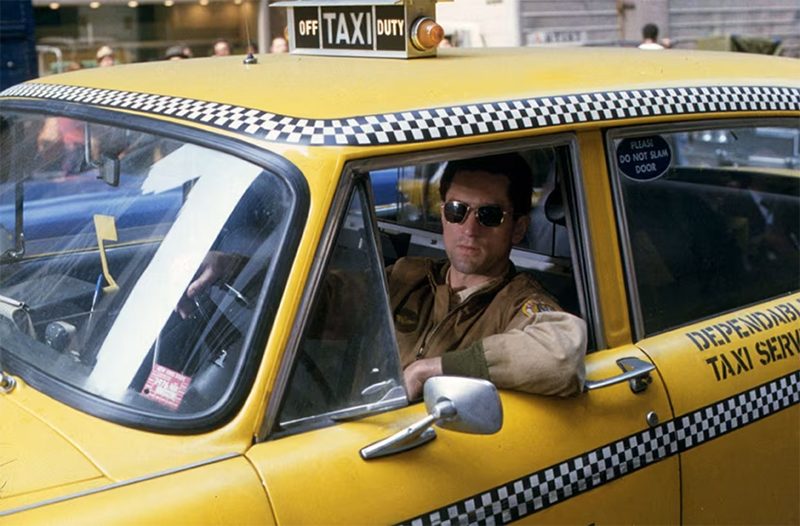
Walk through any community in Trinidad and Tobago today, and you will see it clearly. The doubles vendor who also drives PH in the evening; the office worker who is running an online clothing page after hours; the technician who fixes phones from his home on weekends. The teacher is baking, selling, tutoring, and trading all at once. This is not just hustle culture; it is the quiet restructuring of the economy.
On the surface, the rise of gig work and informal income streams can be framed as an expression of entrepreneurial energy. It reflects adaptability, creativity and resilience. In a small economy facing global pressures, there is something admirable about citizens finding ways to generate income beyond traditional employment, but beneath that narrative lies a more uncomfortable truth: for many, side hustles are not about opportunity; they are about survival.
Wages in Trinidad and Tobago have not kept pace with the cost of living. Food prices have risen, rent has climbed, transportation costs continue to bite, and utilities fluctuate. The result is a growing gap between what people earn and what they need to survive with basic stability. A single income, even for a skilled worker, is increasingly insufficient. The side hustle is no longer optional; it is necessary to close the gap.
A healthy economy produces jobs that can sustain a household. A strained one produces jobs that must be supplemented. When large portions of the workforce depend on secondary income streams, it signals that the primary labour market is underperforming. People are not leaving their jobs to become entrepreneurs; they are taking on more work on top of their existing jobs to stay afloat.
While the side hustle economy can generate income, it rarely generates stability. Informal work often operates outside regulatory frameworks. There are no benefits, no pensions, no insurance protections, and limited access to financing. Income is inconsistent. and growth is constrained. What appears as economic activity does not always translate into long-term wealth creation. In fact, it can do the opposite.
When workers are stretched across multiple income streams, productivity suffers; fatigue sets in, and time for skill development, rest, and family life shrinks. The economy becomes populated by individuals who are busy but not necessarily advancing. Effort increases, but upward mobility remains elusive.
There is also a fiscal dimension that cannot be ignored. Much of the side hustle economy operates informally, meaning it sits partially or entirely outside the tax net. This creates a paradox. As more citizens turn to informal work to survive, the State’s revenue base weakens, limiting its ability to invest in services and infrastructure. Meanwhile, compliant businesses and salaried workers continue to bear the bulk of the tax burden, deepening perceptions of unfairness.
For formal businesses, the impact is equally complex. On one hand, side hustles can stimulate competition and innovation. On the other hand, they can distort the market. A registered business paying VAT, NIS, and other statutory costs cannot compete on a level playing field with an informal operator who avoids those obligations. Over time, this imbalance can discourage compliance and push more activity underground.
A hybrid economy
The deeper question, then, is whether Trinidad and Tobago is witnessing a temporary response to economic pressure or a structural shift in how income is generated. If it is the latter, the implications are significant. The country may be moving toward a hybrid economy in which formal employment is no longer the dominant source of income and economic security is built through a patchwork of activities rather than a single career path. If that is the case, policy must adapt.
First, there must be a serious effort to address wage stagnation. Without improving the earning power of primary jobs, side hustles will continue to proliferate out of necessity rather than choice. This requires not only public-sector wage discussions but also a broader focus on productivity, sector growth, and private-sector expansion.
Second, pathways to formalisation must be made easier, not punitive. Many small operators remain informal because the cost and complexity of compliance are too high relative to their income. Simplified registration, graduated tax systems, and access to micro-financing can help bring more activity into the formal economy without crushing it.
Third, the financial system must evolve. Traditional lending models often exclude individuals with irregular income streams. If side hustles are becoming a permanent feature of the economy, financial products must adapt to accommodate them by offering credit, insurance, and savings tools that reflect the realities of non-traditional work.
Fourth, there must be investment in skills that allow side hustles to evolve into scalable enterprises. Not every side hustle will grow into a business, but some can. With the right support, training, digital tools, and market access, these small operations can transition from survival mechanisms into engines of growth.
Ultimately, the rise of the side hustle economy is a signal. It tells us that people are working harder, not necessarily getting ahead. It reveals resilience but also strain. It shows initiative but also gaps in the system. Trinidad and Tobago must decide how to read that signal.
We can celebrate the hustle and ignore the underlying pressures, or we can treat it as a warning that the economic model is shifting in ways that demand attention because an economy where everyone needs a second job is not an economy that is fully working; it is one that is being worked around.
