


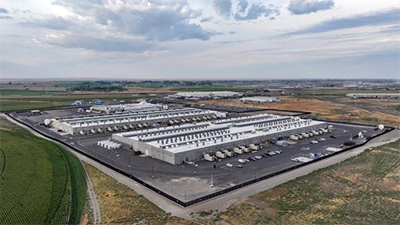



The Government’s proposal to facilitate the establishment of a major data centre in Trinidad and Tobago deserves careful consideration. Digital infrastructure is becoming as important to modern economies as ports, airports and industrial estates. If managed properly, a world class data centre could position Trinidad and Tobago as a regional hub for digital services.
However, the real issue is not whether a data centre is built, but whether the country receives sufficient long term economic, technological and social benefits from the investment.
A data centre should not be viewed as an isolated project. It should form part of a broader national digital transformation strategy that encourages the growth of cloud computing, cybersecurity services, artificial intelligence, software development, fintech, digital government services, research, and technology based entrepreneurship. Without this wider vision, Trinidad and Tobago risks becoming merely a location where foreign companies store and process data while most of the economic value is created elsewhere.
Several important questions therefore deserve answers before any final agreement is concluded.

First, how many permanent, high quality jobs will the project create? Construction will generate temporary employment, but once operational, modern data centres are highly automated and generally require relatively small workforces. Will there be commitments to employ and train local engineers, IT specialists, cybersecurity professionals and data centre technicians?
Second, will local universities, UWI, UTT and technical institutions be integrated into the project through scholarships, internships, certification programmes and research partnerships? Developing local human capital should be one of the project’s principal objectives.
Third, what incentives or tax concessions are being offered to attract the investment? If generous concessions are provided, taxpayers should understand what measurable benefits Trinidad and Tobago will receive in return.
Fourth, what will be the impact on electricity generation and water resources? Large data centres operate continuously and consume significant amounts of electricity. Depending on their cooling systems, they may also require substantial water supplies. These environmental and infrastructure implications should be fully disclosed through independent studies before approvals are granted.
Fifth, will the project encourage the growth of a wider digital ecosystem? Successful international examples show that data centres generate far greater economic value when they attract software developers, cloud service providers, cybersecurity firms, AI companies, financial technology businesses and other digital industries that create skilled employment and export services.
Internationally, governments increasingly negotiate investment agreements that require local procurement, workforce development, technology transfer and partnerships with educational institutions. Trinidad and Tobago should seek similar commitments to ensure that the investment contributes meaningfully to national development.
Foreign investment remains essential for economic growth, particularly as Trinidad and Tobago seeks to diversify beyond the energy sector. However, attracting investment should never be viewed as an end in itself. The objective should be to maximise the long term benefits for citizens through skilled employment, technology transfer, local business opportunities and sustainable economic growth.
A modern data centre could become an important national asset. The question is whether it will simply operate within Trinidad and Tobago, or whether it will help build the digital economy that the country urgently needs. That is the discussion the public deserves before any final commitments are made.
Singapore used Data Centres to attract technological companies & gained much needed FX benefits.
Gordon Laughlin,
Westmoorings
