




By Corneilus George
Education works best when it feels real. When it connects to a child’s surroundings, their family’s livelihood, and the possibilities they can actually see unfolding around them. Yet too often, education systems are designed as though every community is identical, delivering a uniform curriculum to students whose realities could not be more different. The result is predictable: disengagement, underperformance, and the quiet belief among many young people that what they are learning has little to do with their lives. It is time for us to rethink that model and consider the power of geographically specific education programmes.
The principle is simple. Keep a strong national core: literacy, numeracy, and critical thinking, but allow regions to develop specialised pathways based on their environment and economic potential. A coastal community, for example, could integrate marine science, fisheries management, tourism, and climate resilience into its curriculum. Students would not only learn about ecosystems in theory but also understand the waters they see every day, the industries that sustain their families, and the environmental threats that shape their future. In an agricultural district, education could include agritech, soil science, food processing, and entrepreneurship, equipping students with the skills to modernise farming and create value-added products.
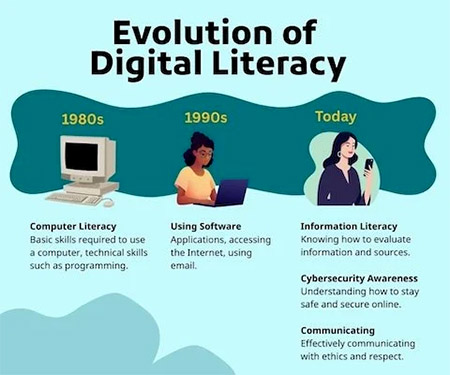
Urban communities, particularly those grappling with crime and social instability, require a different emphasis. Here, education must go beyond traditional academics to include conflict resolution, mentorship, counselling, digital literacy, and pathways into creative and technical industries. A school in an industrial corridor might focus on welding, electronics, logistics, and safety certification, creating a direct bridge between education and employment. The point is not to limit students but to ground their learning in reality so that school becomes a launchpad rather than an abstract obligation.
For a country like Trinidad and Tobago, the case is especially compelling. The needs of Moruga are not the same as those of Chaguanas. Laventille faces challenges distinct from those in Mason Hall. Point Fortin, Mayaro, and Sangre Grande each carry their own economic profiles, risks, and opportunities. A one-size-fits-all curriculum may be administratively convenient, but it does little to meaningfully harness these differences.
Geographically specific education also opens the door to deeper community involvement. Local businesses, farmers, artisans, and professionals can become active participants in the learning process. Students can engage in internships, site visits, and community projects that give them hands-on experience. Schools become hubs of local development, not isolated institutions. This kind of integration strengthens not only learning outcomes but also social cohesion, as young people begin to see themselves as contributors to their communities rather than escapees from them.
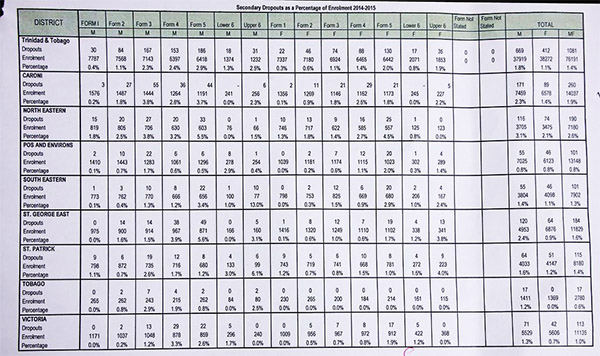
Dropout rates decline
There is also a powerful psychological shift that occurs when education is localised. Students who understand how their skills can improve their immediate environment are more likely to stay engaged. Dropout rates decline when relevance increases. Pride grows when young people see value in where they come from. Instead of being told that success lies elsewhere, they begin to imagine success where they are.
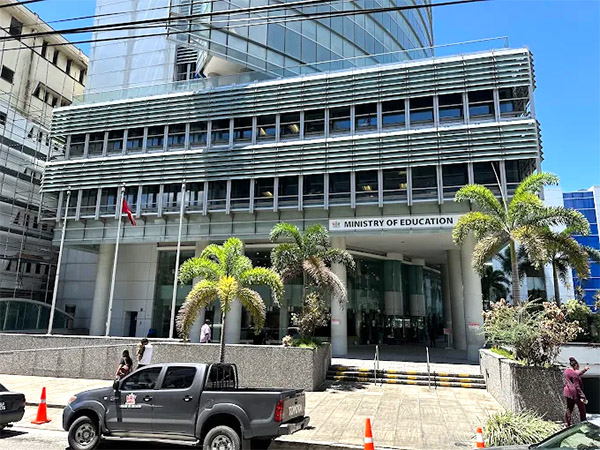
Of course, this approach requires careful planning. It demands collaboration between the Ministry of Education, local government, industry stakeholders, and communities themselves. Teachers must be supported with training and resources to deliver specialised content. Standards must be maintained to ensure that no child is disadvantaged by geography. But these are challenges worth addressing if the reward is an education system that is both equitable and effective.
In the end, the goal of education should not simply be to produce graduates but to produce capable, confident citizens who can participate meaningfully in the economy and society. Geographically specific education programmes offer a way to achieve that by aligning learning with lived reality. They recognise that while the nation is one, its communities are many, and that those differences are not obstacles to overcome but strengths to be developed.
If done right, education in Trinidad and Tobago would no longer feel distant or disconnected to some of our children; it would feel immediate, purposeful, and alive. It would stop preparing students to leave their communities and start equipping them to transform them.
