


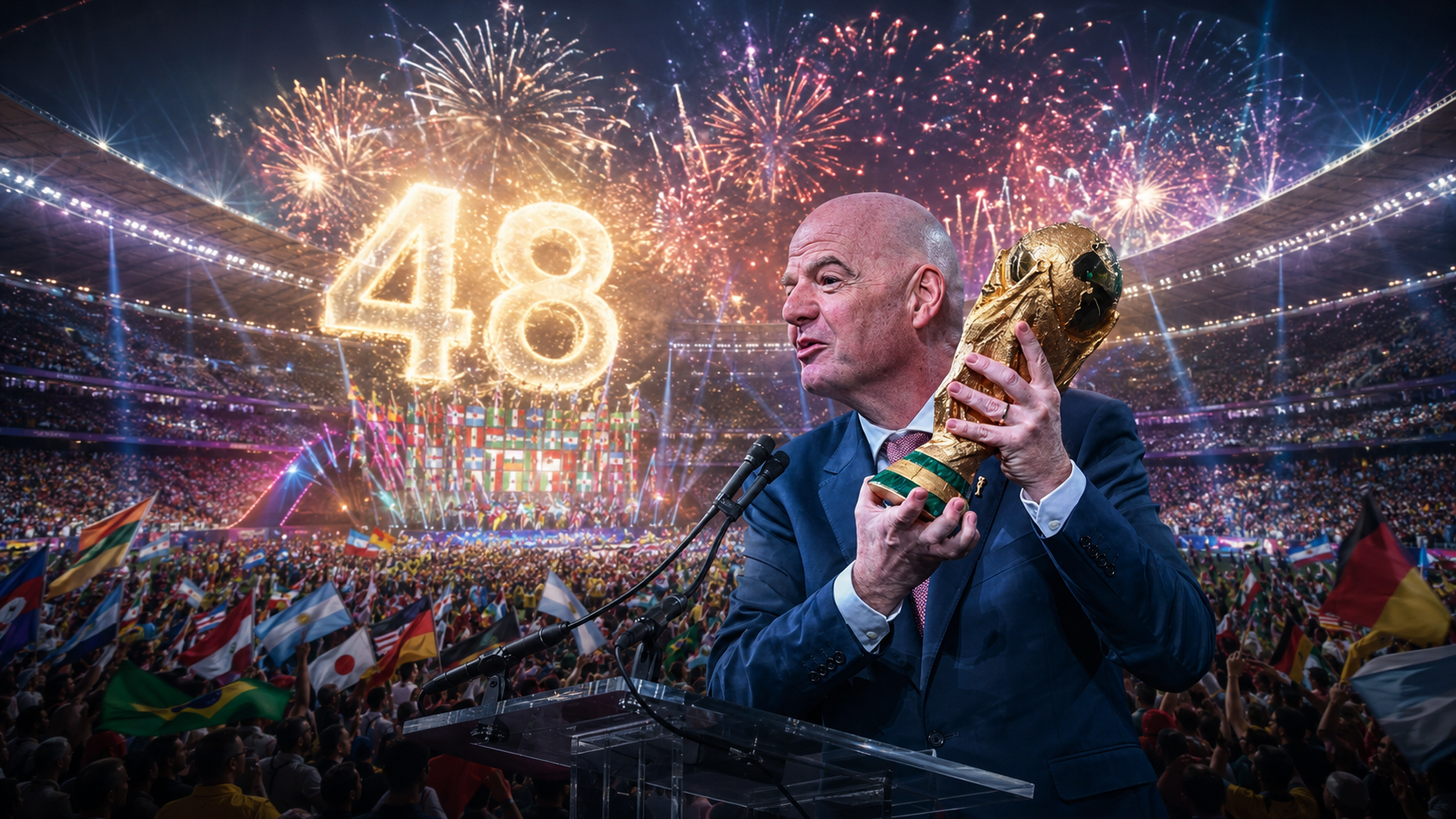



The FIFA World Cup has always occupied a unique place in global sport. It is not merely a football tournament. It is the pinnacle of the game, the event where the world’s best players, representing the world’s best footballing nations, compete under the highest possible pressure. For generations, qualification for the World Cup was itself a badge of honour. Simply reaching the tournament meant surviving one of the most demanding qualification processes in sport.
That is why the expansion of the World Cup from 32 teams to 48 teams has generated such vigorous debate. FIFA has celebrated the move as a triumph of inclusion, diversity, and global development. More nations now have an opportunity to participate. More regions are represented. More fans have a stake in the tournament.
Yet there is an uncomfortable question that football purists continue to ask: has the World Cup become bigger at the expense of becoming better?
The answer depends on how one defines success. If the objective is broader participation, the expansion is unquestionably a success. If the objective is preserving the highest possible standard of football competition, the evidence is far less convincing.
The fundamental issue is simple. When more teams are admitted, the average quality of the field inevitably declines. Football is not unique in this regard. Any competition that lowers its qualification threshold introduces participants who would previously have fallen short of the required standard.
The result is increasingly visible on the pitch.
Lopsided scorelines have become more common. Matches that should represent the pinnacle of international football increasingly resemble qualification fixtures. Instead of tactical chess matches between evenly matched opponents, fans are often presented with contests where one team dominates possession, territory, chances, and goals from the opening whistle.
Such games may excite supporters of the winning team, but they do little to improve the quality of the tournament or football itself.
Football’s greatest moments have traditionally emerged from contests between elite sides operating at the limits of their abilities. The drama of a Brazil versus Germany, an Argentina versus France, or an Italy versus Spain encounter lies in the fact that neither side can afford a mistake. Every tactical adjustment matters. Every substitution carries significance. Every possession becomes a battle of ideas.
That tension disappears when the gap between teams becomes too wide.
Instead of tactical innovation, weaker teams often retreat into defensive survival. Instead of strategic contests, stronger teams engage in prolonged attacks against deeply entrenched defensive blocks. Such matches may produce goals, but they rarely produce great football.
The consequences extend beyond aesthetics.
The expanded format also raises serious questions regarding competitive fairness. Goal difference has always played an important role in tournament football, but its significance increases dramatically when some teams face much weaker opposition than others.
A nation fortunate enough to face an overmatched opponent may accumulate a substantial goal difference advantage that proves decisive later in the group stage. Another nation of similar quality may face three competitors and be disadvantaged despite performing at a comparable level.
In a tournament where advancement can be determined by the narrowest of margins, such disparities matter.
The inflation of individual records presents another concern.
Football supporters rightly celebrate achievements such as goals scored, assists provided, and records broken. Yet records derive their value from the conditions under which they are achieved. When elite forwards are afforded opportunities against opposition that would not previously have qualified for the tournament, comparisons with earlier generations become problematic.
Can a scoring record established against a diluted field truly be compared with one achieved in a smaller, more selective competition?
The question deserves serious consideration.
There is also a human cost to expansion.
The increased number of matches exposes players to greater physical demands and a higher risk of injury. Elite footballers already face congested club calendars, international commitments, and commercial obligations. Additional World Cup fixtures only intensify these pressures.
Moreover, mismatches sometimes create dangerous situations. Technically inferior teams often compensate through physicality and desperation. Challenges arrive later. Tackles become riskier. The potential for injury increases. A single reckless challenge can remove a star player from the tournament and fundamentally alter the competitive landscape. Canada knows well about this.
None of this is to suggest that inclusion is undesirable. Football should be a global game. Emerging nations deserve opportunities to develop and compete. Exposure to elite competition can accelerate growth and inspire future generations. However, there is a difference between growing the game and diluting its premier competition.
The World Cup’s prestige was built upon exclusivity. Qualification was difficult because participation was reserved for the very best. Every group-stage match carried significance because every team had earned its place through a demanding selection process.
Today, the tournament is undeniably larger. It is more commercially valuable. It is more politically popular. It reaches more countries and more audiences than ever before, but bigger and better are not always the same thing.
The World Cup remains football’s greatest event. The passion, drama, and global attention remain unmatched. Yet it is increasingly difficult to escape the conclusion that while FIFA has expanded the tournament’s reach, it has also diluted the quality of its on-field product.
In pursuing inclusivity, football’s governing body may have sacrificed a measure of excellence. And for those who cherish the World Cup as the ultimate test of international football, that is a price worth questioning.
