





By Dr Jack Austin Warner
Another prosecution has collapsed.
Another accused citizen has walked out of a courtroom a free man.
Another jury has examined the evidence presented before it and concluded that the prosecution had failed to prove its case beyond a reasonable doubt.
In any democracy governed by the rule of law, acquittals are not failures of justice. They are part of justice. Every accused person is presumed innocent until proven guilty, and when the evidence does not satisfy the required legal standard, acquittal is the proper outcome.
Yet while acquittals are not failures, poorly investigated cases certainly are.
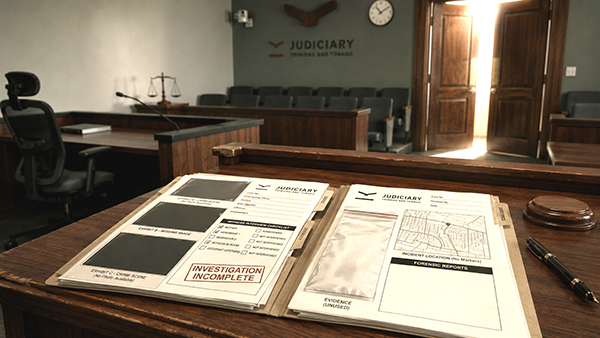
The collapse of a recent sexual abuse prosecution has once again raised uncomfortable questions about the quality of criminal investigations and prosecutorial decision-making within Trinidad and Tobago’s justice system. According to evidence revealed during the trial, a series of investigative deficiencies emerged under cross-examination, deficiencies significant enough to contribute to a jury returning not guilty verdicts after just forty minutes of deliberation.
The speed of the jury’s decision should concern everyone.
Juries are not legal technicians. They are ordinary citizens. When a jury reaches a decision after such a brief period of deliberation in a case involving serious allegations, it naturally raises questions about the strength of the evidence presented to them.
The issue is not whether the accused was innocent or guilty. The jury has already spoken on that matter. The real issue is whether the police investigation and prosecutorial review processes met the standard that the public has a right to expect.
The facts reported from the trial are troubling.
The investigating officer reportedly admitted that he never visited the location where one of the alleged incidents was said to have occurred. No photographs of the location were taken. The officer could not say whether the area was secluded. He acknowledged that neighbours were not interviewed, despite allegations that one of the incidents occurred outside a residence. Occupants of the upper section of the house were not questioned. No DNA analysis was conducted. A witness reportedly present in the room during one alleged incident was not interviewed.
These are not minor procedural oversights.
They represent investigative steps that many members of the public would assume were routine.
If an allegation is made concerning a specific location, should that location not be visited and documented? If potential witnesses exist, should they not be interviewed? If forensic evidence may be available, should it not be pursued? If another individual was allegedly present during an incident, should that person not be questioned?
These are not legal technicalities. They are fundamental components of investigative diligence.
The situation becomes even more concerning when one considers the admissions made during cross-examination. According to the report, the complainant acknowledged circumstances that the defence argued created a possible motive for fabrication, including fears relating to stolen money and concerns about personal matters being disclosed to her mother. Whether those concerns were ultimately decisive is known only to the jury. What is clear, however, is that such issues were sufficiently important to form a central part of the defence case.
This raises another question.
Were these matters fully examined by investigators before charges were laid?
The public often assumes that a charge represents proof of wrongdoing. It does not. A charge merely signifies that authorities believe sufficient grounds exist to proceed. That is why both the Trinidad and Tobago Police Service and the Office of the Director of Public Prosecutions carry enormous responsibilities. Their role is not simply to bring cases before the courts. Their role is to ensure that cases are properly investigated, objectively assessed, and supported by credible evidence.
When weak cases proceed to trial, everyone suffers.
The accused suffers through years of uncertainty, legal expense, reputational damage, and emotional strain.
Complainants suffer because they are forced to relive traumatic experiences in proceedings that may ultimately collapse.
The public suffers as confidence in the criminal justice system erodes.
And genuine victims suffer because every failed prosecution risks undermining confidence in future allegations.
This is particularly important in cases involving allegations of sexual offences. Such matters are among the most sensitive and emotionally charged cases that courts are called upon to adjudicate. They require professionalism, objectivity, and meticulous investigative work. Anything less risks injustice to all involved.
The question, therefore, is not whether the jury got it right.
The question is whether the system did its job before the matter ever reached a jury.
Did investigators exhaust all reasonable lines of inquiry? Were evidential weaknesses properly identified and addressed? Did prosecutors rigorously evaluate the case before proceeding? Were concerns regarding witness credibility, corroboration, and evidential gaps adequately examined?
These are not questions of politics. They are questions of competence.
Every collapsed prosecution should trigger reflection within the institutions responsible for administering justice. Not to assign blame, but to identify lessons and improve future performance.
The public understands that not every case will result in a conviction. That is the nature of justice. What citizens have a right to expect, however, is that every case brought before the courts has first been subjected to the highest standards of investigative and prosecutorial scrutiny.
When serious prosecutions collapse because of apparent investigative deficiencies, the question is no longer simply what happened in the courtroom.
The question becomes what happened before the courtroom doors ever opened.
