





People are saying they wonder when the State will stop paying for unlawful conduct by police officers. With disturbing regularity, taxpayers are required to foot the bill when courts find that police powers have been abused, leaving many to question whether anyone within the system is ever held personally accountable.
People are saying the latest example, reported by both the Daily Express and the Trinidad Guardian, involved two brothers who were awarded more than half a million dollars after the court found that evidence against them had been deliberately fabricated.
People are saying the judge’s observations deserve careful attention. The court found that a police officer deliberately fabricated the factual basis for arresting and prosecuting the claimants, describing the conduct as an intentional abuse of police powers. The judgment further emphasised that citizens are entitled to expect police officers to exercise their authority honestly, fairly and only for lawful purposes, and that deliberately inventing evidence fundamentally undermines public confidence in the administration of justice.
People are saying this is where the conversation becomes especially important. The litigation may conclude, judgment may be delivered and compensation eventually paid, but who is writing the accountability cheque? When taxpayers are required to finance awards arising from what a court has found to be an abuse of police power, citizens are entitled to ask what consequences, if any, follow for those responsible.
People are saying official expressions of concern are no longer enough. If a court determines that an officer deliberately abused his authority, many believe accountability should extend beyond prolonged administrative leave or internal investigations.
People are saying taxpayers should not repeatedly bear the financial consequences of established misconduct while questions of individual responsibility disappear into what often appears to be the Bermuda Triangle of disciplinary proceedings, internal investigations and official silence.
People are saying that if the State continues reaching into taxpayers’ pockets to satisfy judgments arising from unlawful conduct, then the public is entitled to know whether those whose actions gave rise to those payouts are themselves being held accountable, where the law and disciplinary procedures permit.
People are saying the system has become remarkably efficient at ensuring taxpayers pay the bill. Now it must demonstrate that it is equally committed to ensuring accountability arrives on time.
When Will It End, Lord?
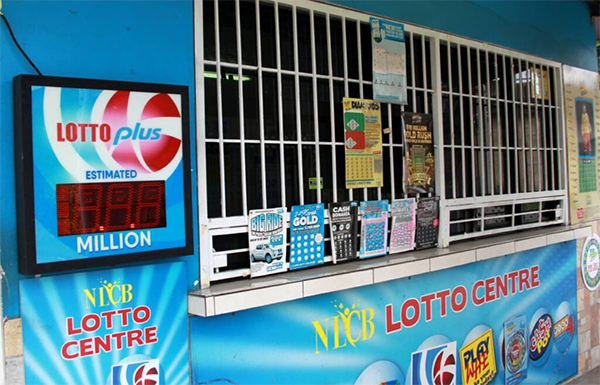
NLCB’s $38,000 Question
People are saying the National Lotteries Control Board should revisit its prize structure because the gap between matching all five numbers and missing by just one appears disproportionately wide.
People are saying that in one recent payout, correctly matching all five numbers earned a prize of $38,000, while matching four of the five returned just $214.
Yes—$38,000 compared with $214.
People are saying no one expects matching four numbers to attract the jackpot. Even so, many believe that falling just one number short should be worth considerably more than what amounts to little more than a token consolation prize.
People are saying the player who matched four numbers was only one selection away from perfection, yet received approximately 177 times less than the jackpot winner.
People are saying the principle appears simple enough: match every number and win the top prize; miss by one and, apparently, be grateful for $214.
People are saying the NLCB should review the prize structure. The jackpot can remain attractive without making the secondary prize appear almost symbolic.
Because at $38,000 compared with $214, people are saying it is not only the lottery numbers that deserve another look.
Silk for Twelve More by August

People are saying the Government is expected to confer Senior Counsel status on twelve attorneys by August, with five reported to be serving in government or holding senior public appointments.
People are saying the names most frequently being mentioned include Gerald Ramdeen, Chairman of the National Gas Company; Speaker of the House Jagdeo Singh; Minister of Defence Wayne Sturge; Leader of Government Business in the Senate Darrell Allahar; and Congress of the People Political Leader Prakash Ramadhar.
People are saying other names circulating within legal circles include Christlyn Moore, former Minister of Justice in the People’s Partnership administration; Frederick Gilkes, founder of Caribbean Commercial Law Chambers; Gregory Armorer, a civil litigation and conveyancing attorney; and Michael Rooplal, Senior Ordinary Member of the Council of the Law Association of Trinidad and Tobago.
People are saying, as with every round of appointments to silk, speculation will continue until the official announcement is made. Until then, the legal fraternity—and the wider public—will be watching closely.
What Trinidad and Tobago Is Talking About on the Eve of Emancipation

People are saying that Trinidad and Tobago enters Emancipation Day carrying more conversations than it can comfortably hold. A police officer is dead in Caroni. Nurses are leaving for opportunities abroad. The lights went out again.
A ferry lies on the seabed off the Essequibo coast, with its captain and two crew members facing 72 murder charges. And the man widely regarded as the greatest all-round cricketer the game has ever produced has been laid to rest in Barbados.
People are saying this is the pulse of the nation this week, one story at a time.
A Policeman Shot in His Own Car While Hundreds Await Charges
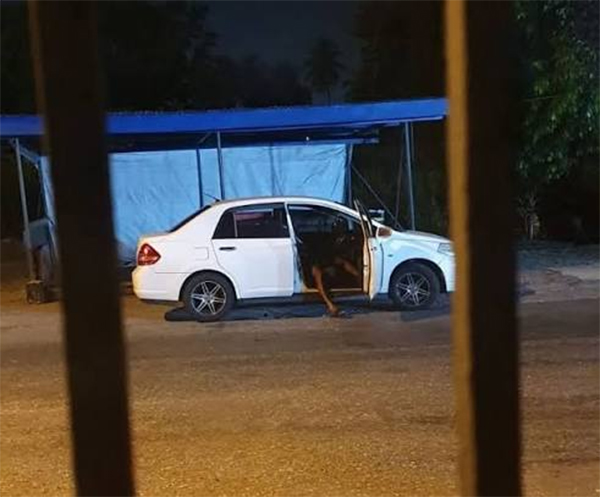
People are saying that PC Romell Kerry Douglas, 48, was sitting in his Nissan Tiida in Kelly Village, Caroni, on Tuesday night when he was ambushed and killed. Police launched a manhunt for two suspects, while a third was killed in an exchange of gunfire with officers.
People are saying his family is not calling for another committee, inquiry or review. They are demanding the death penalty for those responsible. That call has resonated across the country because many citizens quietly share the same sentiment.
People are saying the killing has intensified a much broader national debate. Trinidad and Tobago has spent roughly ten of the past fourteen months under emergency powers. The Prime Minister told Parliament that 373 people had been detained, while the Express has reported that the number detained under the current State of Emergency is approaching 500, with none yet charged with an offence.
People are saying the national ledger now has two columns, and citizens are weighing both at the same time. Murders fell sharply during 2025, with some analysts attributing much of that decline to the emergency measures. Yet, in the same week, the State was ordered to compensate two brothers after the court found that police officers had fabricated evidence against them.
People are saying concern has now extended beyond Trinidad and Tobago’s shores. Jennifer Johnson-Carroll, the nominee for United States Ambassador to Port of Spain, told a US Senate committee that the repeated use of States of Emergency “doesn’t bode well” for the fight against crime. Coming from someone born in Port of Spain, the remark carried more weight than routine diplomatic observation.
People are saying the real question is not whether emergency powers can reduce crime, but what replaces them when they end. So far, no clear answer has emerged from those in authority, and many believe that uncertainty is the greatest concern of all.
The Ratings Warning Nobody Wants to Hear

People are saying that former Finance Minister Colm Imbert warned at a PNM briefing on Charles Street this week that Trinidad and Tobago risks a downgrade to its sovereign credit rating.
People are saying the warning did not emerge in isolation. In 2025, Standard & Poor’s revised the country’s outlook to negative, citing weakening public finances, declining oil and gas production, sluggish economic growth and a US$1 billion external bond nearing maturity. Moody’s subsequently issued its own negative outlook, a move Finance Minister Davendranath Tancoo described as premature.
People are saying most citizens neither follow credit rating agencies nor feel they should have to. They pay attention instead to the exchange rate, the weekly grocery bill and how long they wait for foreign currency at the bank. Those indicators tell the same story in terms every household understands.
People are saying a credit downgrade is far from an abstract economic concept. It increases the cost of borrowing, and those costs eventually filter through to jobs, public services and prices on supermarket shelves.
People are saying the economic picture is not entirely bleak, which is why the debate continues. WITCO reported higher profits during the same news cycle, while the Government is promoting the restart of a steel mill and a trade mission to Ghana. What many citizens want to know is which set of numbers best reflects the reality in their own homes.
Lights Out, Taps Brown

People are saying that shortly after 10 p.m. one evening this week, Machine No. 14 at Point Lisas suffered a diode failure in its excitation system, causing the unit to trip and taking twelve feeders offline. Communities including Malabar, Independence Square, Longdenville, Lange Park, Endeavour, parts of Rio Claro and sections of the East-West Corridor were left without electricity. Power was restored approximately thirty minutes later.
People are saying the thirty-minute outage is not the real issue. The greater concern is how routine these disruptions have become in a country that markets itself to the world as an energy powerhouse.
People are saying the situation appears even more troubling alongside reports that T&TEC has stopped taking electricity from the Brechin Castle solar facility. A nation promoting a transition to cleaner energy while disconnecting a solar plant inevitably invites difficult questions.
People are saying the water story has attracted less attention but may have an even greater impact. A Chaguanas retailer told Express Business that enquiries and sales of water filtration systems, particularly whole-house units, continue to rise because of discoloured water, sediment, unpleasant tastes and odours. Increasingly, households appear to have stopped waiting for WASA and are purchasing their own solutions.
People are saying that may be the clearest verdict of all. When citizens begin privately solving problems that public utilities are expected to address, no press release can easily change that perception.
The Nurses Are Leaving, and the Wards Already Know

Association Idi Stuart lead the march
People are saying that Idi Stuart, President of the Trinidad and Tobago National Nursing Association, has warned that the shortage of nurses will continue unless healthcare workers receive competitive salaries, improved benefits and, above all, greater respect.
People are saying anyone who has spent a night in a public hospital scarcely needs statistics to understand his concerns. Long waiting times, chronic staff shortages and exhausted healthcare professionals routinely doing the work of two people have become all too familiar.
People are saying it was Mr Stuart’s appeal for greater respect that resonated most. Salaries can be negotiated, but when a profession feels undervalued, people often leave for reasons that no pay increase can quickly remedy.
People are saying trained nurses continue to be recruited by hospitals overseas that offer higher salaries in stronger currencies. Trinidad and Tobago invests heavily in educating these professionals, only to see many of them build their careers elsewhere.
People are saying crime may dominate the headlines, but sooner or later every family depends on the healthcare system. So far, they have heard the diagnosis. What they are still waiting to hear is the prescription for retaining the nurses the country cannot afford to lose.
Seventy-Two Counts of Murder and a Ferry on the Seabed

People are saying no regional tragedy has shaken the Caribbean more this month than the sinking of the MV Barima. The ferry went down on the night of July 18 off the Essequibo coast while bound for Port Kaituma. Seventy-six people were rescued, 73 have been confirmed dead and about 30 remain missing at sea.
People are saying that on Tuesday, Captain Kevin Price, Chief Mate Rondell Roberts and Goods Superintendent Delon Granderson were jointly charged with murder and remanded into custody. During the court hearing, Price reportedly broke down, saying he did not understand why he was facing a murder charge. The matter is due to resume on August 3.
People are saying the public reaction in Guyana surprised many in Trinidad and Tobago. Villagers marched with placards bearing the slogan, “Jail the criminals, free the innocent,” demanding that ministers, rather than crew members alone, answer for the tragedy. Others protested outside the Office of the President, calling for justice for the victims’ families. President Irfaan Ali has since established a Commission of Inquiry.
People are saying Trinidad and Tobago has a direct interest in the investigation. Rear Admiral Pritchard, former Chief of Defence Staff of the Trinidad and Tobago Defence Force, is serving on the investigative team alongside a forensic naval architect with experience in major maritime casualty investigations.
People are saying the conversation quickly came closer to home. Three people died in separate incidents along Trinidad’s south-western coastline last week. The Coast Guard intercepted a third vessel within a single week, while the jet ski operator charged in connection with the death of seven-year-old Angelica Jogie at Pigeon Point was denied bail. Tobago has not forgotten that little girl.
People are saying this is a twin-island nation where thousands of people travel daily by boat, pirogue and ferry. Maritime safety is not an abstract policy issue. It is a matter that touches families across the country every day.
London or Port of Spain? The Court Question Returns
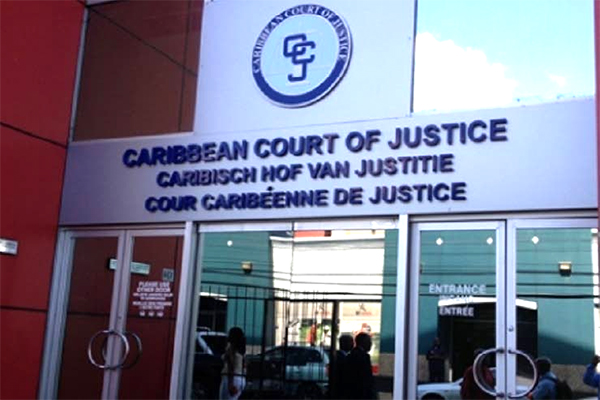
People are saying Trinidad and Tobago has once again been identified as the country that sends the greatest number of appeals to the Judicial Committee of the Privy Council, reigniting a constitutional debate that this nation never seems to settle.
People are saying the timing is particularly intriguing. The Prime Minister has maintained that the Caribbean Court of Justice (CCJ) will not become Trinidad and Tobago’s final court of appeal any time soon, even as her own challenge to the process used to reappoint CARICOM Secretary-General Dr Carla Barnett is headed to the CCJ for an advisory opinion.
People are saying Israel Khan, SC, President of the Criminal Bar Association, supports replacing the Privy Council with the CCJ in principle. However, he has argued that recent Privy Council decisions alone do not justify making the transition at this time. He has also called for action over remarks made by former Attorney General Faris Al-Rawi concerning the Privy Council, adding another political dimension to the debate.
People are saying one Express letter writer summed up the issue in the fewest possible words: “We built a court, and we refuse to use it.”
People are saying another legal development worth watching is the proclamation of provisions under the Unexplained Wealth Act. Citizens have heard promises before about pursuing the proceeds of crime. This time, they say they want to see the legislation actively enforced.
People are saying the debate matters because a nation’s final court determines its most difficult cases—constitutional rights, preventive detention, capital punishment and the limits of State power. Whoever exercises that authority wields enormous influence over the country’s legal landscape.
Farewell, Sir Garry, and a Test Victory in His Honour
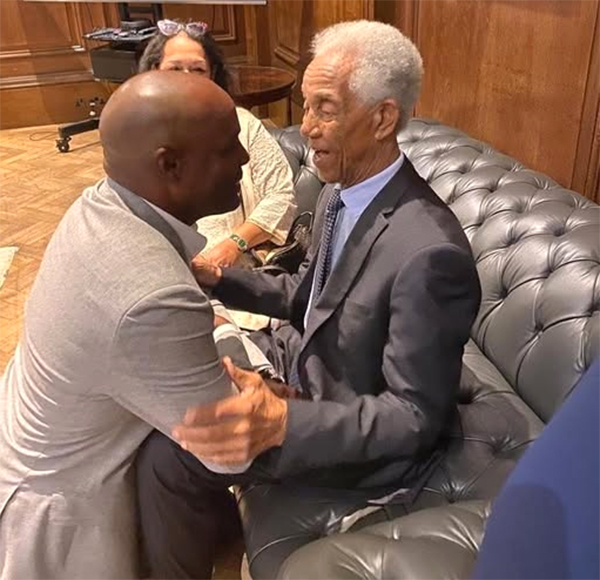
People are saying the Caribbean has been in mourning since July 17, when Sir Garfield Sobers passed away at his home in St Michael, Barbados, at the age of 89, just weeks before what would have been his ninetieth birthday. Barbados honoured its greatest sporting son with a state funeral and declared a national day of mourning.
People are saying Sir Garry’s statistics still stop conversations in their tracks: 93 Test matches between 1954 and 1974, 8,032 runs at an average of 57.78, and 235 wickets. No cricketer before or since has matched that remarkable combination of batting and bowling excellence.
People are saying some of the most touching tributes came from fellow Barbadian and West Indies legend Brian Lara, who reflected on the profound influence Sir Garry had on his own cricketing journey after surpassing Sobers’ world record for the highest individual Test score.
People are saying the West Indies paid the most fitting tribute of all by defeating Pakistan in a Test match. Captain Roston Chase dedicated the victory to Sir Garry, who would have celebrated his 90th birthday earlier that week. For a region more accustomed to disappointing cricket headlines in recent years, the victory felt symbolic.
People are saying the good news extended beyond cricket. Nikoli Blackman secured Trinidad and Tobago’s first gold medal at the CAC Games, while the men’s swimming team added relay gold to the country’s medal tally, even as the Calypso netballers suffered a fourth consecutive defeat.
People are saying sport continues to achieve something politics often cannot. It gives the country moments of shared pride and reminds citizens that, despite their many divisions, they remain one people.
