


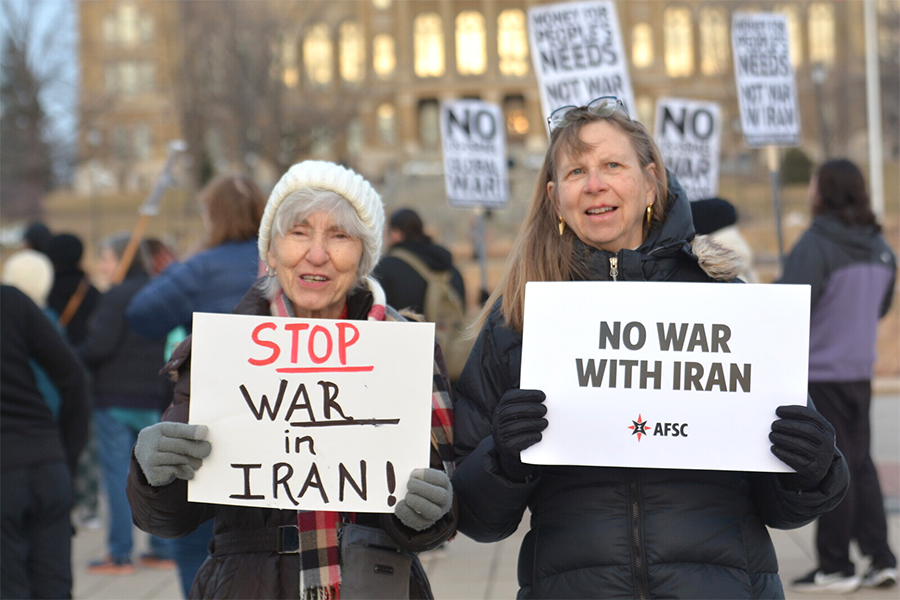



By Dr Jack Warner
The world is confronting a dangerous contradiction. While diplomats discuss peace, missiles and drones continue to fly across the Persian Gulf. While governments speak about protecting international commerce, commercial vessels face attacks in one of the world’s most strategically important waterways, and while the major powers calculate military advantage, ordinary families thousands of miles away face the possibility of paying the economic price.
The Iran war is no longer simply a Middle Eastern security crisis. It threatens international trade, energy security, and the economic stability of vulnerable nations, including those in the Caribbean.
On November 18, reports confirmed renewed Iranian attacks targeting military facilities in Kuwait and Bahrain, following American strikes against an Iranian missile installation on Qeshm Island.
The exchanges have intensified fears that the conflict could widen despite continuing diplomatic efforts.
Iran presents its military actions as retaliation against American operations and restrictions on its trade. Washington maintains that its military posture is necessary to counter Iranian threats and protect regional security.
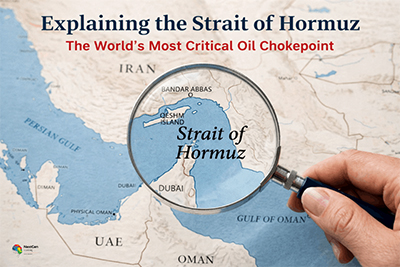
But whatever arguments the opposing governments advance, attacks on commercial shipping and the continued militarisation of vital waterways threaten countries with no involvement in the conflict. At the centre of this danger lies the Strait of Hormuz.
According to the International Energy Agency (IEA), approximately 20 million barrels of oil and petroleum products passed through the strait daily in 2025, representing roughly one-quarter of global seaborne oil trade. The same passage carried approximately 19 per cent of worldwide liquefied natural gas trade. These figures explain why the security of a relatively narrow maritime corridor matters to the entire international economy.
When tankers are attacked, shipping companies face higher risks, insurers reassess coverage and vessels may be delayed or diverted. The consequences can extend through fuel markets, electricity generation, manufacturing, agriculture and international transportation.
The danger is compounded by instability near the Bab el-Mandeb Strait, another strategic passage linking the Red Sea with global shipping routes. With Iran-backed Houthi forces involved in regional hostilities, commercial shipping faces threats across more than one important maritime corridor.
The world cannot indefinitely expose its energy lifelines to military confrontation and expect global commerce to remain unaffected.
Yet an important distinction must be recognised. An energy crisis is a serious risk, not an unavoidable outcome.
Indeed, oil prices declined on November 18 as markets responded to rising American inventories and expectations of abundant supplies, despite the continuing Gulf conflict. That demonstrates that energy markets respond to multiple forces, not military headlines alone.
Nevertheless, a prolonged disruption to major export routes could overwhelm existing buffers and produce another damaging price shock. For Caribbean economies, the consequences could be severe.
Most Caribbean countries depend heavily on imported petroleum products, international shipping, tourism and food imports.
Higher fuel and freight costs could increase electricity bills, transportation expenses and supermarket prices while weakening already constrained public finances. Tourism-dependent economies could face additional pressure if international airfares rise and household spending declines in their principal visitor markets. Trinidad and Tobago occupies a somewhat different position.
As an oil-and-gas producer, the country could receive additional export revenue if international energy prices increase, but that apparent advantage requires careful examination.
Higher benchmark prices do not automatically translate into proportional increases in government revenue. Production volumes, contractual arrangements, taxation and operating costs all matter.
Furthermore, Trinidad and Tobago remains exposed to imported food, manufactured goods, freight costs and international inflation.
A country cannot reasonably celebrate higher energy earnings while ignoring the increased cost of living confronting its citizens. The Government should therefore assess the potential consequences of a prolonged Gulf conflict for national revenue, inflation, fuel supply and essential imports.
CARICOM should coordinate contingency planning, strengthen regional supply arrangements and examine opportunities to reduce dependence on vulnerable international shipping routes, but the greatest responsibility rests with the governments directly involved in the conflict.
The United States and Iran must recognise that military escalation cannot provide a sustainable substitute for diplomacy.
Negotiations should prioritise an enforceable cessation of attacks on commercial shipping, arrangements for safe passage through the Strait of Hormuz and verifiable measures addressing the security concerns of the parties.
Oman, Qatar and other regional intermediaries should be supported in efforts to establish a credible negotiating framework. Any lasting settlement must address sanctions, maritime access and the broader security disputes sustaining the confrontation. International law and the protection of civilian maritime commerce must remain central.
The alternative is a prolonged cycle of retaliation in which every military response justifies another.
The world has witnessed enough wars in which the political objectives remain disputed while the economic and human costs become undeniable.
For Trinidad and Tobago and its Caribbean neighbours, the lesson is unmistakable. Energy security, economic diversification and diplomatic engagement are not optional ambitions. They are essential safeguards against conflicts beyond our control.
The world must not wait for oil tankers to burn, shipping routes to close and household budgets to collapse before recognising the urgency of peace.
The question is no longer whether the Iran war threatens the global economy. It does.
The question is whether world leaders possess the political will to contain that threat before another regional war becomes an international economic emergency.
