






As someone who has used the Freedom of Information Act (1999) over the last twenty years (20) in the courts of Trinidad and Tobago I am deeply interested and concerned about any amendment to the Act. I dare say that I have used the FOIA to influence as well as to expose governments over those years.
There is a particular kind of political disgrace that only a party in office can achieve: dismantling the very instrument it once used to expose its opponents. The Freedom of Information Act 1999 was a UNC statute. Ramesh Lawrence Maharaj drove it through Parliament as part of the accountability suite that also produced judicial review reform and the Integrity Commission. Activists, journalists and ordinary citizens — including this writer — then used that statute in the High Court and at the Privy Council to drag previous administrations into the light. Today a UNC government is before the House with a Bill that weakens the same Act. That is not continuity. That is apostasy.
The 2026 Amendment does not repeal the right of access. It does something more useful to an Executive that has grown tired of being sued. It replaces the mandatory dual publication in the Gazette and a daily newspaper with an “or”: a newspaper or a “publicly accessible website.” No designated site. No archiving standard. No requirement that the statement remain findable after the next redesign. The parent Act’s first transparency duty — sections 7, 8 and 9 — becomes optional in the only channel most citizens still encounter.

This is the same duty that ministries and state agencies have already treated as optional. The Freedom of Information Unit, created in 2001 to monitor, advise, train and report, was never given enforcement power. It was shunted from the Office of the Prime Minister to Communications to Public Administration and back again. For years its remit even sat inside a transformation division. A watchdog that keeps changing address is not a watchdog.
The Unit’s own reports, when they were still being laid under section 40, are an indictment. In 2019 some 259 public authorities had a legal obligation to file quarterly returns and publish annual statements. Twenty-five published statements in the Gazette. Twenty-five. Ministries and departments accounted for only about half the returns over a four-year stretch. The 2020 report listed authorities that submitted nothing. Section 7(4) already required the responsible Minister to publish reasons in the Gazette when a statement was missing. That duty was ignored with the same ease as the publication duty itself.
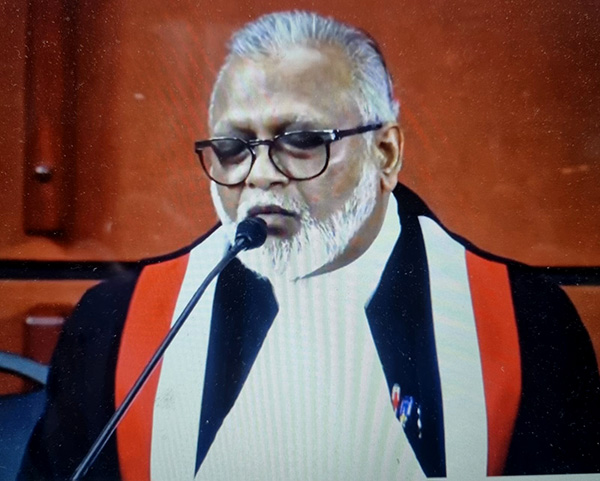
The courts have now named the practice for what it is. In December 2025 Justice Robin Mohammed held that the Ministry of Foreign and CARICOM Affairs had not published its section 7 statements since 2016. The Children’s Life Fund Authority was in the same dock. Relocation and ministerial delay were offered as excuses. The judge rejected both. The Act “does not provide for a general suspension of its obligations due to administrative inconvenience.” A later statement does not erase earlier years of breach. To hold otherwise, he said, would create “a perverse incentive whereby public authorities could ignore their statutory obligations for years, only to publish a single statement at a later date and claim full compliance.”
That perverse incentive is now being written into law.
The irony is not abstract. It is personal and institutional. UNC activists used this Act against PNM governments because the statute worked. We used it on Petrotrin, on TSTT, on legal fees, on contracts, on the machinery of the State. The Privy Council has already said the right of access must be “jealously guarded” and “not allowed to be whittled down.” Singh v Public Service Commission. Devant Maharaj v National Gas Company. Those were not academic exercises. They were the Act doing what the UNC of 1999 said it was for: making official power visible.
The same party now finds visibility inconvenient. In 2019 a PNM attempt to stretch the 30-day clock to 90 days, with another 90 for the Attorney General to second-guess a refusal, collapsed under pressure from the Law Association, the Media Association and civil society. The instinct survived the change of government. When litigation kept succeeding, the response was not to resource the Unit, restore the section 40 reports to Parliament, or punish non-publication. The response is to move the record offline and call it modernisation.
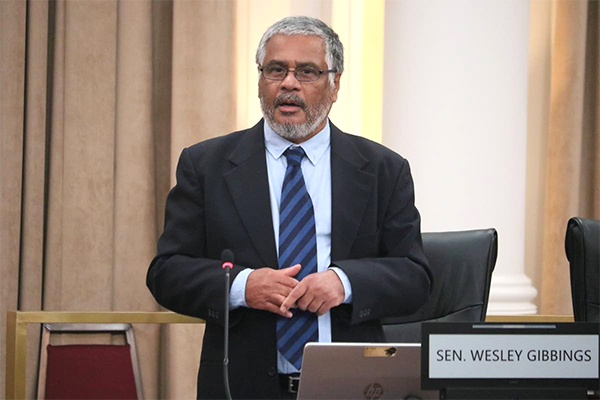
Senator Wesley Gibbings warned that the change will weaken legacy media. He is right, and that is only the first injury. Newspaper publication is a public-notice mechanism. A ministry PDF that few people can find, that search engines treat as ephemeral, and that can vanish in a redesign, is not an equivalent. The digital divide is not a slogan. The Unit’s own outreach history shows how many citizens still need print and a named officer they can locate.
If this government wanted digital publication, it would add it — as this same Parliament did for the statute book, with a designated site and integrity standards. Instead it offers substitution. Substitution is what you do when you have already stopped publishing and need a legal cover story.
The Freedom of Information Act was designed to be inconvenient to governments of every colour. That is why it was worth passing in 1999. That is why it was worth taking to the Privy Council. A UNC government that now treats that inconvenience as a problem to be amended away is not honouring its own legislation. It is confessing that the Act worked too well — including against the people who now hold the seals. Parliament should reject the Bill. The party that wrote the FOIA does not get to bury it on a website and call the burial reform.
